

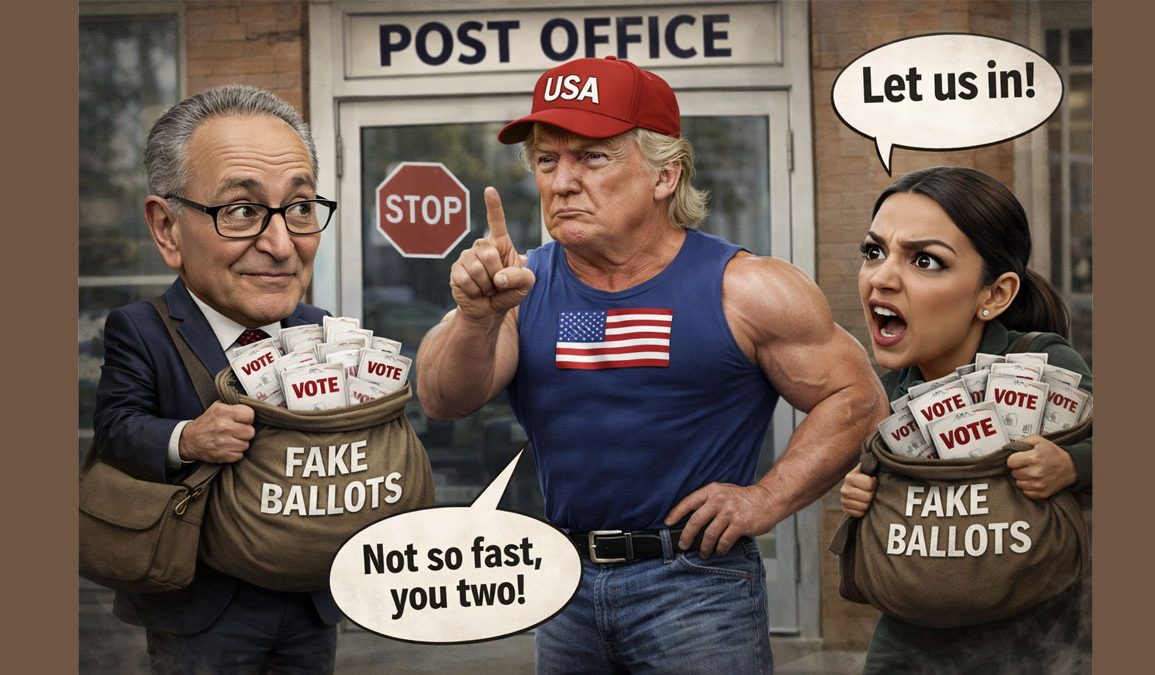
As the 2026 midterm elections approach, Donald Trump has taken a major step to reshape how Americans vote. In a controversial move, Trump signed a new executive order aimed at limiting mail-in voting, a method he has long criticized.
At the signing ceremony, Trump made his position clear. “The cheating on mail-in voting is legendary. It’s horrible, what’s gone on,” he said, adding, “I think this will help a lot with elections.”
What Trump’s Executive Order Does
The order represents one of the most aggressive federal efforts to influence election procedures in modern history. It introduces several key changes designed to tighten control over who receives mail-in ballots and how they are distributed.
First, the order directs the Department of Homeland Security, working with the Social Security Administration, to create an official list of eligible absentee voters. This list would be based on federal data such as citizenship and Social Security records.
Second, the U.S. Postal Service would only be allowed to send mail-in ballots to individuals included on that approved list. Anyone not on the list would effectively be blocked from receiving a ballot by mail.
Third, the order instructs the attorney general to investigate and prosecute individuals who improperly distribute mail-in ballots.
Finally, the administration is threatening to withhold federal funding from states that do not comply with the new rules.
Taken together, these measures attempt to centralize control over a system that has traditionally been managed by the states.
Trump’s order goes further than many previous proposals by attempting to directly involve federal agencies in determining voter eligibility and controlling ballot distribution.
The move mirrors parts of the proposed SAVE America Act, which would require proof of citizenship to register to vote and push states to remove noncitizens from voter rolls. However, that legislation has struggled to advance in Congress.
By acting through executive order, Trump is attempting to bypass legislative gridlock and implement similar restrictions unilaterally.
Still, some of the more sweeping ideas discussed by critics of mail-in voting, such as eliminating the practice entirely or requiring universal in-person voting, are not included in the order.
Does the Order Apply Only to Federal Elections
The order is primarily aimed at elections involving federal offices, but it attempts to influence state-run systems by leveraging federal power.
States remain responsible for administering elections, but the federal government is using tools like the Postal Service and federal funding to push compliance.
This creates a gray area where the federal government is not directly running elections, but is exerting significant pressure on how they are conducted.
Examples of Problems Cited by Critics of Mail-In Voting
Supporters of tighter restrictions often point to documented issues with mail-in voting systems.
One example comes from New Jersey, where up to 800 ballots were disqualified after hundreds were found bundled together in violation of state law. Several individuals, including a councilman-elect, faced criminal charges related to alleged election fraud.
In Nevada, ballots sent to inactive voters were reportedly found piled in mail trays, left outside apartment complexes, posted on bulletin boards, and even discovered in trash cans.
Critics also warn that outdated voter rolls can lead to ballots being sent to people who have moved or died, creating opportunities for misuse.
“These are not isolated concerns,” one report argued, warning that mailing ballots to inaccurate voter lists results in both wasted taxpayer money and potential vulnerabilities.
What Supporters Are Saying
Republicans and supporters of the order argue that it is a necessary step to restore confidence in elections.
They believe mail-in voting weakens safeguards that are present in in-person voting and creates opportunities for fraud or error. Concerns about ballot harvesting, where third parties collect and submit ballots, are frequently cited.
Supporters also argue that uniform federal standards could bring consistency to a system currently governed by a patchwork of state rules.
“There should not be 50 different standards,” one argument states, calling for national rules on voter identification, registration, and ballot handling.
What Opponents Are Saying
Opposition to the executive order has been swift and forceful.
Election experts and Democratic officials argue that the order is unconstitutional, pointing out that the Constitution gives states and Congress, not the president, authority over elections.
Arizona Secretary of State Adrian Fontes dismissed the move, saying, “The Constitution doesn’t allow the executive to take over elections administration.”
Legal challenges are already being prepared. Prominent election lawyer Marc Elias warned, “If Trump signs an unconstitutional Executive Order to take over voting, we will sue. I don’t bluff and I usually win.”
Critics also argue that restricting mail-in voting could disenfranchise eligible voters, particularly those who rely on absentee ballots.
They further contend that claims of widespread fraud in mail-in voting have not been proven.
Trump’s executive order sets up a major legal and political fight over election control in the United States, but it is also as a long-overdue correction to a vulnerable system.