
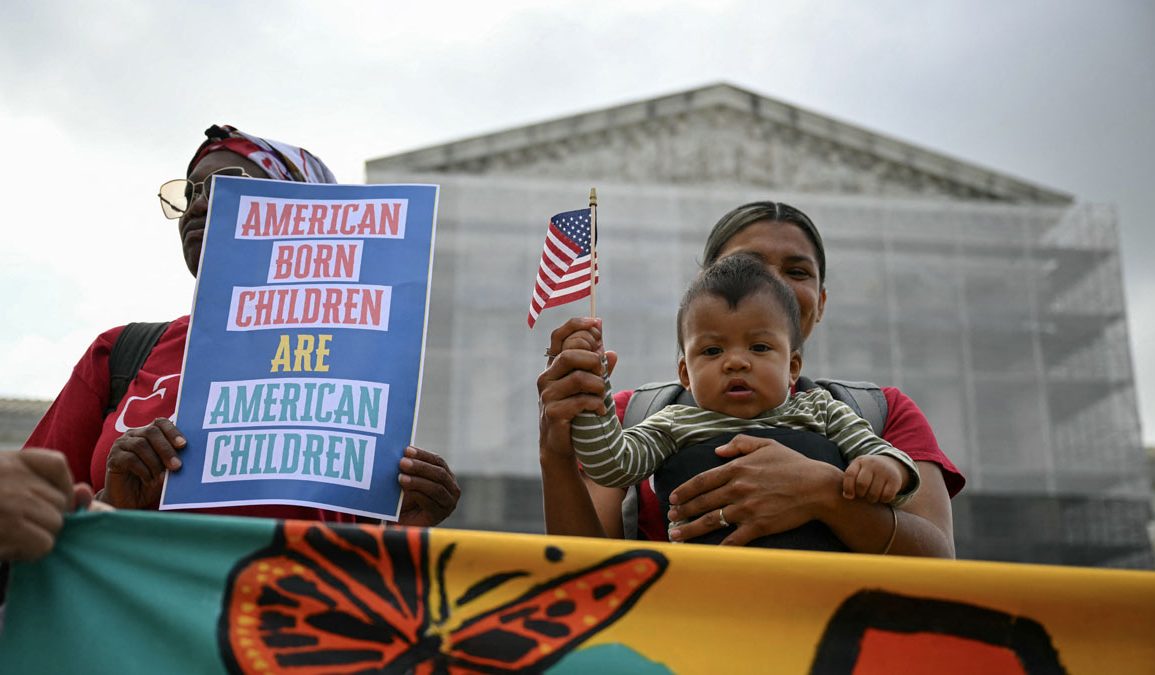
New data has reignited one of the most contentious debates in U.S. immigration policy: birthright citizenship. According to the Pew Research Center, nearly one in ten babies born in the United States in 2023 were born to parents living in the country without legal status. That figure, roughly 320,000 out of 3.6 million total births, is now at the center of a legal and political battle that could reshape how citizenship is granted in America.
The Scale of the Issue
The numbers are striking. Pew found that about 245,000 of those births were to mothers identified as unauthorized immigrants, with fathers who were neither U.S. citizens nor lawful permanent residents. Another 15,000 involved mothers with temporary legal status and noncitizen fathers.
This means that nearly 9 percent of all U.S. births in 2023 fall into what critics describe as “anchor baby” territory. The term refers to children born on U.S. soil to noncitizen parents who automatically receive citizenship under current law.
The trend is not new, but it is persistent. In 1990, such births accounted for about 3 percent of all U.S. births. By 2006, that number had climbed to roughly 9 percent, and today’s figures bring the country back to that level.
The 2023 total is also the highest since 2010, when approximately 325,000 babies were born under similar circumstances.
Why These Children Become Citizens
At the heart of the issue is the 14th Amendment, ratified in 1868. It states that “all persons born or naturalized in the United States, and subject to the jurisdiction thereof, are citizens.”
For more than a century, this has been interpreted to mean that nearly anyone born on U.S. soil automatically becomes a citizen, regardless of their parents’ immigration status. A Supreme Court ruling in the late 19th century reinforced this interpretation, establishing the precedent that has guided modern policy.
Critics argue that the phrase “subject to the jurisdiction thereof” was never meant to apply universally, especially to individuals in the country unlawfully. That interpretation is now being challenged in court.
The Biden Administration’s Role
The 2023 data falls squarely within the tenure of President Joe Biden. While the report does not assign direct causation, it highlights that the number of births to unauthorized immigrant parents has increased for three consecutive years.
Critics argue that broader immigration policies under the Biden administration have contributed to higher numbers of unauthorized immigrants residing in the United States, which in turn affects birth statistics. They frame the issue as part of a larger policy environment that they believe encourages migration and settlement.
The Financial and Social Debate
Some analysts argue that the implications go beyond citizenship itself. Brandy Perez Carbaugh of the Heritage Foundation stated, “Under the current erroneous birthright citizenship interpretation, these children automatically become citizens and unlock food stamps, welfare, specialized schooling for English education, and eventually college aid.”
She added that “high volumes of illegal and temporary aliens are having children in the U.S. because they are exploiting the decades-old erroneous interpretation that such children are U.S. citizens.”
Critics also point to what they describe as financial burdens on taxpayers, citing access to public benefits and healthcare services. Others counter that children born in the U.S. contribute to the economy over time and that the issue is more complex than a simple cost calculation.
Trump’s Push to End Birthright Citizenship
President Donald Trump has made birthright citizenship a central issue. He issued an executive order seeking to reinterpret how citizenship is applied, specifically targeting children born to noncitizen parents without legal status.
According to Pew’s analysis, about 260,000 babies born in 2023 would not have qualified for citizenship under Trump’s proposed framework if it is upheld.
The policy is now being tested in a Supreme Court case that could redefine the meaning of the 14th Amendment. A ruling is expected in the coming months, and its impact could be historic.
A Nation at a Crossroads
The debate over so-called “anchor babies” touches on fundamental questions about law, fairness, and national identity. Supporters of the current system argue that birthright citizenship is a cornerstone of American values and legal tradition. Critics see it as an outdated interpretation that no longer reflects modern realities.
What is clear is that the numbers have brought urgency to the issue. With nearly one in ten births now tied to noncitizen parents, the outcome of the Supreme Court case could reshape immigration policy for generations.
As the legal battle unfolds, the country is left to decide whether to maintain a long-standing interpretation of citizenship or chart a new course that could redefine who qualifies to be an American at birth.