

A wave of so-called teen takeovers is spreading across the United States, turning city centers, beaches, and shopping districts into flashpoints of disorder. What began as loosely organized gatherings has evolved into a coordinated pattern of mass disruptions, often fueled by social media and marked by violence, vandalism, and fear.
From Washington, D.C. to Florida to Chicago, the same story is playing out. Hundreds of teenagers descend on a location, overwhelm police, and leave behind damaged property, shaken residents, and in some cases, gunfire.
What a Teen Takeover Really Is
Law enforcement describes teen takeovers as organized, unpermitted gatherings that rapidly escalate. These events are typically promoted online and spread quickly through viral posts and digital flyers.
Lt. Col. Frank Carpenter of the Chesterfield County Police Department explained how they work: people “use social media to let others know about gathering to occupy an area.”
The result is a sudden influx of hundreds of young people into a single location, often with no supervision and no plan beyond chaos.
From Social Media to Street-Level Disorder
These gatherings are not spontaneous. Police have identified repeat organizers and coordinated campaigns, often tied to social media platforms like Instagram.
In Jacksonville Beach, authorities linked a shooting at a takeover to an organizer who had promoted multiple events online. In other cities, AI-generated flyers and anonymous accounts lure teens with promises of music, excitement, and freedom.
That “freedom” often turns dangerous. Carpenter warned that what begins as entertainment can quickly spiral: young people “become victims of violence or crime.”
A Pattern of Violence and Damage
The consequences are increasingly severe.
In the Bronx, around 300 teens stormed the Bay Plaza Mall, flipping displays, throwing furniture, and attempting to loot stores. “They went into stores and beat the workers,” said Alex Mohamed, a nearby business manager. Police made 18 arrests.
In Daytona Beach, panic erupted during a takeover when loud noises were mistaken for gunfire. Thousands fled in a stampede, and authorities made 133 arrests while imposing emergency restrictions.
In Jacksonville Beach, five people were shot after police broke up a takeover involving about 130 participants.
In Los Angeles, a takeover group has repeatedly ransacked stores, sprayed pepper spray, and assaulted bystanders, according to police.
These are not isolated incidents. They are part of a national trend.
Washington, D.C.: A Case Study in Escalation
Nowhere is the problem more visible than in Washington, D.C.
At the Navy Yard waterfront, hundreds of teens recently swarmed the area, crowding intersections and prompting a large police response. At least four were arrested in one incident, with additional curfew violations reported.
Earlier events in the same area included robberies and a 15-year-old firing a gun into the air.
Activist Elissa De Souza described the growing frustration: “This isn’t a one-off. It’s a repeat pattern, and it’s happening later and later into the night.”
Residents, she added, should not have to worry about “safety or disruption” just to enjoy a night out.
Tybee Island and the Spread to Tourist Hotspots
The trend is not confined to major cities.
On Tybee Island, Georgia, hundreds gathered near the pier in what police called an “unpermitted, pop-up event.” A single gunshot sent the crowd into panic, with video showing teens running in all directions.
The incident has prompted a major law enforcement response ahead of the Orange Crush festival, including K-9 units, helicopters, and road checkpoints.
Police warned that the phenomenon “has popped up across the country,” reflecting a broader national problem.
Curfews: A Tool With Limits
In response, cities are turning to curfews.
Washington, D.C. established Juvenile Curfew Zones that restrict minors from gathering in groups during nighttime hours, sometimes starting as early as 8 p.m. The policy is set to expire, with officials debating whether to extend it.
Councilmember Brooke Pinto argued that curfews give police a critical advantage when they have “information about planned ‘teen takeovers’ and other unsafe activities.”
Mayor Muriel Bowser agreed, calling the curfew “a tool” that “has been an effective one.”
But the results are uneven. Takeovers continue to occur, sometimes just outside curfew zones. In some areas, officials admit the policy is primarily preventative, with few arrests directly tied to curfew enforcement.
Critics argue the measures unfairly target certain communities, while supporters say they are necessary to prevent further escalation.
Law Enforcement Under Pressure
Police departments across the country are being stretched thin.
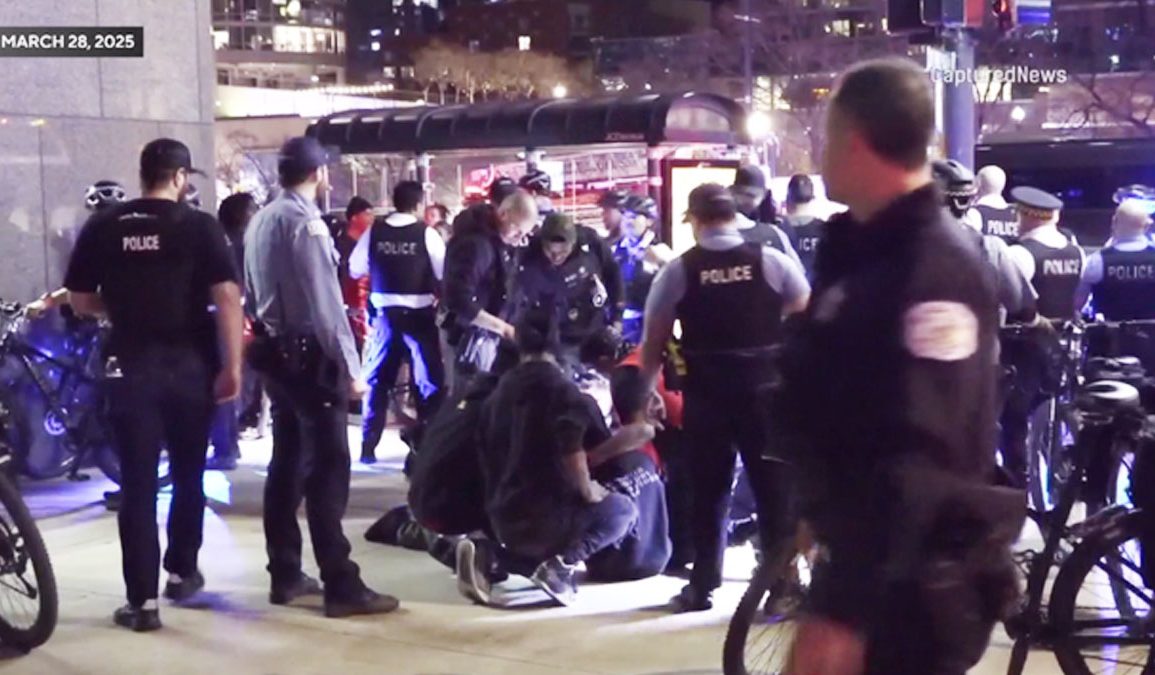
In Florida, officers have deployed paintball guns, pepper spray, and mass arrest tactics to regain control during spring break takeovers. In Chicago, curfews were imposed after repeated incidents in The Loop. In Virginia, police preemptively shut down planned events by warning organizers online.
The challenge is not just responding to events, but staying ahead of them. Carpenter emphasized that early intervention is critical. Without it, gatherings can “grow into altercations that turn into gunplay with potential fatalities.”
A Breakdown That Goes Beyond Policing
At its core, the rise of teen takeovers points to a deeper issue.
These events are organized, repeated, and escalating. They are not random. They reflect a generation that is increasingly disconnected from consequences, operating in environments where rules are inconsistently enforced and authority is often undermined.
U.S. Attorney Jeanine Pirro put it bluntly: “They’ve got to be made accountable.”
Until that happens, the cycle is likely to continue. Social media will spread the next event. Another crowd will gather. Another city will be forced to respond.
And what should be ordinary public spaces will once again become scenes of disorder.