


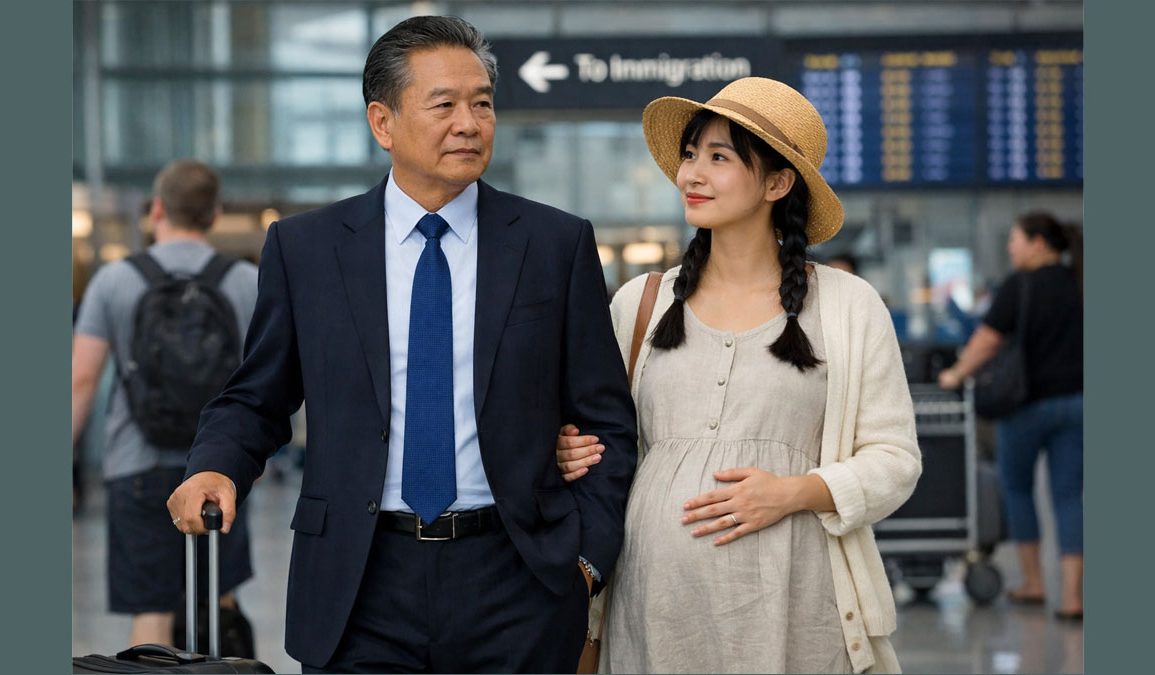
Birth tourism is often described as a loophole. In reality, critics argue it has evolved into something far more deliberate: a systematic exploitation of American law, resources, and national identity.
At its core, birth tourism involves foreign nationals traveling to the United States to give birth so their child automatically becomes a U.S. citizen. Under long-standing interpretations of the Fourteenth Amendment, that child gains full citizenship regardless of the parents’ status. What appears to be a personal decision has increasingly drawn scrutiny from policymakers who see it as a coordinated abuse of the system.
How the System Is Exploited
The foundation of birth tourism is deception. Participants typically enter the United States on tourist visas while concealing their true intent. They present themselves as visitors, when their primary purpose is childbirth.
Federal authorities have made clear that while giving birth in the United States is legal, lying on a visa application is not. That distinction is central. Enforcement depends on proving fraud, not stopping the activity itself.
According to U.S. Immigration and Customs Enforcement, particularly its investigative arm Homeland Security Investigations, organized networks have built entire business models around this gap. These groups coach clients on how to evade detection, including how to hide pregnancies and which ports of entry to avoid.
An Industry Built on Loopholes
What has emerged is not random behavior, but a structured industry.
One of the most well-documented cases involved Chinese national Dongyuan Li, who operated a California-based business called You Win USA. Her company charged between $40,000 and $80,000 per client and provided a full-service pipeline: housing, medical coordination, and detailed instructions on how to mislead U.S. immigration officials.
Clients were instructed to wear loose clothing to conceal pregnancy, route their travel through less scrutinized airports such as Las Vegas or Honolulu, and claim they were ordinary tourists. Once in the United States, they were housed in apartments and taken to hospitals where some were coached to claim financial hardship in order to reduce medical costs.
Li ultimately pleaded guilty to federal charges and was sentenced to prison, but her case revealed the scale and sophistication of these operations.
Another major player, China Mifubaby Group, operates internationally with offices in cities like Beijing, Shanghai, Guangzhou, and Shenzhen. The company markets birth tourism as a premium lifestyle service, offering luxury accommodations, cultural support, and long-term planning for clients seeking U.S. citizenship for their children.
China and the Scale of the Strategy
Chinese nationals have been at the center of the birth tourism industry’s expansion. According to estimates cited in policy discussions, as many as 50,000 Chinese citizens per year may participate, with some projections reaching 100,000 annually.
Author Peter Schweizer has argued that this could amount to “hundreds of thousands” or even up to 1.5 million Chinese-born individuals holding U.S. citizenship over time.
In U.S. territories like Saipan, the capital of the Northern Mariana Islands, the impact became highly visible. At one point, more than 70 percent of births were attributed to Chinese birth tourists taking advantage of visa-free entry programs.
This led lawmakers such as Senators Rick Scott, Jim Banks, and Markwayne Mullin to demand an end to the Guam-CNMI visa waiver program, which they argued created a “veritable cottage industry” of birth tourism.
A Broader National Security Concern
The issue has moved beyond immigration policy into national security debates.
U.S. Solicitor General D. John Sauer argued before the courts that birth tourism has encouraged “a sprawling industry” and could create “a whole generation of American citizens abroad with no meaningful ties to the United States.”
Defense analyst Andrew Badger has suggested that adversarial nations could theoretically use such pathways to position individuals with U.S. citizenship for future strategic advantage, though he acknowledged there is no direct evidence of such operations.
Others push back. Immigration analyst David Bier has said reviews of terrorism and espionage cases have not found evidence of such patterns, arguing that most participants are motivated by economic opportunity rather than strategic intent.
Loopholes That Enabled the Problem
Several policy gaps have allowed birth tourism to grow:
— Tourist visas rely heavily on declared intent
— Birthright citizenship is automatically granted at birth
— Visa waiver programs reduce screening in certain regions
One of the most controversial examples is the Guam-CNMI visa waiver program. Critics like Heritage Foundation fellow Simon Hankinson argue such programs should not apply to countries that do not share criminal data or have higher overstay risks.
Who Is Fighting Back
The Trump administration has made birth tourism a central issue in its immigration agenda.
President Donald Trump has repeatedly cited the practice as justification for restricting both legal and illegal immigration. His administration launched a new “Birth Tourism Initiative” through ICE to identify and dismantle networks engaged in visa fraud and organized facilitation.
White House spokeswoman Anna Kelly described “uninhibited birth tourism” as a threat to taxpayers and national security.
At the legislative level, Senator Rick Scott has also proposed measures targeting related practices, including restrictions on surrogacy arrangements involving foreign nationals.
The administration has also attempted a more sweeping approach. An executive order signed by Trump sought to deny automatic citizenship to children born in the United States if neither parent is a citizen or permanent resident. That effort has been blocked by federal courts and is now under review by the Supreme Court.
Conclusion
Birth tourism is no longer just a legal gray area. It has become a focal point in a broader debate over sovereignty, citizenship, and national security.
What some once dismissed as isolated abuse is now seen by policymakers as an organized system that leverages American openness against itself.