

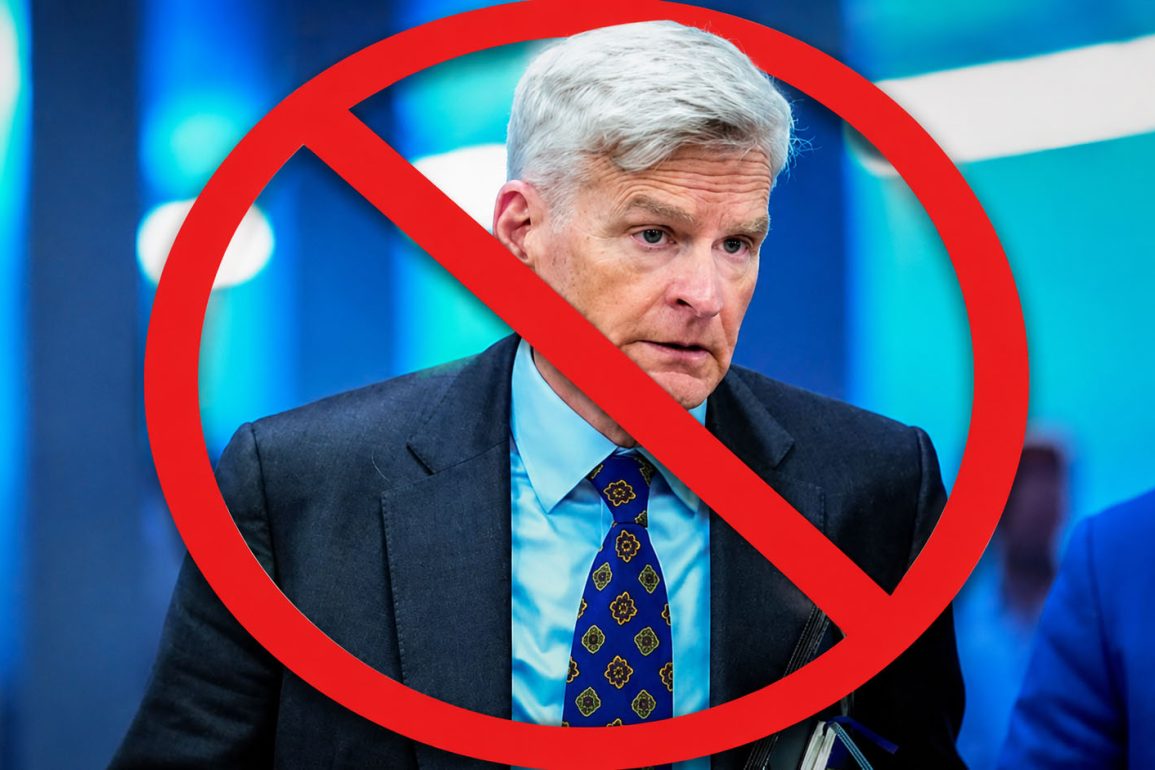
President Donald Trump scored one of the biggest political victories of the 2026 Republican primary season this week as Louisiana Sen. Bill Cassidy was effectively driven from office after losing badly in the state’s GOP Senate primary.
Cassidy, a Republican senator from Louisiana, became the first elected GOP senator since 2012 to lose renomination after openly breaking with Trump and voting to convict him during the 2021 impeachment trial tied to the January 6 Capitol unrest.
For Trump supporters, Cassidy’s defeat was not simply another election result. It was a warning shot aimed at Republicans across the country who cooperate with Democrats in attacks against Trump and then expect Republican voters to forget about it later.
The Louisiana primary also reinforced a larger national trend. Trump is increasingly using his influence to purge Republicans he views as disloyal, weak, or willing to help what many conservatives see as politically motivated efforts to destroy him.
Who Is Bill Cassidy?
Bill Cassidy is a two term Republican senator from Louisiana and a physician by profession. During his time in the Senate, Cassidy often portrayed himself as a conservative who could work across party lines. He highlighted his support for Louisiana’s oil and gas industry and emphasized legislation he said benefited the state.
But for many MAGA voters, Cassidy crossed an unforgivable line when he voted in 2021 to convict Trump during the president’s second impeachment trial. Cassidy was one of only seven Republican senators to do so.
Trump never forgot it.
For years afterward, Trump repeatedly blasted Cassidy as disloyal. On the morning of the Louisiana primary, Trump posted that Cassidy was “a disloyal disaster” and “a sleazebag, a terrible guy, who is BAD FOR LOUISIANA.”
After Cassidy’s defeat, Trump celebrated online, writing that Cassidy’s “political career is OVER!”
Republicans Turned Against Cassidy
The impeachment vote was the biggest reason Cassidy lost support with Republican voters, but it was not the only issue.
Cassidy increasingly found himself at odds with Trump’s broader coalition, especially the Make America Healthy Again movement associated with Health Secretary Robert F. Kennedy Jr. Cassidy, who chaired the Senate Health, Education, Labor, and Pensions Committee, was skeptical of some MAHA priorities involving vaccines and public health reforms.
Kennedy allies also blamed Cassidy for helping sink the surgeon general nomination of Casey Means, a close Kennedy ally and major MAHA figure, after Cassidy did not move the nomination forward in committee.
That anger added to growing frustration among conservatives who believed Cassidy constantly positioned himself as a roadblock rather than a fighter for Trump’s agenda.
Even Cassidy’s attempts to repair relations with Trump failed. Although he supported some Trump nominees during the president’s second term, many Republican voters viewed the moves as too little and too late.
The Louisiana Republican Party had already censured Cassidy years earlier over the impeachment vote, and the distrust never disappeared.
Trump Backs Julia Letlow
Trump threw his support behind Republican Rep. Julia Letlow long before she officially entered the race. Letlow openly embraced the MAGA movement and made loyalty to Trump central to her campaign.
“Louisiana made it clear tonight: we are ready for strong conservative leadership that will stand with President Trump and never waver,” Letlow declared after the primary.
Letlow finished first with roughly 45 percent of the vote, while Louisiana Treasurer John Fleming finished second with about 28 percent. Cassidy trailed badly with roughly 25 percent. Since nobody cleared 50 percent, Letlow and Fleming will now advance to a runoff election.
Trump’s endorsement was widely viewed as decisive.
“It’s the most powerful endorsement in the world,” Letlow said before the election.
Letlow also had support from Louisiana Gov. Jeff Landry, another strong Trump ally.
Meanwhile, Fleming argued that he was the most conservative candidate in the race and emphasized his work in Trump’s first administration.
Even though Trump endorsed Letlow, he also praised Fleming on election day while demanding Cassidy be “CLOBBERED” by “two great people!!!”
Trump Clobbered Indiana State Senators Too
Louisiana was not an isolated case.
Just days earlier, Trump-backed challengers in Indiana successfully defeated multiple Republican state senators who had sided with Democrats to block Trump-backed congressional redistricting plans.
The Indiana battle became one of the clearest examples yet of Trump using his political machine to punish Republicans who oppose his agenda.
Trump had publicly warned Republicans not to oppose the redistricting effort, saying any Republican who voted against it “should be PRIMARIED.”
Months later, several incumbents lost their seats.
Political observers described the Indiana results as a demonstration of Trump’s continuing dominance inside the Republican Party. Indiana Republican Sen. Jim Banks bluntly summarized the lesson afterward: “President Trump is the single most popular Republican among Hoosier voters.”
A Warning to Trump’s Enemies
Many conservatives now view the Louisiana and Indiana results as part of a much broader political realignment inside the Republican Party.
The message appears simple. Republicans who help Democrats attack Trump, undermine his priorities, or block his political strategy may find themselves targeted by primary challengers backed by Trump and the MAGA movement.
Politico described Cassidy’s defeat as “a massive warning sign for any Republicans who’ve provoked the president’s wrath.”
For Trump supporters, that is exactly the point.
They believe Republican voters are tired of elected Republicans who campaign as conservatives but then cooperate with Democrats when pressure rises in Washington. Cassidy’s defeat is being celebrated by many on the right as proof that Republican voters now demand loyalty to the movement and willingness to fight aggressively for conservative priorities.
The outcome in Louisiana showed that even a sitting senator with millions of dollars, committee power, and establishment support can still be defeated if Republican voters believe he turned against Trump.