


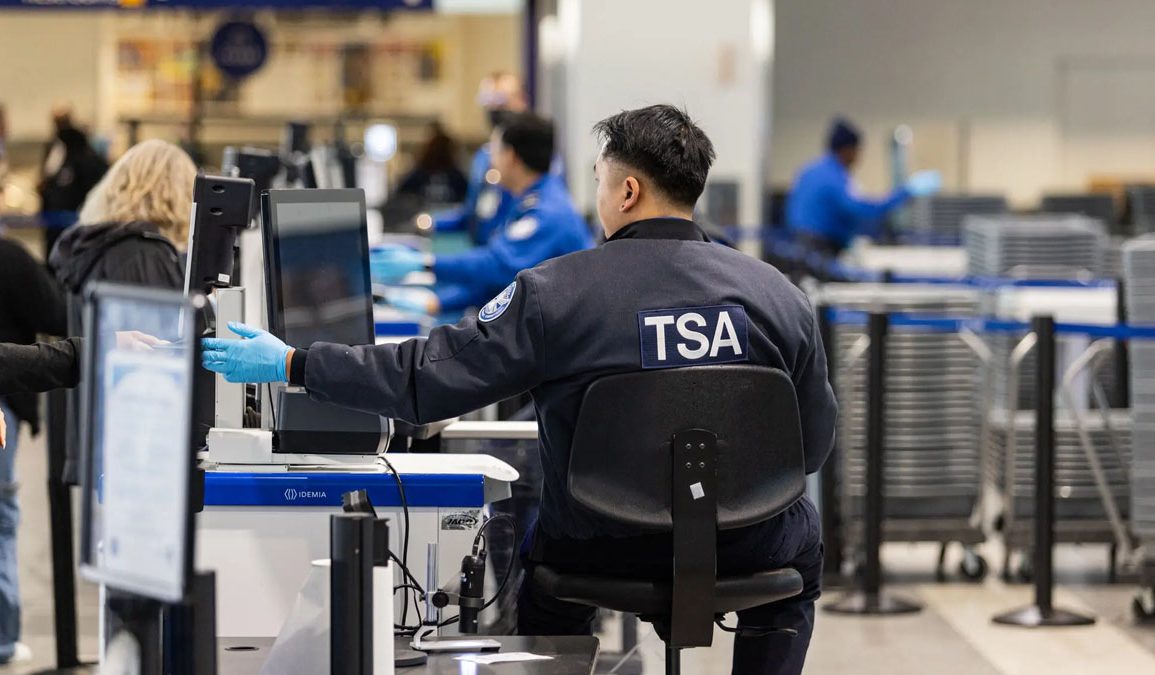
As the Department of Homeland Security funding standoff drags on, President Donald Trump has taken a dramatic step to stabilize airport security operations across the United States. With tens of thousands of Transportation Security Administration employees working without pay and increasing numbers failing to report to work, the administration is now deploying Immigration and Customs Enforcement officers to assist at airports nationwide.
This move comes at a time of rising concern over both operational breakdowns and national security risks, as officials warn that the current strain on airport systems could have serious consequences.
Why Trump Is Sending ICE to Airports
The decision to deploy ICE officers is rooted in a growing crisis within the TSA workforce. Approximately 50,000 TSA agents have been working without pay for over a month due to the funding impasse, and the effects are becoming increasingly visible.
Airports across the country are experiencing long security lines, with wait times stretching up to three hours in some cases. Hundreds of TSA employees have already quit, and many more have been calling in sick or failing to show up.
Former Acting DHS Secretary Chad Wolf warned that the situation is creating dangerous distractions among security personnel. “You don’t want them distracted,” he said, explaining that financial stress makes it difficult for workers to stay focused on their mission. “It’s just human nature that you’re going to be worried about where that next paycheck is cut.”
Trump framed the deployment as a necessary response to what he described as a failure to fund critical security operations. He stated that ICE officers would begin assisting TSA agents immediately to help relieve pressure and restore order at checkpoints.
The State of TSA During the Shutdown
The TSA is facing one of the most severe operational disruptions in its history. As essential employees, agents are required to work even without pay, but the strain is taking a toll.
More than 400 officers have left their jobs, and absenteeism continues to rise. Some airports have even been forced to close security checkpoints due to staffing shortages. Major hubs including Houston, Atlanta, New Orleans, and Philadelphia have reported some of the worst delays.
At the same time, the broader security environment remains tense. Wolf noted that recent incidents, including multiple suspected terrorism-related events, have heightened the need for vigilance. “We need… all of our officers at the Department of Homeland Security… totally focused on their job at hand,” he said.
The combination of fewer workers, longer lines, and elevated threats has created a situation that many officials view as unsustainable.
How ICE Officers will Help
Despite initial concerns, ICE officers will not be replacing TSA agents in specialized screening roles. Border czar Tom Homan made it clear that ICE personnel are not trained to operate X-ray machines or perform detailed screening tasks.
Instead, their role will be to handle supporting functions that currently occupy TSA officers. Homan explained that ICE agents can take over responsibilities such as monitoring exits and managing certain security positions, allowing TSA personnel to focus on screening passengers.
“I don’t see an ICE agent looking at an X-ray machine,” Homan said. “But there are certain parts of security that TSA is doing that we can move them off those jobs… to help move those lines.”
He emphasized that ICE officers are already present at many airports conducting investigations and enforcement operations, making them a logical resource to assist during the crisis.
“This is about helping the men and women at TSA,” Homan added.
The deployment is expected to focus on airports experiencing the longest delays and most severe staffing shortages. Homan indicated that priority would be given to locations where wait times have become unmanageable.
Among the hardest-hit airports are Houston’s George Bush Intercontinental and Hobby airports, Atlanta’s Hartsfield-Jackson, New Orleans, and Philadelphia. In some cases, security lines have stretched into parking areas and surrounding facilities.
Travelers have reported chaotic conditions, with some describing lines that extend for hours and checkpoints operating far below normal capacity.
A Practical Solution
Supporters of the move argue that it is a necessary and pragmatic response to a crisis created by the funding stalemate. They point to the immediate need to keep airports functioning and to ensure that security operations remain intact during a period of elevated threats.
Trump expressed strong confidence in the plan, stating that ICE officers would “do a fantastic job” and emphasizing that the deployment is designed to support TSA workers who have continued to report for duty despite not being paid.
Some also highlight that ICE officers are highly trained federal law enforcement personnel who can quickly step into support roles without requiring extensive retraining.
Critics and Skeptics Raise Concerns
At the same time, critics have raised questions about the effectiveness and appropriateness of the plan. Some argue that ICE officers lack the specific training required for airport screening and worry about potential confusion or inefficiencies.
Others view the move as a political maneuver tied to the broader funding dispute, rather than a long-term solution to TSA staffing issues.
There are also conflicting statements from officials about the scope of ICE involvement, with some suggesting a more direct role in security operations while others, like Homan, insist their duties will remain limited to support functions.
Trump himself acknowledged that opposition is likely, predicting that critics would be “highly critical” regardless of the outcome.
As the DHS shutdown continues with no immediate resolution in sight, the deployment of ICE officers represents a temporary attempt to stabilize a system under strain.
Whether it succeeds in reducing wait times and restoring order at airports remains to be seen. What is clear is that the current situation has exposed significant vulnerabilities in the nation’s transportation security infrastructure.