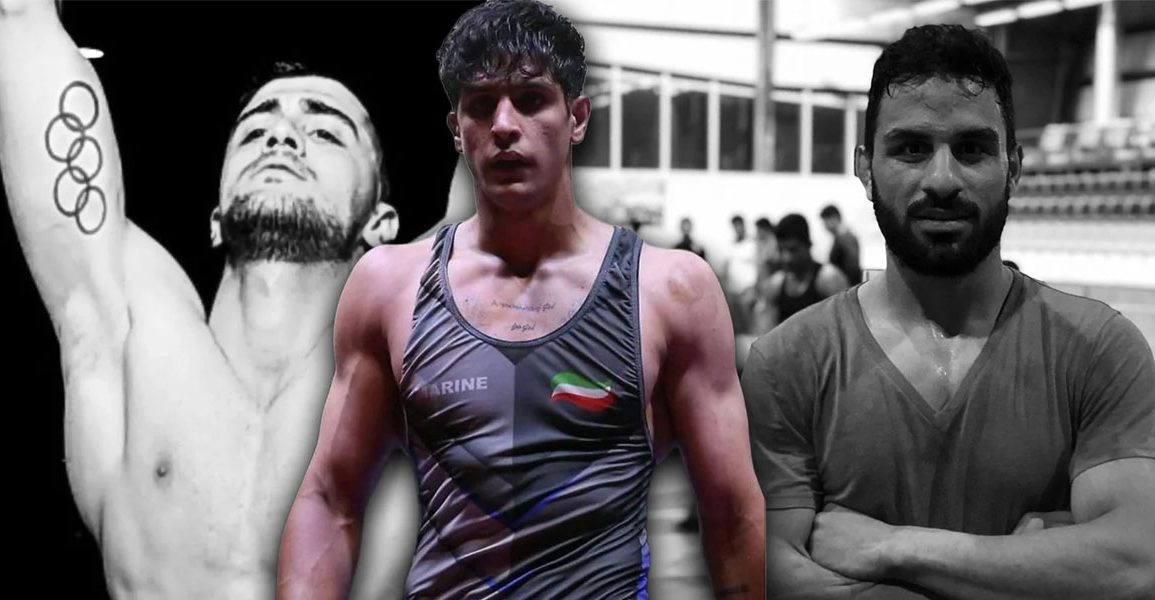
Saleh Mohammadi was a 19-year-old wrestling champion and a member of Iran’s national wrestling team. He had already competed internationally and earned recognition for his talent, including a bronze medal at the Saytiyev International Cup in 2024. By all accounts, he represented the future of Iranian sport, a young athlete with discipline, promise, and national pride.
Instead of being celebrated, his life was cut short in a way that has shocked the world.
Iran’s regime executed Mohammadi by public hanging in the city of Qom. He was killed alongside two other men, Mehdi Ghasemi and Saeed Davoudi, in what human rights groups and activists describe as a deeply flawed and unjust process.
Reports indicate that the three men were subjected to torture, forced confessions, and denied meaningful legal defense. Amnesty International said Mohammadi was denied “adequate defense” and forced into confessions during proceedings that “bore no resemblance to a meaningful trial.”
Human rights organizations concluded that the execution resembled an “extrajudicial killing,” not a legitimate legal outcome.
False Accusations
Iranian authorities accused Mohammadi of involvement in the killing of two police officers during nationwide protests in January 2026. He was also charged with “moharebeh,” meaning waging war against God, a charge frequently used by the regime to justify death sentences against protesters and dissidents.
State media further claimed that the accused had carried out actions “in favor of Israel and the United States,” a charge that critics say is routinely used to discredit opposition voices.
Activists and observers strongly dispute these accusations. Many argue that Mohammadi’s real “crime” was participating in protests calling for freedom and political change.
As Iranian American activist Masih Alinejad wrote, he was executed “for the crime of joining January protests,” adding that the trial involved “torture. Forced confessions. No access to chosen lawyers. Closed-door proceedings. No right to appeal.”
A Pattern of Fear and Repression
Mohammadi’s execution did not happen in isolation. It came amid a sweeping crackdown on protests that spread across Iran, driven by economic hardship and demands for political reform.
Rights groups report that thousands of people have been killed during the unrest, with more than 7,000 deaths recorded by some organizations. Iran remains one of the world’s most prolific executioners, carrying out at least 1,500 executions in the past year alone.
According to Iran Human Rights, such executions are meant “to spread fear in the society,” signaling that the regime views its own citizens as the primary threat to its survival.
Human rights activist Nima Far described Mohammadi’s death as “a blatant political murder, part of the Islamic Republic’s pattern of targeting athletes to crush dissent and terrorize society.”
Olympians Speak Out
The global sports community responded with outrage. Several Olympians spoke out, condemning both the execution and the system that allowed it.
Brandon Slay, Olympic gold medalist (wrestling, 2000)
He emphasized the contrast between the Iranian people and their rulers:
“I’ve seen firsthand the dignity and heart of the Iranian people. That’s why it’s so heartbreaking to witness a terror regime execute a teenage wrestler.”
Tyler Clary, Olympic gold medalist (swimming, 2012)
He warned about what this represents:
“What we’re seeing in Iran… is a brutal reminder of what that regime stands for.”
Kaillie Humphries, three-time Olympic gold medalist (bobsled)
She highlighted the targeting of a young athlete:
“Murdering a teenager who was specifically targeted because he is a champion athlete and icon of his country is even worse.”
Eli Bremer, Olympian (modern pentathlon, 2008)
He delivered one of the strongest condemnations:
“Murdering a teenaged iconic athlete shows how deeply depraved the Iranian leadership is.”
Katie Uhlaender, five-time Olympian (skeleton)
She focused on the failure to protect athletes:
“These athletes did nothing wrong… instead of being protected, they were left exposed to a system that failed to act when it mattered most.”
AJ Edelman, two-time Olympian (skeleton, Israel)
He framed Mohammadi’s death as a symbol of resistance:
“He was hanged for envisioning an Iran free from the predations of a regime… His sacrifice is proof that such a cause was just.”
Sardar Pashaei, Iranian world champion wrestler
Speaking from lived experience under the regime, he said:
“This is only a glimpse of the regime’s brutality… This regime is built on executions, fear, and hatred. It does not change.”
He added a stark warning:
“Saleh’s only ‘crime’ was protest… The world must act now.”
A Call for Resolve
The death of Saleh Mohammadi has triggered calls for action across multiple fronts, including sanctions, diplomatic pressure, and even bans from international sports competitions.
Alireza Nader, an expert on Iran, warned that “there must be a heavy price for the regime for executing young people like this. There must be a deterrent.”
Others argue that silence is no longer an option. As Uhlaender stated, “Action, not silence, must define our response moving forward.”