

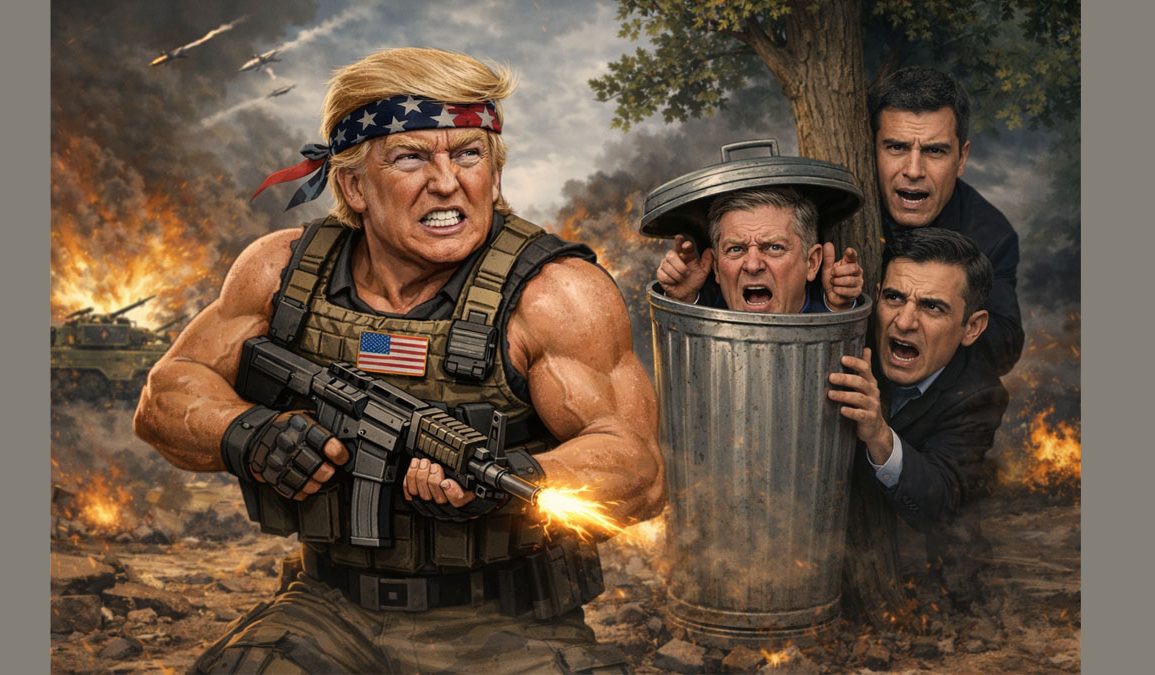
The war between the United States, Israel, and Iran has exposed a familiar divide in the Western alliance. While President Donald Trump moved decisively to strike Iran, several European leaders have responded with hesitation, criticism, and political maneuvering – our words only, petty cowards.
For supporters of the operation, the contrast is striking. Trump acted boldly against a dangerous regime, while a handful of European politicians appear more concerned about domestic politics, legal debates, and avoiding controversy.
The result is a tense diplomatic moment in which the United States is pressing forward militarily while some European leaders complain from the sidelines.
The Context: A War That Shook the Middle East
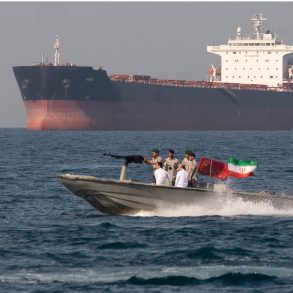
The current conflict began after the United States and Israel launched military strikes against Iran. The attacks targeted Iranian military infrastructure and leadership, triggering retaliation from Tehran.
Iranian missiles and drones have already been fired toward regional targets. NATO air defense systems even intercepted an Iranian missile heading toward Turkish airspace, highlighting the risk that the conflict could widen.
The fighting has forced European governments to confront a difficult question: whether to support the United States openly, remain neutral, or oppose the operation.
Many leaders have tried to walk a careful line, offering limited defensive cooperation while avoiding full support for the war.
Spain’s Sánchez Leads the Opposition
The most outspoken critic has been Spain’s Prime Minister Pedro Sánchez.
Sánchez declared that Spain would not participate in the conflict “in any way,” describing the war as a “senseless war with unforeseeable consequences.”
He also blocked the United States from using Spanish bases at Morón and Rota for strike operations. Spain’s government said the bases would offer “no support, except in the event of humanitarian necessity.”
In a public statement criticizing the war, Sánchez said:
“We are not going to be complicit in something that is bad for the world and is also contrary to our values and interests, just out of fear of reprisals from someone.”
Trump responded sharply, threatening to cut off trade with Spain after Madrid refused cooperation.
Despite the pressure, Sánchez has continued to position himself as one of Europe’s most vocal opponents of the operation.
Britain’s Starmer Hesitates
Britain has also shown reluctance to fully back the operation.
Prime Minister Keir Starmer told lawmakers that the United Kingdom would not join a war unless it was clearly legal and had a well-defined strategy.
He warned that airstrikes alone were unlikely to produce regime change in Iran and referenced the long shadow of the 2003 Iraq war.
“I don’t think regime change could come from an air war,” Starmer said.
At first, Britain even refused permission for the United States to use British bases for offensive strikes.
Trump publicly expressed frustration with the British position, saying:
“This is not Winston Churchill we’re dealing with.”
Eventually, the United Kingdom allowed American forces to use bases for “defensive strikes” against Iranian missile sites, but the hesitation marked a rare moment when Britain did not automatically align with Washington.
Foreign policy expert Sophia Gaston described the moment bluntly:
“This is the first time that we have said ‘we don’t agree with your assessment of the security risk and we won’t stand shoulder to shoulder with you.’”
France Voices Legal Concerns
France has taken a more cautious but still critical tone.
President Emmanuel Macron said the U.S.-Israeli strikes were “conducted outside the framework of international law,” though he also blamed Iran for creating the crisis.
At the same time, France has deployed military assets to the region. A French frigate has been sent to Cyprus, and additional air defense systems are being deployed to protect regional bases from Iranian attacks.
In other words, Paris is criticizing the legality of the strikes while quietly preparing for the consequences of the war.
Germany Takes a More Pragmatic Approach
Not all European leaders are criticizing Washington.
German Chancellor Friedrich Merz has taken a noticeably different approach, refusing to condemn the operation.
Merz called the strikes “good news for Iran and good news for the world” and said he would not lecture America.
“This isn’t the moment to lecture our partners,” he said.
His position reflects a pragmatic reality. Europe still depends heavily on the United States for security, energy stability, and trade.
Germany’s stance suggests that some leaders recognize that criticizing Washington publicly could damage relationships they cannot afford to lose.
European Politics and Public Pressure
Domestic politics are playing a major role in Europe’s reaction.
Trump remains deeply unpopular across much of the continent. In Britain, for example, a YouGov poll found that 49 percent of the public opposes attacking Iran, while only 28 percent support it.
Leaders such as Starmer also face pressure from political factions inside their own parties. In Britain, parts of the Labour Party and rising populist groups strongly oppose military action.
Sánchez faces his own political challenges after corruption scandals and recent election setbacks.
For these leaders, criticizing the United States may be politically safer than backing another Middle Eastern conflict.
Analyst Mujtaba Rahman explained the calculation:
“Europe’s influence and agency is going to be limited, so in those circumstances be constructive and be tactical.”
In other words, European leaders know they have limited power over events. Their strategy is often to criticize publicly while avoiding a direct break with Washington.
A Test of Western Leadership
The Iran war has revealed two very different approaches to leadership.
Trump has chosen confrontation and decisive military action against a hostile regime.
Several European leaders, by contrast, have emphasized caution, legality, and domestic political concerns.
Yet even as some criticize the operation, Europe still relies heavily on the United States. Tens of thousands of American troops remain stationed across the continent, and many European governments continue to depend on U.S. security guarantees.
The dispute over Iran therefore exposes a deeper reality about the Western alliance.
When crises erupt, the United States still acts first.
And while a few European leaders may complain, protest, or hesitate, the strategic burden of confronting dangerous regimes continues to fall largely on Washington.