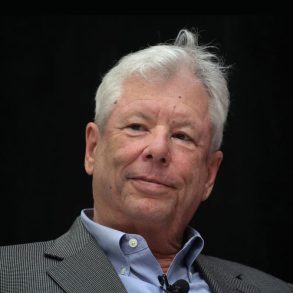

Kentucky Senator Rand Paul appears to be leaving the door open to another run for the White House in 2028. While the libertarian-leaning Republican has not officially announced a campaign, a series of recent interviews and public appearances suggest that he is positioning himself as a voice for a different direction inside the Republican Party.
Paul has framed his possible candidacy around restoring what he calls the free market wing of the GOP. His comments come at a time when the party remains heavily influenced by the populist political movement built around Donald Trump and figures such as JD Vance.
A Libertarian Voice in the Republican Party
Paul has long been known as one of the most libertarian-minded Republicans in Congress. During his time in the Senate, he has consistently promoted fiscal conservatism, civil liberties, and a non interventionist approach to foreign policy.
More recently, he has been vocal about what he sees as the party drifting away from those principles.
“The most important thing to me isn’t necessarily me or what my role is, but that there is someone who’s advocating that international trade is good and makes us rich. That big is not bad,” Paul said during an interview on Sunday Night with Chuck Todd.
Paul has also criticized the rise of protectionist economic policies within the party, especially tariffs.
“So whether it’s running for president or just being a national voice, I do want to be that voice who says we want low taxes. That means tariffs, which are a tax. We don’t want high tariffs; we want low tariffs. We want more trade,” he said.
His argument is that the Republican Party needs a faction that still supports global trade and free market capitalism.
“There needs to be representatives in the Republican Party who still believe international trade is good, who still believe in free market capitalism, who still believe in low taxes,” Paul said in a television interview.
Signs He May Be Preparing for 2028
Although Paul has not committed to running, he has repeatedly declined to rule it out.
“We’ll decide after 2026,” he said when asked about a potential presidential bid.
In other interviews he has echoed the same theme, telling reporters it was “too early to tell” if he would run again for the White House. In another appearance he said, “We’ll see over time what happens.”
Behind the scenes, political observers say he appears to be testing the waters. Last year he traveled to Iowa, New Hampshire, and South Carolina, the three early states that traditionally shape the Republican presidential nominating contest.
A strategist close to Paul told reporters, “He’s keeping options open and looking at the landscape.”
Looking Back at the 2016 Campaign
Paul has already tried once to win the presidency. He entered the race for the Republican nomination in 2015 and formally launched his campaign on April 7, 2016, promising to “take our country back.”
However, his campaign struggled to gain traction during a primary season dominated by Donald Trump. Paul finished in a distant fifth place in the Iowa caucuses and soon dropped out of the race.
He then returned his focus to the Senate, winning reelection in 2016 and again in 2022.
The experience showed both the possibilities and limits of his libertarian message in a Republican Party that was rapidly shifting toward Trump style populism.
Tension With Trump Era Policies
One of the biggest obstacles to a future presidential run may be Paul’s willingness to criticize parts of the Trump agenda.
He has been one of the most outspoken Republican critics of tariffs, a major economic policy championed by Trump. Paul has also opposed some of the administration’s large spending bills, arguing they add too much to the national debt.
“I don’t make it personal at all,” Paul said when discussing his disagreements with the president. “I like the president, supported the president. In fact, I’m for the tax cuts. I am for a lot of the bill, but I can’t in good conscience give up every principle that I stand for.”
Trump has pushed back sharply at times. After Paul opposed one major spending bill, Trump wrote that the senator had “a minimal understanding” of the legislation and added, “The people of Kentucky can’t stand him.”
These policy disagreements highlight a deeper ideological divide between Paul’s libertarian economics and the economic nationalism that has become influential in Republican politics.
Paul himself has acknowledged that his political future may depend on whether there is still space inside the GOP for dissenting voices.
While campaigning in Kentucky with Representative Thomas Massie, Paul raised the question directly.
“If people are unhappy with Thomas and he’s unelected, that hurts me personally. But it also hurts the idea of: Is there room in the party?” he said.
Paul and Massie have both occasionally broken with Trump on fiscal and trade issues. Their willingness to challenge the party’s dominant direction has earned them both supporters and critics.
“There are very vocal presidential supporters who want complete fidelity. They’re very loud online,” Paul said. “But there’s a lot of people in the community who want a mixture of balance.”
Supporters Say the Party Needs Debate
Among Paul’s allies, his willingness to question party orthodoxy is seen as a strength rather than a liability.
Some Republican activists argue that internal debate is healthy and necessary.
“We elected them because they’re fiscally responsible. We want that,” said Mike Fisher, a GOP county chair in Kentucky. “That’s what the hardcore base of the Republican Party is looking for.”
Supporters say Paul represents an older strain of conservative thinking that emphasizes limited government spending and free trade.
For them, a possible presidential run would give voters another choice within the party.
Critics Question His Alignment
At the same time, critics inside the Republican coalition argue that Paul and his allies are out of step with the party’s new populist direction.
Some Trump aligned strategists have harshly attacked politicians who break with the president’s agenda. One critic described Paul’s ally Massie as “a reliable vote with the craziest on the left that defies common sense,” adding that he “hasn’t accomplished a damn thing for constituents other than provide embarrassment.”
These kinds of attacks highlight the difficult path Paul would face if he decides to run in 2028.
For now, Paul says the decision is still far off. He has repeatedly indicated that he will not make any final decision until after the 2026 midterm elections.
“So we’ll see over time what happens,” he said.
Whether he ultimately runs or not, Paul’s comments signal that he intends to remain a national voice in the debate over the Republican Party’s future. His message is clear: the party, in his view, still needs someone willing to defend free markets, global trade, and traditional conservative economic principles.
NP Editor: We like Rand Paul in general because he very often keeps the Republican Party on the straight and narrow which is sorely needed.
But in the case of trade, we can’t figure out if he is really stupid or if he is just trying to create a false narrative. Trump’s tariffs are the route TO fair trade not away from it. Trade rules have been massively biased against America for decades thanks to inept negotiators that have allowed deals lopsided against America and have caused us to lose factories, sell fewer goods overseas and pay higher prices. The ONLY way to fixed it was to break it first. Now perhaps we can negotiate back to smaller and smaller tariffs to get to the absolutely free trade that is the ideal.