The headline is the airstrike. But the deeper story is what may have been prevented.
As Israel struck a leadership meeting in Qom where Iran’s Assembly of Experts was reportedly counting votes for Ayatollah Ali Khamenei’s successor, the regime stood on the brink of choosing a new supreme leader. According to a senior Israeli official, “Israel struck while they were counting the votes for the appointment of the supreme leader.”
Iranian reports said the building was “flattened.” Other accounts indicated that many members of the 88 member clerical body were killed or wounded. This was not just another battlefield target. It was the very committee charged with deciding who would inherit the power structure built since 1979.
President Donald Trump told ABC News that the operation was so effective that it eliminated most of the expected successors. “The attack was so successful it knocked out most of the candidates,” he said. “It’s not going to be anybody that we were thinking of because they are all dead. Second or third place is dead.”
The question is not simply who was killed. It is who might have emerged.
The Hardline Contenders
Iran’s constitution requires the supreme leader to be a senior Shia jurist chosen by the Assembly of Experts. In practice, that means a figure deeply embedded in the revolutionary clerical establishment.
Among the known or widely discussed contenders were several figures with records that suggest a hard line path.
Gholam Hossein Mohseni Ejei
The head of Iran’s judiciary since 2021, Mohseni Ejei has long been seen as a hardline conservative. He was sanctioned by both the U.S. State Department and the European Union for his role in crushing protests after the 2009 election. According to the E.U., intelligence agents under his command detained, tortured, and coerced false confessions from activists and journalists. As millions protested economic collapse, he vowed to show “no leniency” and called for expedited trials and executions. He accused the U.S. and Israel of having “openly and explicitly supported the unrest” in Iran.
Mojtaba Khamenei
The late supreme leader’s son is believed to wield massive influence behind the scenes, particularly within the Islamic Revolutionary Guard Corps and the Basij paramilitary force. Though he has avoided public office, he reportedly oversees a large financial empire and has been under U.S. sanctions since 2019. His rise could have solidified the most entrenched elements of the regime. A father to son succession would have been controversial, but it may also have empowered the security state even further.
Mohammad Mehdi Mirbagheri
An Assembly of Experts member and leader of the Islamic Sciences Academy in Qom, Mirbagheri is described as a staunch conservative. He has called the 2022 Woman, Life, Freedom protests “Western inspired sedition.” He has spoken about thwarting “infidels” and quoted Ayatollah Khomeini in saying that establishing a “new culture based on Islam in the world” would require “hardship, martyrdom, and hunger.” So called “super revolutionary” factions reportedly view him as a potential future leader.
Alireza Arafi
A member of the Guardian Council and head of the Iranian seminary, Arafi is described by analyst Alex Vatanka as one of Khamenei’s “loyalists that will advance his agenda and in return they enjoy his patronage.” He now sits on the temporary leadership council.
Ali Larijani
Though not a senior Shiite cleric and therefore unlikely to qualify under the constitution, Larijani is a veteran power broker. After the U.S. Israeli strikes, he urged retaliation, posting that Iran would make “the Zionist criminals and the shameless Americans regret their actions” and that Iran would deliver “an unforgettable lesson to the hellish international oppressors.”
Hassan Khomeini
The grandson of Iran’s revolutionary founder has sometimes been described as more reform minded. He once said, “Sometimes dignity is born through war, and sometimes through holding firm in the field of negotiation.” Yet even he commands respect among senior clerics and the Revolutionary Guards. In a system designed to preserve revolutionary rule, even a relative moderate would operate within strict ideological boundaries.
A Power Vacuum and the Risk of Escalation
History shows that when authoritarian systems face sudden leadership vacuums, the most organized and uncompromising factions often seize control. In Iran’s case, that likely would have meant a figure closely aligned with the Revolutionary Guards and willing to double down on confrontation.
Luciano Zaccara of Qatar University noted that Iran’s structures remain intact. “The structures remain, the line of power and the line of command remain in place,” he said. That continuity, however, also means that the ideological framework remains.
With Iran already launching retaliatory attacks across the Gulf and targeting U.S. bases, a new radical supreme leader could have framed the moment as a call for total resistance. Escalation might have prolonged the war, expanded missile campaigns, and drawn more regional actors into direct conflict.
Prime Minister Benjamin Netanyahu framed the broader mission clearly. “With these ballistic missiles, these weapons of mass death, these weapons, they bombed all these countries,” he said. “And when they developed these ballistic missiles, they’ll try and eventually they’ll bomb you. This is what President Trump understood.”
What Was Prevented
The airstrike on the Assembly of Experts was not just a tactical strike. It disrupted the formal mechanism that could have elevated one of the most hardline clerics to the highest office in Iran.
Trump suggested he would prefer “somebody from within” to take over. In theory, that could mean a figure more pragmatic and willing to step back from confrontation. But given the list of likely contenders and their records, the immediate outcome of that vote was unlikely to be a moderate reformer.
By striking at the moment of decision, Israel fractured the process that might have consolidated power in the hands of a radical successor prepared to escalate the war indefinitely.
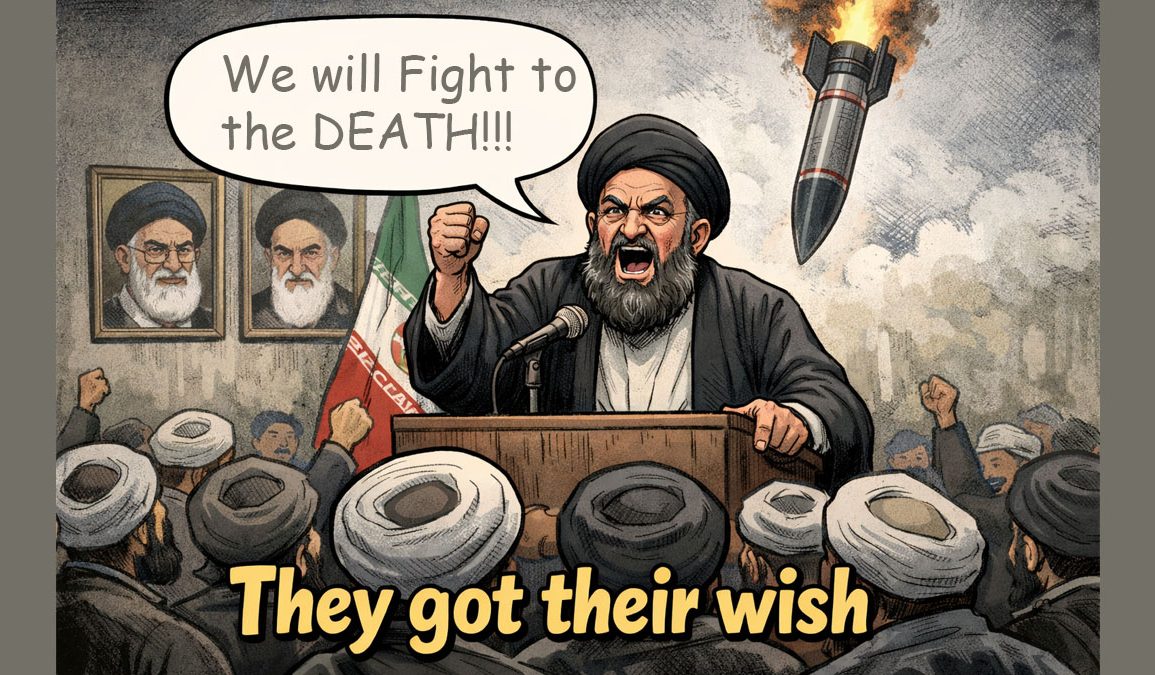
NP Editor: Imagine a radical leader hiding within Iran for months urging every last soldier to fight to the death and for everlasting terrorism to become the new action against the West. While we may have taken out some potential moderate leaders, we avoided an extension of the war by killing the radicals trying to fill the power vacuum.