
Ayatollah Ali Khamenei, the supreme leader of Iran for more than thirty five years, is dead. His death came after a coordinated U.S. and Israeli military operation that struck Iran’s leadership compound in Tehran, killing him along with several senior regime figures.
For many around the world, the moment represents the end of one of the most dangerous and oppressive regimes in modern history. President Donald Trump described the significance bluntly, writing that Khamenei’s death “is the single greatest chance for the Iranian people to take back their Country.”
Khamenei had ruled Iran since 1989, succeeding revolutionary leader Ayatollah Ruhollah Khomeini. As supreme leader, he held ultimate authority over the military, government, judiciary, and religious establishment. No major decision in Iran happened without his approval.
His leadership defined Iran’s nuclear ambitions, its support for armed proxy groups across the Middle East, and its violent repression of dissent at home.
A Record Marked by Violence, Intimidation, and Global Threats
World leaders and officials repeatedly pointed to Khamenei’s responsibility for Iran’s aggressive posture and internal brutality.
Australian Prime Minister Anthony Albanese said Khamenei “was responsible for the regime’s ballistic missile and nuclear programme, support for armed proxies and its brutal acts of violence and intimidation against its own people.”
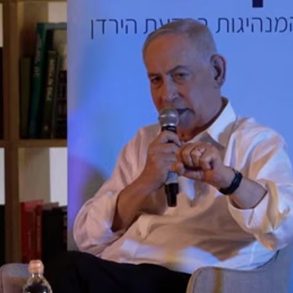
Israeli Prime Minister Benjamin Netanyahu called him a “cruel tyrant” who had “spread terror across the world while oppressing his own people, while working tirelessly and without pause on a plan to destroy Israel.”
France’s government spokeswoman Maud Bregeon described him as a “bloodthirsty dictator,” saying France “could only be satisfied with his demise.”
For critics of the Iranian regime, Khamenei was not simply a political leader. He was seen as the driving force behind decades of instability, terrorism, and nuclear brinkmanship.
The CIA’s Key Contribution
The operation that killed Khamenei was the result of months of intelligence work.
According to people familiar with the mission, the CIA had been tracking Khamenei’s movements for months and became increasingly confident about his location patterns. The breakthrough came when intelligence revealed that Iran’s top leadership would gather on a Saturday morning at a compound in central Tehran connected to the presidency, the supreme leader’s office, and Iran’s National Security Council.
Originally, the U.S. and Israel planned to strike at night. That plan changed once the intelligence confirmed Khamenei would be present at the morning meeting.
Officials briefed on the operation said the CIA provided what was described as “high fidelity” intelligence about his location to Israel.
Israeli fighter jets launched around 6 a.m. local time. Two hours later, at approximately 9:40 a.m. Tehran time, long range missiles struck multiple buildings inside the compound simultaneously.
An Israeli defense official said the attacks achieved tactical surprise. Senior national security officials were gathered in one building while Khamenei was in another nearby structure when the missiles hit.
The strike was part of a broader operation targeting Iran’s leadership and military command structure.
Confirmation That the Supreme Leader Was Dead
Initial reports created confusion. Some Iranian outlets claimed Khamenei remained alive and “steadfast and firm.” But those claims quickly unraveled.
Iranian state media ultimately confirmed his death and announced a forty day national mourning period.
U.S. and Israeli officials had already indicated he had likely been killed. Reuters later reported that his body had been located, citing a senior Israeli official.
Trump highlighted the intelligence success, writing that Khamenei “was unable to avoid our Intelligence and Highly Sophisticated Tracking Systems and, working closely with Israel, there was not a thing he, or the other leaders that have been killed along with him, could do.”
Other Senior Iranian Leaders Eliminated
Khamenei was not the only casualty. The strike targeted a meeting of Iran’s top security leadership, and multiple senior figures were killed.
Iran confirmed the deaths of Ali Shamkhani and Mohammad Pakpour. The gathering was believed to include other high ranking officials such as defense minister Aziz Nasirzadeh and aerospace commander Seyyid Majid Mousavi.
Follow on strikes also hit locations where intelligence leaders were staying, causing heavy losses among Iran’s senior intelligence ranks. One top intelligence official reportedly escaped.
Netanyahu said many “senior figures” had been “eliminated,” including commanders connected to Iran’s nuclear program.
The operation significantly weakened the regime’s command structure in a single coordinated blow.
Celebrations, Fear, and Mourning Inside Iran
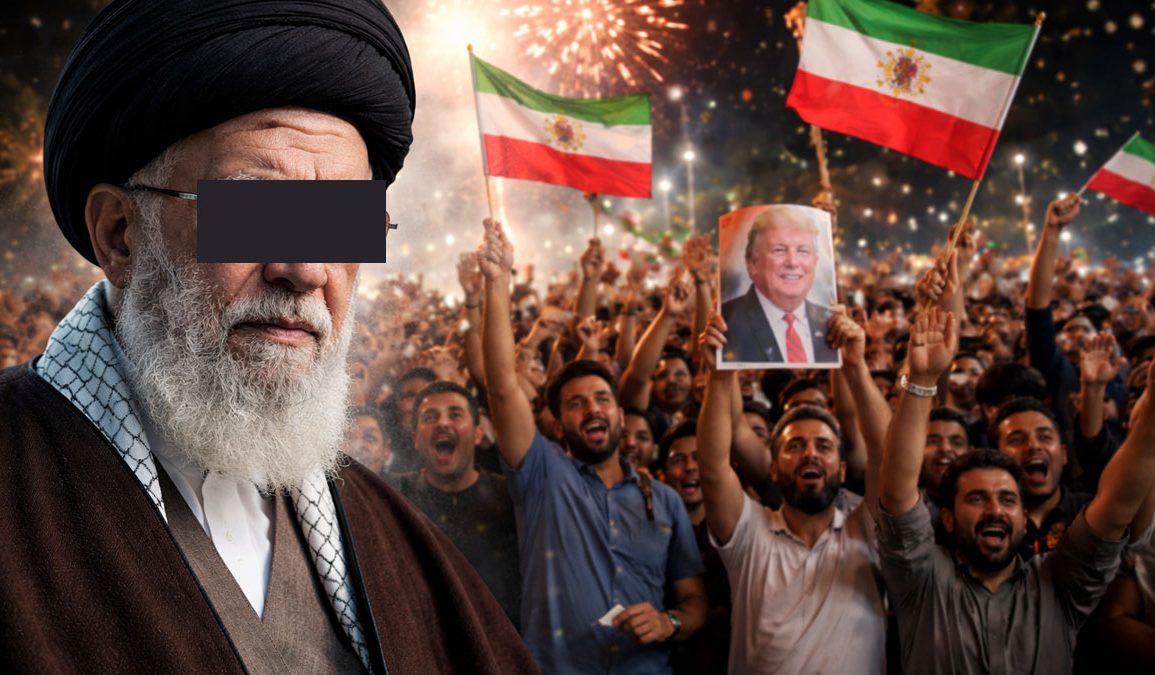
In some parts of Tehran, celebrations broke out shortly after reports of Khamenei’s death began circulating. Witnesses described people setting off fireworks, playing music, and cheering in the streets late into the night. Audio recordings and video footage showed crowds expressing relief and excitement, although the gatherings were not massive. Many residents remained cautious, remembering the government’s deadly crackdown on protests earlier in the year. Even so, the visible public celebrations reflected how deeply unpopular the regime had become among segments of the population.
Celebrations were also reported outside Iran, particularly among members of the Iranian diaspora. In Los Angeles, home to one of the largest Iranian communities outside the country, jubilant crowds gathered waving pre revolution Iranian flags, singing, and chanting for freedom. Some carried posters of President Trump and wore shirts reading “Free Iran.” The son of Iran’s former shah, Reza Pahlavi, praised the moment, declaring that “with his death, the Islamic Republic has effectively come to an end and will soon be consigned to the dustbin of history.” For many celebrating, the death of Khamenei represented not just the fall of a leader, but the possibility of a future without the regime he controlled for decades.
At the same time, thousands of mourners gathered in Revolution Square dressed in black, chanting “death to America” and “death to Israel,” waving flags, and holding Khamenei’s image.
Iran’s president Masoud Pezeshkian called the killing a “declaration of war against Muslims,” while the Revolutionary Guards vowed to punish those responsible.
Trump declared, “Khamenei, one of the most evil people in History, is dead.”
British Defense Secretary John Healey said “few people will mourn” him, echoing similar comments from Australia.
European Union foreign policy chief Kaja Kallas called the moment a “defining moment,” adding that there was now “an open path to a different Iran, one that its people may have greater freedom to shape.”
Reza Pahlavi, son of Iran’s former shah, said, “With his death, the Islamic Republic has effectively come to an end and will soon be consigned to the dustbin of history.”
But Iran’s allies condemned the strike. Russian President Vladimir Putin called it “a cynical violation of all norms of human morality and international law.” China described it as “a serious violation of Iran’s sovereignty.” North Korea labeled the attack “shameless and gangster like conduct.”
Pope Leo XIV urged restraint, warning of a possible “spiral of violence” that could become an “irreparable chasm.”
At least nine people were killed in Pakistan when protesters attempted to storm the U.S. consulate in Karachi. Demonstrators also tried to breach Baghdad’s fortified Green Zone, where the U.S. embassy is located. Protests occurred in Kashmir as well.
Meanwhile, Iranian Americans celebrated openly in cities such as Los Angeles, carrying pre revolution Iranian flags and wearing “Free Iran” shirts.
The Possibility of a New Iranian Government
Khamenei’s death creates enormous uncertainty inside Iran.
Analysts say the country had contingency plans for such a scenario. Barbara Slavin of the Stimson Center said, “There will probably be a council that will be set up to run the country. It may already have been running the country, as far as we know.”
Trump indicated that potential new leadership figures had already contacted the United States seeking talks. A White House official said Trump “does plan to talk” with them, although military operations under Operation Epic Fury were continuing.
Trump also expressed hope that Iran’s security forces might “peacefully merge with the Iranian Patriots.”
A Moment Seen as Liberation by Many
For supporters of regime change, Khamenei’s death represents the removal of a leader they viewed as a central source of instability, repression, and nuclear threat.
For critics, it raises fears of escalation and chaos.
What is undeniable is that one of the most powerful and controversial figures in modern Middle Eastern history is gone. His death has created both risk and opportunity, but for many around the world, it is being seen as the fall of a man they believed embodied tyranny and danger.
Whether Iran moves toward freedom or further conflict will determine whether this moment becomes a true turning point in history.