

An Armada Off Iran, and a Deal Still on the Table
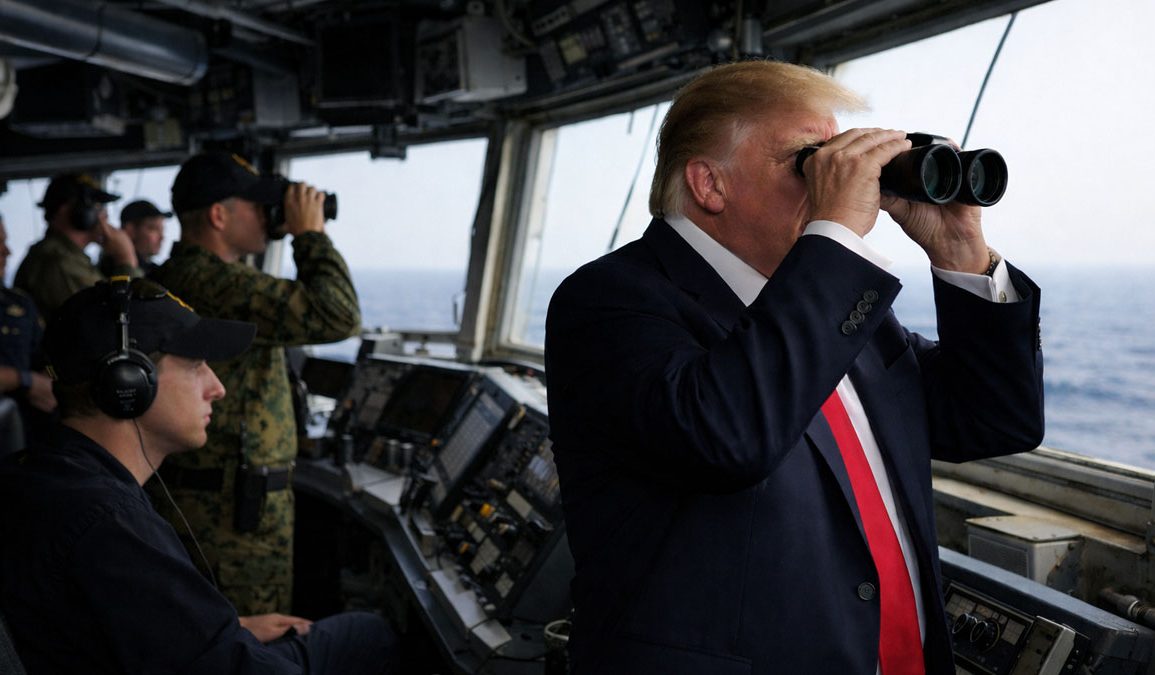
President Donald Trump is applying pressure on Iran while publicly keeping the door open to negotiations. As a large U.S. naval force moves into position near Iran, Trump has emphasized that talks are still possible and that military action is not inevitable.
“[Iran is] talking to us, and we’ll see if we can do something, otherwise we’ll see what happens,” Trump said in an interview. “We have a big fleet heading out there. They are negotiating.” His comments frame the military buildup as leverage rather than a final decision.
What Trump Has Said About the Armada
Trump has repeatedly described the U.S. military buildup as a massive show of force. He has referred to it as an “armada” and declined to offer any timeline for its withdrawal.
“We’ll see how it all works out,” he told reporters. “They have to float someplace, so they might as well float near Iran.”
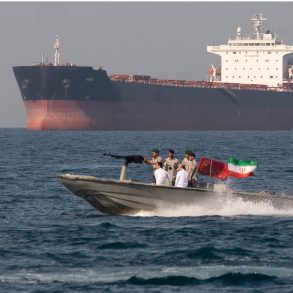
The naval presence includes a battle group led by the USS Abraham Lincoln, positioned within striking distance of Iranian targets. U.S. officials have said the deployment is partly defensive, given that American forces and allies are within range of Iranian missiles and drones, but the same positioning also gives Trump expanded military options if diplomacy fails.
Trump has also made clear that even close regional partners are not being briefed on specific plans. “We can’t tell them the plan,” he said. “If I told them the plan, it would be almost as bad as telling you the plan. It could be worse, actually.”
Trump’s Claim That Iran Is Still Talking
Despite the rising tensions, Trump has consistently said Iran is still engaging with the United States.
“I can say this, they do want to make a deal,” he said at the White House, while warning that time was “running out.” Asked whether Iran faced a deadline, Trump replied, “Only they know for sure.”
Iranian officials have offered a more guarded message. Tehran has said it is open to nuclear talks, but only under what it calls “mutual respect” and without threats. Iran’s foreign minister has said there are no formal talks planned at the moment, even as intermediaries continue to shuttle messages.
Ali Larijani, head of Iran’s Supreme National Security Council, said that “structural arrangements for negotiations are progressing,” pushing back on what he called “the hype of the contrived media war.”
The Demands Trump Has Made
Trump has publicly laid out simple but stark conditions. On Thursday, he said Iran had to do two things to avoid military action: “Number one, no nuclear. And number two, stop killing protesters.”
Behind the scenes, U.S. and European officials describe a broader set of demands that have been put before Iran:
- A permanent end to all uranium enrichment and disposal of existing stockpiles
- Limits on the range and number of ballistic missiles
- An end to support for proxy groups in the region, including Hamas, Hezbollah, and the Houthis
Iranian officials have rejected these conditions as unrealistic. One senior adviser described them as equivalent to surrender. “This translates into disarming yourself so we could strike you when we want,” he said on state television.
Iran’s foreign minister has warned that “diplomacy cannot be effective and have results through military threats,” adding that a war between Iran and the United States would destabilize the entire region.
Option 1: Trump Might Attack
According to reporting cited in your material, Trump is weighing a wide range of military options. These include limited strikes, attacks on Iranian nuclear sites, and strikes aimed at Iranian leaders or security officials tied to the violent crackdown on protests.
On social media, Trump warned that any future U.S. attack would be “far worse” than the strikes carried out last summer. He has compared the current buildup to the one that preceded U.S. action in Venezuela, signaling that he wants Iran’s leaders to take the threat seriously.
At the same time, Trump has not made a final decision. Sources say he believes his options have expanded now that a carrier strike group is in place.
Option 2: Iran Will Cave
Supporters of Trump’s approach argue that Iran ultimately prefers a deal to military confrontation. Trump himself has said Iran “does want to make a deal,” and intelligence assessments described in your material say the Iranian regime is in a historically weak position.
Recent protests, economic strain, and earlier U.S. and Israeli strikes have all taken a toll. Some analysts believe Iran understands that continued defiance could invite far greater damage.
One Israeli analyst said Iran is rational and capable of compromise, arguing that “the ability to show compromise is there.” From this view, pressure backed by credible force could push Tehran toward concessions, especially on the nuclear issue.
Others believe Iran sees Trump’s demands as existential threats. Iranian officials have warned that any attack would be treated as “all out war” and that retaliation would target U.S. forces and allies, especially Israel.
“Our brave Armed Forces are prepared with their fingers on the trigger to immediately and powerfully respond to any aggression,” Iran’s foreign minister said. Another senior official warned that Tel Aviv would be hit in the event of a U.S. strike.
U.S. officials have also cautioned that even if Iran’s supreme leader were removed, there is no guarantee the regime would collapse. “No one knows who would take over,” one senior U.S. official said, underscoring the uncertainty of regime change.
Israel Pushes
From Israel’s perspective, this moment is seen as a rare opportunity. Israeli analysts say the country believes the United States should lead any action because it has greater military capability and international legitimacy.
One former Israeli intelligence official described the current situation as a “golden moment in time” that should not be missed. Others argue that limited strikes or a new deal would leave the Iranian regime intact and the long term threat unresolved.
“When you deal with total evil, you don’t act limited,” said one Israeli lawmaker, reflecting a view held by many that only decisive action can change Iran’s behavior. Polls cited in your material show strong Israeli public support for military action, even after recent conflicts.
Trump’s Position: Prepared and Weighing the Response
Taken together, the picture that emerges is of a president deliberately keeping every option open. Trump has assembled a powerful military presence, warned Iran of severe consequences, and at the same time repeated that talks are still possible.
“Hopefully we’ll make a deal,” Trump said. “If we do make a deal, that’s good. If we don’t make a deal, we’ll see what happens.”
From Trump’s perspective, the armada is not a signal that war is inevitable. It is a signal that he is prepared for anything, and that Iran’s next move will help determine which path he chooses.