

A major investigation by federal banking regulators has uncovered early evidence that nine of America’s largest banks cut off services to politically sensitive industries. These decisions affected companies involved in oil and gas, firearms, coal, tobacco, private prisons, and even cryptocurrency. The findings support long standing claims by President Trump that some banks engaged in what he has called politicized or unlawful debanking. For many, the report confirms that financial power was used as a political weapon, shaping entire sectors of the economy through selective denial of basic banking services.
Who Conducted the Investigation
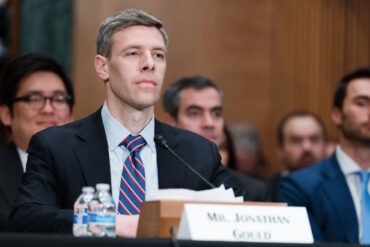
The Office of the Comptroller of the Currency, led by Comptroller Jonathan Gould, carried out the investigation. Gould ordered the nine largest banks under his authority to produce detailed accounts of their client restrictions and account closures. His office is responsible for ensuring that banks uphold their government granted charters and serve the public fairly.
Gould did not hide his frustration with what the OCC found so far. He said, “It is unfortunate that the nation’s largest banks thought these harmful debanking policies were an appropriate use of their government granted charter and market power.” He emphasized that the investigation is ongoing and added that the OCC “could ultimately refer its findings to the Attorney General.”
The report noted that while many of these policies were implemented openly, banks have continued to deny that they engaged in debanking. Gould countered those claims, stating, “While many of these policies were undertaken in plain sight and even announced publicly, certain banks have continued to insist that they did not engage in debanking.”
Which Banks Were Involved
The banks named in the report include JPMorgan Chase, Bank of America, Citibank, Wells Fargo, US Bank, Capital One, PNC Bank, TD Bank and BMO Bank. These institutions dominate the financial landscape and hold tremendous influence over which industries can access capital.
All of the banks have denied that they debank customers for political reasons. They claim that any restrictions were tied to legal requirements to monitor criminal activity or to manage financial risk. They also argue that environmental and social goals encouraged by investors led them to reduce ties with certain industries.
However, these explanations did not fully satisfy federal investigators, because many of the affected industries were lawful and financially stable. What they had in common was that they became politically unpopular under the Biden administration.
Which Industries Were Targeted
Companies in oil and gas extraction reported difficulties maintaining accounts. Firearms manufacturers faced similar problems, as did coal producers and tobacco companies. Private prisons and cryptocurrency firms were also affected. These are industries that became targets during the Biden years for environmental, social or ideological reasons.
The OCC report highlighted that many of the banks had adopted sustainability and climate based policies pushed by investors and activist groups. These commitments often required banks to distance themselves from fossil fuels or firearms. Gould noted that these decisions may not have been unlawful on their face but said they had the effect of denying services to entire categories of Americans based on political goals.
Banks claimed these moves were part of their risk management strategies. Yet these strategies aligned closely with the political priorities of the Biden administration, which supported heavy pressure on fossil fuels and other controversial sectors.
How the Biden Administration Encouraged Debanking
While banks publicly denied political motivations, the wider regulatory environment told another story. The Biden administration encouraged banks to take stronger positions on climate change, racial equity and other ideological goals. Investors also demanded aggressive sustainability policies, which in practice pushed banks to financially isolate disfavored industries.
President Trump has repeatedly argued that this environment encouraged banks to discriminate. He has said that he and his businesses were debanked after leaving office in 2021. He described the experience as punishment for political views, linking his treatment to what many conservatives experienced in recent years.
The White House, after Trump returned to office, issued an executive order accusing banks of discriminating against conservatives and cryptocurrency companies. It threatened fines against institutions that close accounts for political reasons.
Trump’s Plan to Punish Debanking
President Trump has now taken direct action. He signed an executive order establishing penalties for financial institutions that shut down accounts based on political beliefs. The order demands that regulators investigate whether banks ever used reputational or ideological reasons to deny service. It also seeks to limit the ability of banks to rely on vague claims of reputational risk to justify dropping lawful businesses.
Trump warned bank leaders publicly earlier this year during a speech at the World Economic Forum in Davos. He told them, “I hope you start opening your bank to conservatives, because many conservatives complain that the banks are not allowing them to do business within the bank.” He then directly addressed JPMorgan CEO Jamie Dimon, saying, “You and Jamie and everybody, I hope you are going to open your bank to conservatives.”
These remarks reflected growing frustration among conservatives who believed the financial system had been weaponized against them. Trump’s order aims to ensure that banks cannot quietly blacklist industries simply because they are politically unfashionable.
To critics of the Biden era, the debanking scandal represents something far more serious than a political dispute. Fascism is simply government influence over private industries used to control the population, a tool of oppression, anti-democratic in every respect. In this case, regulators, activist investors and powerful banks converged on the same political targets, creating a system where certain lawful industries could be financially choked without any democratic debate.
Instead of passing laws to shut down firearms companies or fossil fuel producers, political forces pressured banks to do it quietly. That is why many believe this is the definition of government backed control of industry. Banking is not the only area where this happened. Similar pressures affected technology companies, energy producers and even online platforms.
The OCC investigation has exposed how widespread and coordinated these actions may have been. It also raises concerns that other regulators encouraged similar behavior behind closed doors.
Access to banking is central to almost every part of modern life. When banks adopt political filters for who can hold an account, they effectively decide which industries are allowed to survive. The OCC report shows that some of the most powerful banks in America used that influence in ways that aligned with political goals rather than financial fairness.
The Bank Policy Institute, a group representing major banks, said the industry supports new rules to ensure fair access. The group stated, “It is in banks’ best interest to take deposits, lend to and support as many consumers and businesses as possible to drive economic growth.”
Gould says the OCC will now hold banks accountable and prevent unlawful debanking from continuing. The investigation is far from over, and the next steps could shape financial policy for years. For many Americans, the findings are a reminder of how easily powerful institutions can silence whole parts of the economy without public debate and how essential it is to prevent political agendas from controlling access to basic financial services.
NP Editor: In case you haven’t noticed, this really pisses me off. We have been the victim of this, not in banking but in other ways.