
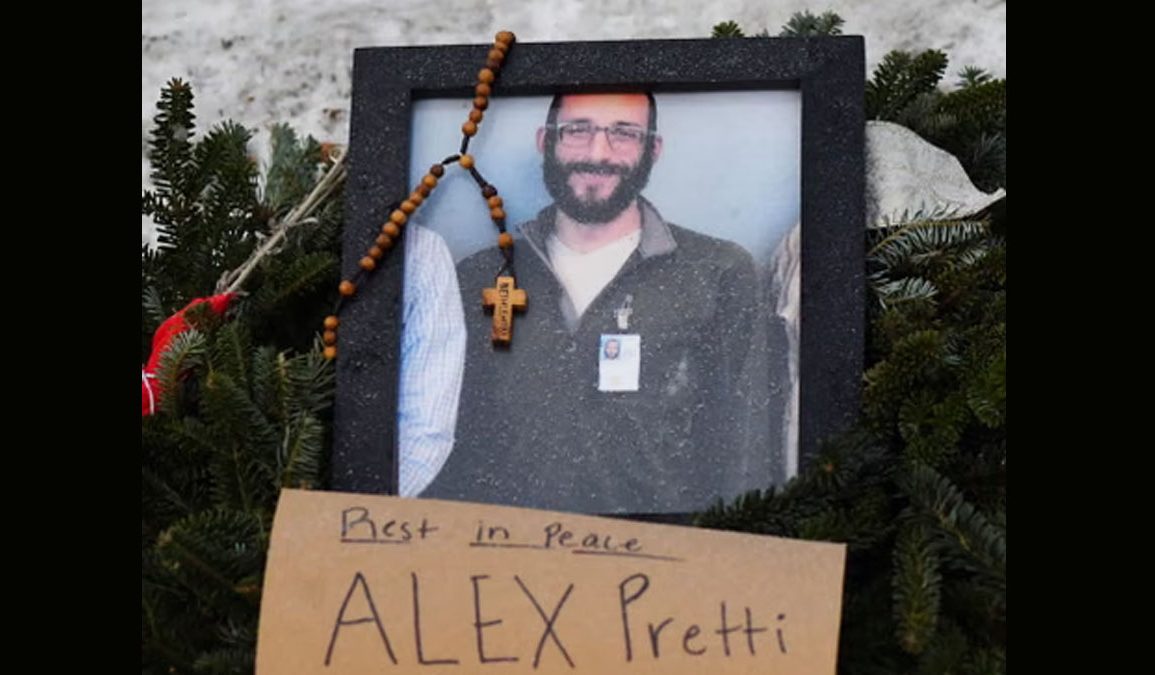
The fatal shooting of 37 year old Alex Pretti in Minneapolis did not emerge from a random street encounter. Reporting shows a layered activist infrastructure was already operating in the area, tracking federal agents in real time, mobilizing demonstrators through encrypted communications, and escalating street confrontations before any shots were fired. Within hours of Pretti’s death, that same infrastructure helped transform the incident into a nationwide protest campaign.
At the center of the controversy is a system activists describe as “rapid response,” a decentralized but disciplined network designed to spot Immigration and Customs Enforcement activity and summon crowds quickly. Critics argue that this system placed Pretti directly in harm’s way and then used his killing to fuel broader political unrest.
A confrontation that was not spontaneous
Federal agents from U.S. Immigration and Customs Enforcement and Customs and Border Protection were operating near Glam Doll Donuts on Nicollet Avenue to arrest an illegal immigrant criminal. According to reporting, activists were already present in the area before the encounter turned deadly.
Encrypted Signal messages reviewed in reporting show individuals flagging the agents’ location minutes before the shooting. Short video clips and text alerts circulated in real time, calling for “backup” and warning others that federal officers were nearby. Whistles were reportedly used on the street to alert people to the agents’ presence.
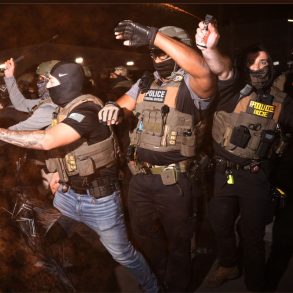
Video from the scene shows Pretti stepping into traffic and becoming involved in a confrontation with agents. Within minutes, a Customs and Border Protection officer fired the shots that killed him.
The “rapid response” infrastructure
The most clearly documented element of the network is its operational structure. Activists used encrypted Signal chats to broadcast sightings, assign roles, and summon additional people to the scene. Messages included urgent all points style alerts and requests for medics and observers.
Alongside the messaging system was a shared database commonly referred to as “MN ICE Plates.” Activists logged license plate numbers, vehicle descriptions, and locations of cars they believed belonged to federal agents. The database categorized vehicles as “Confirmed ICE,” “Suspected ICE,” or “Cleared,” and contained thousands of entries by the weekend of the shooting.
Guides circulated among participants laid out specific roles using emojis, including mobile patrols, stationary monitors, dispatchers, license plate checkers, medics, and aftercare providers. This division of labor points to an organized monitoring system rather than a spontaneous protest crowd.
From local death to national protest
Within minutes of Pretti’s death, the focus shifted from the street confrontation to mass mobilization. Signal alerts urged people to rush to the area, warning of large numbers of agents and police. Supplies including water, masks, and winter gear appeared at protest sites.
National activist organizations and media aligned with socialist causes amplified the incident rapidly. BreakThrough News published dramatic footage from the scene and framed the killing as another federal “murder” in Minneapolis. The video spread widely online within hours.
Soon after, the Party for Socialism and Liberation released protest graphics calling for a “general strike,” a long standing communist tactic aimed at coordinated mass work stoppages. The People’s Forum promoted emergency protests in New York City, while Democratic Socialists of America posted graphics calling the shooting an “execution” and demanding the abolition of ICE.
By the end of the day, protests had spread well beyond Minneapolis.
The broader coalition and where claims diverge
Mainstream reporting confirms the existence of a large public coalition behind recent “ICE Out of Minnesota” actions. Groups such as Indivisible Twin Cities and Faith in Action have been cited as organizers, alongside labor unions, educators, and faith leaders. About one hundred clergy were arrested during coordinated protests at Minneapolis–St. Paul International Airport, a tactic that helped define the movement’s public image.
Where accounts diverge is in the interpretation of the rapid response layer. Partisan investigations argue that the street level monitoring system is tied to socialist, communist, and Marxist-Leninist organizations and amplified by groups connected to the People’s Forum, a New York based nonprofit associated with billionaire Neville Roy Singham.
Other coverage stops short of proving centralized control, describing instead an ecosystem of aligned groups that react quickly to events. That distinction separates what is documented from what remains alleged.
Claims of engineered chaos
Vice President JD Vance described the unrest following Pretti’s death as “engineered chaos,” arguing that the rapid escalation was the product of activist coordination rather than spontaneous outrage. Officials from the Department of Homeland Security and Customs and Border Protection echoed that view, saying the violence on the streets was not a coincidence.
Critics of the protests argue that the rapid response system escalates encounters with federal agents, increasing the risk of violence, and then converts tragic outcomes into political leverage.
What can be established from the evidence
Based on reporting from the last two weeks, several facts are clear. Encrypted communications were used to track and broadcast the movements of federal agents. A shared database logged alleged ICE vehicles. Mobilization occurred within minutes, not hours, and national organizations amplified the narrative almost immediately.
What remains contested is whether this represents a centrally directed far left operation or a loosely coordinated network of activist groups with shared goals. That question continues to divide coverage.
The larger implication
The death of Alex Pretti has become a symbol used by activists to justify escalating protests and demands to dismantle federal immigration enforcement. But the evidence shows he did not walk into an accidental confrontation. He entered a scene shaped by an organized monitoring and mobilization system that brought activists face to face with armed federal agents.
For critics, the lesson is stark. When activists deliberately insert themselves into law enforcement operations and escalate street encounters, the risk of tragedy rises. When tragedy occurs, that same machinery can rapidly turn a death into a political weapon, deepening unrest rather than restoring order or accountability.