

Every November, ordinary Americans prepare for Thanksgiving the way humans have for centuries. They roast turkeys, pack airports, and brace for that one uncle who brings up politics at the worst moment. But there is a new threat to the holiday in recent years. It is not flight delays, not dry turkey, and not even that mysterious green gelatin thing Grandma insists is a family tradition. The real danger is the nation’s educators, activists, and DEI departments who have decided that Thanksgiving is too offensive to exist in its current form.
Apparently, the holiday now requires a complete ideological makeover. According to a growing number of extremely serious scholars, the simple act of being thankful is now a form of colonial propaganda.
What It Means to Decolonize Thanksgiving
To the rest of us, Thanksgiving means turkey, gratitude, and maybe a nap. But on campuses from California to Massachusetts, it now means reframing, reconceptualizing, recontextualizing, and any other re word that lets administrators justify their salaries.
At UC Davis, a group calling itself the California History-Social Science Project held an event titled Decolonizing Thanksgiving in the Classroom. They promised to help teachers “reframe classroom practices and rituals,” which is academic language for explaining why your kid’s handprint turkey is an act of cultural erasure. They also want teachers to “center perspectives from Turtle Island,” which sounds poetic until you realize it means your child’s placemat drawing now needs a land acknowledgment.
The central theory behind all this is simple. Thanksgiving is not about gratitude or harvest or survival. It is, according to the wokesters, a national event designed to trick Americans into forgetting colonization. Washington University in St. Louis promoted events about diverse understandings of Thanksgiving that contribute to “systemic change.” MIT is hosting its annual Thanksgiving Myth-busting session, complete with rental-car road trips to the National Indigenous Day of Mourning and a viewing of Buffy the Vampire Slayer. Nothing says rigorous academic reflection quite like vampires and popcorn.
The University of Maryland went even further by holding a talk with the friendly title Harvesting the Truth: Colonial Disruptions of Indigenous Food Systems. Albuquerque Public Schools told students that many Native people see Thanksgiving as a reminder of genocide and erasure. Naturally, the Berkeley Unified School District agreed and described the holiday as a time of mourning in their teaching guide.
This is the point where normal Americans start rubbing their eyes and wondering whether these people have ever actually attended a Thanksgiving dinner. Most families spend the day arguing about politics, burning rolls, and trying not to spill gravy on the tablecloth. If there is a secret plot to advance colonialism, it probably got lost somewhere between the pie and the football game.
Once you enter the world of decolonized Thanksgiving, almost anything that tastes good becomes suspicious. Turkey is an Indigenous food. Corn, beans, squash, pumpkins, cranberries, potatoes, wild rice, sweet potatoes, and even tomatoes are Indigenous foods. This means that according to activists, your dinner must now be preceded by a TED Talk about Indigenous agricultural contributions.
Even the simple act of telling the traditional Thanksgiving story is apparently a gateway to misinformation. The ACLU material insists that we must challenge false narratives, resist the idea that Indigenous people existed only in the past, and correct the harmful belief that the holiday involved shared goodwill. If you want your mashed potatoes with a side of guilt, you are in luck.
The National Day of Mourning
A growing number of schools have renamed Thanksgiving a Day of Mourning. The University of Massachusetts explains that this annual demonstration exists to educate the public, dispel myths, and raise awareness of ongoing Indigenous struggles. Berkeley’s school district uses the same language and wants everyone to focus on the painful legacy instead of, say, gratitude.
MIT students are encouraged to drive to Plymouth for the National Indigenous Day of Mourning rally. The invitation does not specify whether this emotional pilgrimage should happen before or after the Buffy marathon, but one assumes the two events pair well together.
Activists are convinced that Thanksgiving is fundamentally a lie and must be rebuilt from the ground up. One Indigenous writer featured in the material stated that Thanksgiving is steeped in colonial violence and that Americans should consider replacing it with Truthsgiving. Another argued that the United States cannot even provide clear legal title to its land because it was all illegally annexed, and therefore families eating turkey should consider giving land back.
Other voices insist that Americans should thank Indigenous people for nearly every item in modern life, including agriculture, democracy, transportation networks, and sunglasses. The message is clear. Your gratitude should not go to Grandma for the pumpkin pie. It should go to the Iroquois Confederacy for inventing political concepts and to various tribes for cultivating crops.
Normal Americans, who do not spend their time wringing their hands over the historical implications of gravy boats, think this whole thing is absurd.
Paul Runko of Defending Education summed it up perfectly. He said that Thanksgiving is meant to bring people together, not divide them or cast blame. It is an opportunity for unity, celebration, and gratitude. He reminded everyone that this tradition goes back to George Washington, who asked Americans to give thanks for the blessings of the nation. Presidents since then have done the same.
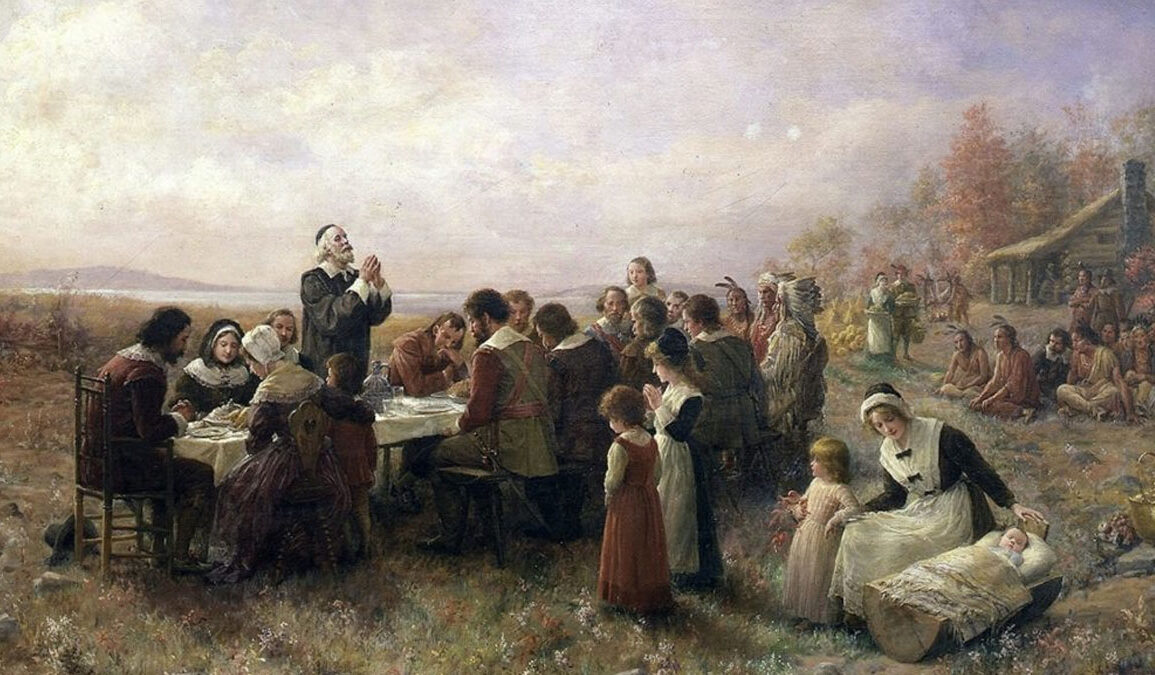
That view is shared by most people who are not paid by a university to find new things to be offended by. They understand that revisiting history is fine, but frantically deconstructing the holiday until it becomes a self-loathing exercise defeats the entire point. Thanksgiving is a moment of gratitude because the early settlers survived a brutal winter and lived to see another year. That is it. There is no conspiracy attached.
Only in modern academia could a holiday built on gratitude and survival be treated like a dangerous thought crime. The idea that Thanksgiving requires a political renovation, a land acknowledgment, a rally, and a vampire-themed study hall is the sort of intellectual theater only DEI bureaucrats could create.
Most Americans will ignore all of this, roast their turkeys, and enjoy their day. They will eat, laugh, and watch football without worrying about whether their sweet potatoes symbolize ongoing colonialism. They will gather with family and be thankful in the traditional, perfectly acceptable way.
The wokesters, however, will continue trying to turn Thanksgiving into an emotional endurance test filled with lectures, guilt, and mandatory land acknowledgments.
The rest of the country will pass the gravy and be grateful anyway.
NP Editor: Academics always want to feign indignance from the point of view of the loser, and have recently picked up the habit of trying to make people feel ashamed (which is a cruel act when it involves children). Should we feel sorry for the British on July 4th? How about the Nazi’s on VE day, should we mourn? Or the Japanese on VJ day?
In this case, it wasn’t the pilgrims who defeated the Indians, and the thankfulness in their case was genuine.