


A New Direction for U.S. Foreign Policy
Director of National Intelligence Tulsi Gabbard announced that the United States has officially abandoned its decades-long strategy of “regime change and nation building.” Speaking at the Manama Dialogue, a major Middle East security summit in Bahrain, Gabbard declared that under President Donald Trump, the U.S. has turned a decisive page in its approach to foreign affairs.
“For decades, our foreign policy has been trapped in a counterproductive and endless cycle of regime change or nation building,” Gabbard told diplomats and defense leaders. “It was a one-size-fits-all approach, of toppling regimes, trying to impose our system of governance on others, intervene in conflicts that were barely understood and walk away with more enemies than allies.”
Gabbard, a former congresswoman from Hawaii and a veteran of the U.S. Army National Guard, has long been critical of American interventionism. Her remarks reinforced President Trump’s stated goal of shifting from military entanglements to policies that emphasize prosperity, sovereignty, and stability.
Who Tulsi Gabbard Is and Why Her Words Matter
Gabbard’s role as national intelligence director gives her remarks particular weight. Known for her independent streak and outspoken opposition to foreign wars, she rose to national prominence for challenging the bipartisan foreign policy consensus that led to long, costly wars in Iraq and Afghanistan.
As one of the highest-ranking officials in Trump’s national security team, her statement represents more than just a personal opinion—it is now the formal stance of U.S. intelligence leadership. Her military service in the Middle East and firsthand experience with the human costs of intervention give her credibility when she argues that the U.S. must move beyond “nation building” and focus on practical outcomes.
What “Regime Change Is Over” Means
Gabbard’s declaration signals a major shift away from the policies of Presidents Obama and Biden, both of whom promoted democracy and human rights abroad—often through interventions or covert operations. Obama’s administration, for example, supported uprisings during the Arab Spring and helped topple Libya’s Muammar Gaddafi. The Biden administration continued a similar emphasis, pressing for regime accountability in nations like Russia and Iran while maintaining a confrontational posture in Latin America.
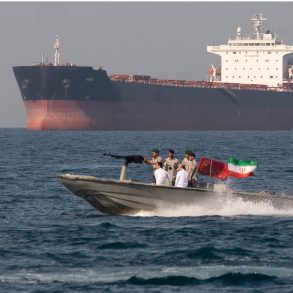
Trump’s second term has taken a different approach. The U.S. now seeks stability through negotiation, regional trade, and selective use of force. That philosophy underpinned the recent ceasefire between Israel and Hamas and the U.S.-backed end of Israel’s short war with Iran following airstrikes on nuclear sites.
“The results: Trillions spent, countless lives lost and in many cases, the creation of greater security threats,” Gabbard said, summarizing what she sees as the failures of the old strategy.
The Legacy of Obama and Biden’s Interventions
Both the Obama and Biden years were marked by efforts to spread democracy through influence or intervention—efforts that often backfired. The wars in Iraq and Afghanistan, the intervention in Libya, and attempts to arm rebels in Syria became synonymous with unintended chaos. Gabbard’s remarks echo the widespread public fatigue that followed these costly campaigns.
Trump’s withdrawal from Afghanistan during his first term was intended to close that chapter, though the chaotic exit under Biden in 2021 became one of the defining failures of his presidency. Gabbard’s comments indirectly highlight this contrast: Trump sought to end endless wars, while his successor presided over their disorderly conclusion.
Nations Still in the Crosshairs
While Gabbard insists the era of regime change is over, several global flashpoints remain. Iran’s nuclear activity continues to concern international inspectors, and the Gaza ceasefire remains fragile. In South America, Trump’s deployment of U.S. warships near Venezuela and covert operations against drug-running networks have stirred speculation about possible confrontation.
In Syria, Trump has openly supported interim President Ahmad al-Sharaa, a former al-Qaida fighter turned U.S. ally—a move that shows the administration’s pragmatism over ideology. Critics, however, warn that Washington’s hands-off approach could leave space for regional powers like Russia, Iran, or China to expand their influence.
Gabbard’s remarks drew praise from Trump’s supporters, who see the end of regime change as a long-overdue correction to decades of failed global experiments. “The president is very committed down this road,” Gabbard told the audience, emphasizing that peace and economic partnerships—not ideological crusades—will define America’s future abroad.
Former U.S. Ambassador James Jeffrey, writing for the Hoover Institution, called the new approach “a dramatic shift” that rejects interference in other nations’ internal affairs. He said Trump’s policy now rests on three principles: relying on regional actors for stability, rejecting U.S. nation-building, and pursuing shared business interests that benefit all parties.
Still, critics argue that this retrenchment could embolden authoritarian regimes or weaken America’s global moral leadership. Human rights activists point to the risk that stability-first policies might overlook abuses in places like Bahrain or Egypt.
A Defining Moment in U.S. Foreign Policy
Tulsi Gabbard’s statement in Bahrain may come to mark a turning point in American strategy. For the first time in a generation, the United States is formally declaring an end to regime change as a tool of foreign policy. The shift reflects a growing belief that diplomacy, trade, and targeted strength can achieve more than decades of wars ever did.
As Gabbard put it, “The road ahead will not be simple or easy. But the president is very committed down this road.” Whether that path leads to lasting peace or new forms of rivalry will test the wisdom of this historic course correction.