
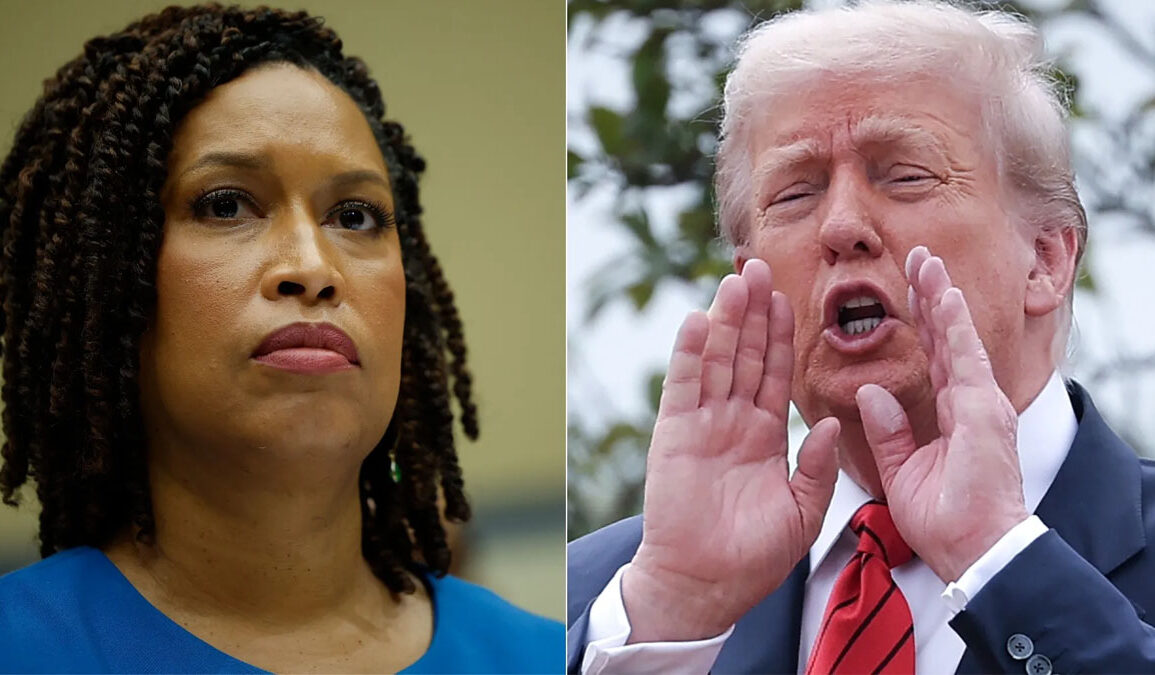
President Donald Trump has executed one of the most aggressive public safety moves in modern Washington history, federalizing the Metropolitan Police Department and sending 800 National Guard troops into the streets of the nation’s capital. Declaring what he called “Liberation Day in DC,” Trump said the action was necessary to rescue the city from “crime, bloodshed, bedlam, and squalor and worse.”
A First-of-Its-Kind Federal Takeover
Speaking from the White House briefing room, Trump described the move as “a historic action to rescue our nation’s capital,” claiming the city had been “overtaken by violent gangs and bloodthirsty criminals, roving mobs of wild youth, drugged-out maniacs and homeless people.” He invoked Section 740 of the District of Columbia Home Rule Act, which allows the president to take control of the city’s police department for up to 30 days in response to “special conditions” deemed an emergency.
The takeover places the Metropolitan Police under the authority of Attorney General Pam Bondi. Defense Secretary Pete Hegseth said the deployment of 800 National Guard troops would be operational “in the coming week” and could expand. “They will be strong, they will be tough, and they will stand with their law enforcement partners,” Hegseth told reporters.
Trump insisted that police under federal control would be able to “do whatever the hell they want” when confronted by offenders. “That’s the only language they understand. They like to spit in the face of the police. You spit, and we hit, and they get hit real hard.
The president’s decision came after the alleged beating of Edward Coristine, a 19-year-old software engineer and prominent member of Trump’s Department of Government Efficiency, known by the nickname “Big Balls.” The assault took place earlier this month near Logan Circle and was followed by a string of high-profile incidents, including the fatal shooting of a congressional intern.
“What a shame,” Trump told reporters in the days before the takeover. “The rate of crime, the rate of muggings, killings and everything else, we’re not going to let it [continue], and that includes bringing in the National Guard.” On Truth Social, Trump posted that “the days of ruthlessly killing, or hurting, innocent people are OVER!”
In the president’s view, Washington has become “one of the most dangerous cities anywhere in the world,” even claiming its murder rate is higher than Bogotá or Mexico City. “If our capital is dirty, our whole country is dirty,” he said.
A Test Case for Other Cities
Trump made it clear that Washington could be just the first city to see this kind of intervention. “Hopefully LA is watching,” he said, adding that Chicago was also on his radar. White House officials indicated that if the operation produced results in DC, similar takeovers could be considered elsewhere.
His administration has already reassigned 120 FBI agents in Washington to nighttime patrols, joining federal officers from the Capitol Police, ATF, and Federal Protective Service who were deployed over the weekend. In total, about 450 federal officers were already in the city before the Guard activation.
Pirro’s Call for Tougher Juvenile Laws
Jeanine Pirro, the former Fox News host whom Trump recently appointed as U.S. Attorney for Washington, backed the move in forceful terms. “I see too much violent crime being committed by young punks who think that they can get together in gangs and crews and beat the hell out of you or anyone else,” she said. Pirro criticized what she called excessive leniency toward juveniles. “I can’t arrest them. I can’t prosecute them. They go to family court, and they get to do yoga and arts and crafts. Enough, it changes today.”
Pirro is calling for legal changes so more juvenile cases can be prosecuted in adult court.
DC Leaders Push Back
Mayor Muriel Bowser acknowledged the president’s legal authority under the Home Rule Act but rejected his portrayal of the city. “Any comparison to a war-torn country is hyperbolic and false,” she said. Bowser noted that violent crime is down 26 percent this year compared to 2024, assaults with dangerous weapons are down 20 percent, and homicides have dropped by 12 percent. “We continue to look for ways to make our city safe,” she said, adding that even under federal control, police would still follow “constitutional policing methods” and city policies like the use of body cameras.
District Attorney General Brian Schwalb condemned the move as “unprecedented, unnecessary and unlawful,” promising to “do what’s necessary to protect the rights and safety of District residents.” Shadow Senator Ankit Jain accused Trump of ignoring real solutions, such as filling judicial vacancies. “Why has the president not made it a priority to nominate judges?” he asked, warning that he was “incredibly concerned about what he is going to use the police force to do to the people of DC.”
Delegate Eleanor Holmes Norton, DC’s non-voting representative in Congress, called the takeover “a historic assault on DC home rule” and argued it proved the urgent need for statehood.
Critics See Political and Personal Motives
Representative Jamie Raskin said Trump was “searching for distractions and provocations” to divert attention from his “outrageous refusal to release the Epstein files” and using the city to “exact revenge” on voters who have overwhelmingly opposed him. Al Sharpton labeled the intervention “a disgusting, dangerous, and derogatory action” against a majority-Black city. Civil rights leaders suggested the move was part of an authoritarian playbook designed to consolidate control and intimidate dissent.
Protesters gathered near the White House carrying signs such as “Free D.C. No Police State.” Organizer Alex Dodds of the advocacy group Free D.C. said, “It’s an easy way for them to silence dissent and accelerate their agenda, if they physically control the capital.”
Support from Police Union, But Calls for Limits
The DC police union, which represents more than 3,000 officers, supported the takeover, citing “violent crime surges, historic officer shortages, and eroded morale.” However, the union stressed that the measure should remain temporary, with the ultimate goal of building a “fully staffed and supported” local department.
What Happens Next
Under the law, the federal control can last only 30 days unless extended by Congress. The operation will expire on September 10 unless lawmakers take action. Congress could, in theory, end the emergency sooner, but with Republicans controlling both chambers, that is unlikely.
For now, the city’s police chief remains in place but answers to federal authorities. Residents will see a significant increase in armed patrols, both from the Guard and from reassigned federal agents. Whether this produces the safer streets Trump has promised—or simply deepens political tensions—will be evident long before the month is over.