

High-level nuclear talks between the United States and Iran resumed in Rome on Saturday, concluding their second round with cautious optimism and a growing awareness of the deep divisions that remain. The discussions are part of an ongoing effort to prevent Iran from developing nuclear weapons and to find a diplomatic solution that could avoid military conflict in the Middle East. While both countries acknowledged that progress had been made, key issues remain unresolved, and the stakes are rising.
The United States is demanding that Iran stop enriching uranium to high levels, a process that American officials believe is a clear step toward building a nuclear weapon. President Donald Trump, who withdrew from the 2015 Iran nuclear deal during his first term and reimposed heavy sanctions, has returned to office and revived his policy of “maximum pressure” on Tehran. Still, he has signaled that diplomacy is his first choice.
“I’m for stopping Iran, very simply, from having a nuclear weapon. They can’t have a nuclear weapon,” Trump said during a press conference. “I want Iran to be great and prosperous and terrific.” He added, “I’m not in a rush to do it because I think that Iran has a chance to have a great country and to live happily without death.”
However, Trump also gave a clear warning. “If there’s a second option, I think it would be very bad for Iran,” he said. This statement suggests that while military action is not imminent, it remains on the table if talks break down.
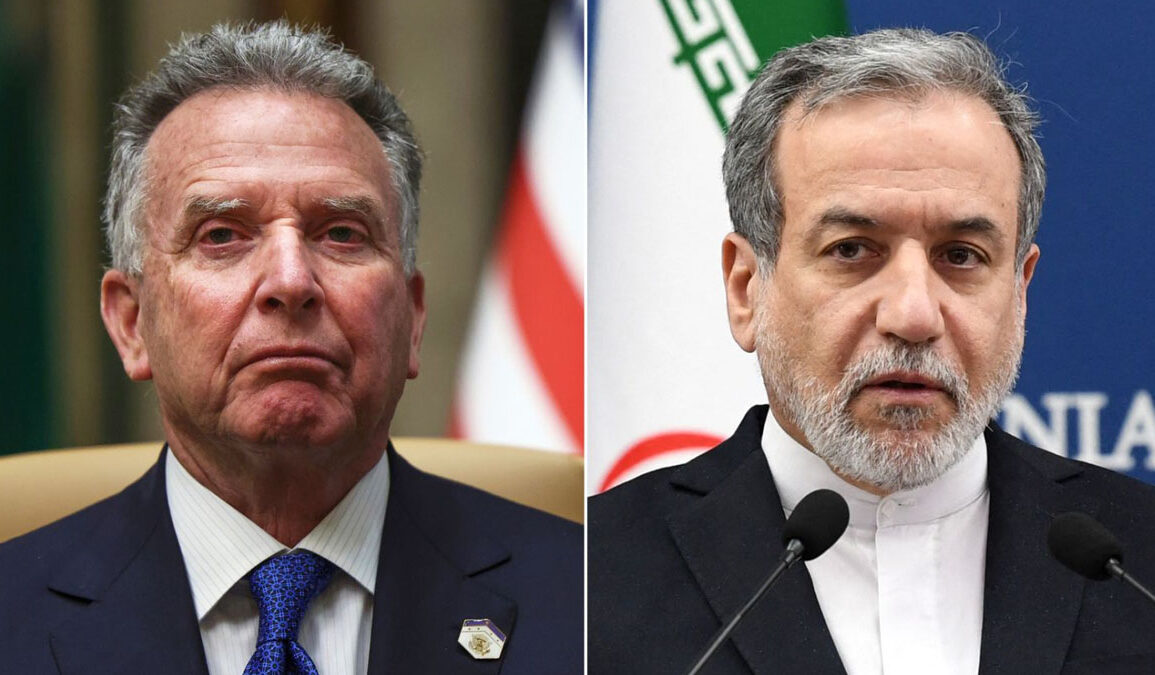
Iran, for its part, said that the talks in Rome were constructive. Foreign Minister Abbas Araghchi stated after the meeting, “I can say that there is movement forward. We’ve reached better understanding and agreement on some principles and goals in these Rome negotiations.” He also confirmed that the meeting lasted about four hours.
Despite these signs of progress, Iran continues to resist what it sees as excessive demands. Araghchi posted on X (formerly Twitter) that the 2015 nuclear agreement, known as the Joint Comprehensive Plan of Action (JCPOA), “is no longer good enough for us.” He explained that to Iran, “what is left from that deal are ‘lessons learned,’” and warned that “optimism may be warranted but only with a great deal of caution.”
Ali Shamkhani, a senior advisor to Iran’s Supreme Leader Ayatollah Ali Khamenei, posted a list of nine principles that Iran’s negotiating team is following. These include seriousness, balance, speed, rejection of threats, removal of sanctions, and a refusal to surrender to outside pressure. He wrote, “Iran’s team in Rome with full authority for a deal based on 9 principles… not to yield.”
Shamkhani also stressed that Iran would never agree to dismantle its uranium enrichment centrifuges, halt enrichment entirely, or reduce its enriched uranium stockpile below the levels set in the original deal. He added that Iran would not negotiate about its missile program or other defense capabilities.
The Structure of the Talks
The discussions in Rome were not conducted face-to-face. The U.S. delegation, led by Special Envoy Steve Witkoff, and the Iranian delegation, led by Araghchi, sat in separate rooms. Messages were relayed between them by Oman’s Foreign Minister Badr Al-Busaidi, who has taken the lead role in mediating. The decision to use Oman again, despite the location shift to Rome, reflects the trust both sides place in Oman as a neutral party.
A third round of talks is scheduled to take place next Saturday in Muscat, Oman, following technical-level discussions that will happen during the week. An Iranian spokesperson confirmed that “the two sides agreed to continue the indirect talks in a few days at [a] technical level to be followed by another round at their own level.”
A senior U.S. official told CNN that “we made very good progress in our direct and indirect discussions. We agreed to meet again next week and are grateful to our Omani partners for facilitating these talks and to our Italian partners for hosting us today.”
Global Reactions and Regional Tensions
The talks are happening at a time of increased tension in the Middle East. Iran’s network of regional militias has been weakened by Israeli strikes, and concerns remain about Iran’s ability to ramp up uranium enrichment quickly if talks collapse. Israel, which strongly opposes the negotiations, has continued its covert and overt efforts to undermine Iran’s nuclear progress.
Israel’s Prime Minister Benjamin Netanyahu has argued that his country’s operations are the reason Iran does not already possess a nuclear weapon. Before the Rome meeting, Witkoff met quietly in Paris with Israeli Strategic Affairs Minister Ron Dermer and Mossad Director David Barnea. According to U.S. intelligence, Israel may attempt to strike Iran’s nuclear facilities if it believes diplomacy is failing.
Meanwhile, Italy’s Foreign Minister Antonio Tajani tried to strike a hopeful note. “Rome becomes the capital of peace and dialog,” he posted online. “I encouraged Araghchi to follow the path of negotiation against nuclear arms. The hope of the Italian government is that all together may find a positive solution for the Middle East.”
Saudi Arabia has also shown new interest in regional diplomacy. Prince Khalid bin Salman, the Saudi Defense Minister, visited Tehran this week in one of the highest-level trips by a Saudi official in decades. A source familiar with the visit said it was intended to improve diplomatic ties and reduce the risk of conflict.
Russia, another original signatory to the 2015 deal, is also offering support. Araghchi visited Moscow before the Rome talks and met with President Vladimir Putin and Foreign Minister Sergey Lavrov. Russia has said it is willing “to assist, mediate, and play any role” that can help secure an agreement.
Despite the efforts, many experts remain skeptical. David Albright, head of the Institute for Science and International Security, warned that “Iran needs to start cooperating more fully with the IAEA in order to develop confidence that any deal is water-tight.” He also noted that Trump has given negotiators a two-month window to finalize a deal.
Tehran has surpassed the uranium enrichment limits set by the JCPOA, claiming it needs the fuel for peaceful energy. However, the scale and pace of enrichment have alarmed Western intelligence agencies. The head of the UN’s nuclear watchdog, Rafael Grossi, called the negotiations “at a very crucial stage,” warning, “we know we don’t have much time.”
NP Editor: Don’t trust them.