

Former President Donald Trump announced his decision to cut off funding to South Africa, citing concerns that “certain classes of people” were being treated “very badly.” His statement, made via Truth Social, referenced alleged land confiscation and violence against white farmers, reviving a long-standing and controversial debate over farm murders and land redistribution in South Africa. The move has ignited international discussion about whether white farmers are victims of systemic persecution or whether farm violence is part of the country’s broader crime problem.
Allegations of White Farmer Persecution
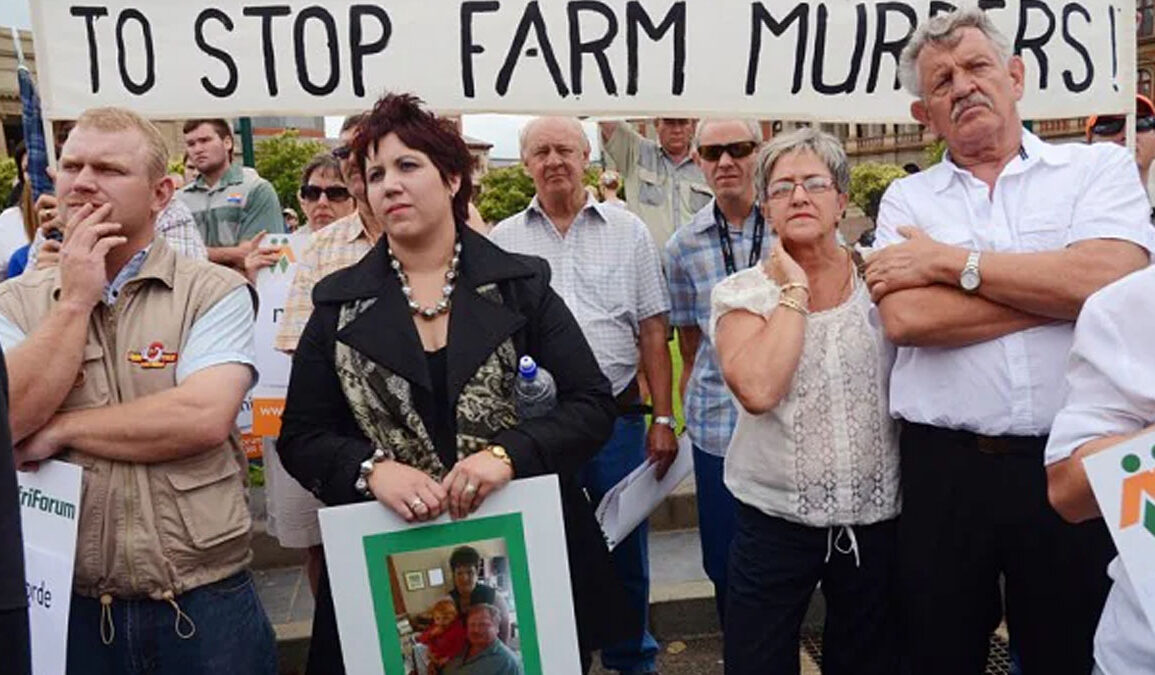
For years, white farmers in South Africa have claimed they are being targeted in violent attacks, with some activists arguing that this violence amounts to a campaign of “white genocide.” Groups such as AfriForum, a prominent Afrikaner rights organization, have pushed this narrative, arguing that the South African government has failed to protect white farmers from violent crime. They highlight brutal murders, farm invasions, and economic pressures as evidence that whites, particularly those in the agricultural sector, are being systematically victimized.
Elon Musk, the South African-born billionaire, has been vocal about these concerns. In 2023, he reacted strongly to a video showing a radical political group singing “Kill the Boer,” an old anti-apartheid chant that some interpret as an incitement to violence against white farmers. Musk stated on X (formerly Twitter) that “they are openly pushing for genocide of white people in South Africa.”
Farm Attacks: Crime or Targeted Persecution?
Farm attacks in South Africa are highly politicized. While white farmers make up a small fraction of the country’s population, their historical dominance of land ownership has made them a focal point in discussions about crime, land reform, and race relations.
According to South African police data, farm murders make up less than 1% of all homicides in the country. In 2019, of the 21,325 recorded murders, only 49 were white farmers. This has led critics to argue that white farmers are not disproportionately targeted but are instead victims of South Africa’s broader violent crime problem. However, proponents of the white genocide theory argue that farm attacks are often uniquely brutal, involving torture, mutilation, and psychological terror beyond what is typical in other violent crimes.
One high-profile case was the murder of Brendin Horner, a young white farm manager who was found strangled and tied to a pole in Free State province. Authorities arrested two Black men, linking them to a cattle theft syndicate rather than racial motives. However, Horner’s killing ignited racial tensions, with white farmers protesting outside the courthouse, clashing with Black activists from the radical Economic Freedom Fighters (EFF) party.
Land Reform and the Expropriation Debate
Underlying the farm murder debate is the larger issue of land redistribution. South Africa’s history of apartheid left vast amounts of land in white hands. Even after three decades of democracy, white South Africans, who make up less than 9% of the population, own about 70% of commercial farmland. Many Black South Africans remain landless or live in poverty-stricken rural areas, fueling calls for more aggressive land reform.
In 2018, South Africa’s ruling party, the African National Congress (ANC), proposed expropriation of land without compensation as a means to correct historical injustices. This policy sparked fears among white farmers and international investors that it could lead to Zimbabwe-style land seizures, economic collapse, and increased racial tensions. Trump previously weighed in on the issue, directing his Secretary of State to investigate “large-scale killing” of white farmers and land expropriation. However, South Africa dismissed these claims, arguing that land reform is a legal and necessary step to address apartheid-era disparities.
Political Reactions and Global Implications
Trump’s decision to cut aid to South Africa has drawn mixed reactions. His supporters view it as a principled stance against what they see as racial persecution, while critics argue it is based on misinformation and inflames racial tensions. The South African government has repeatedly stated that farm murders are criminal acts rather than ethnic cleansing. President Cyril Ramaphosa has condemned all violent crime and maintains that land redistribution will be handled legally and equitably.
Meanwhile, international figures have weighed in. Australian politician Peter Dutton previously suggested granting visas to white South African farmers, calling them “persecuted people.” This idea sparked outrage in South Africa, with many seeing it as a neo-colonial attempt to interfere in domestic policies.
The Bigger Picture
The controversy over farm murders and land reform is part of South Africa’s broader struggle to reconcile its past with its future. Crime is rampant in the country, affecting all racial groups. The fear and anger among white farmers are understandable given the brutality of some attacks, but statistical evidence does not support claims of genocide. However, unresolved land inequality continues to fuel resentment and instability.
Trump’s decision to cut funding may pressure South Africa’s government to be more transparent about rural crime, but it also risks inflaming racial tensions and undermining diplomatic relations. Whether this move will have a real impact or merely serve as political theater remains to be seen.