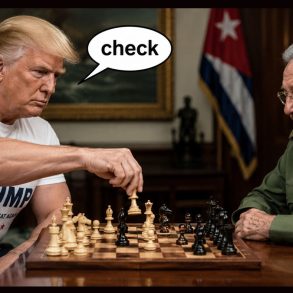

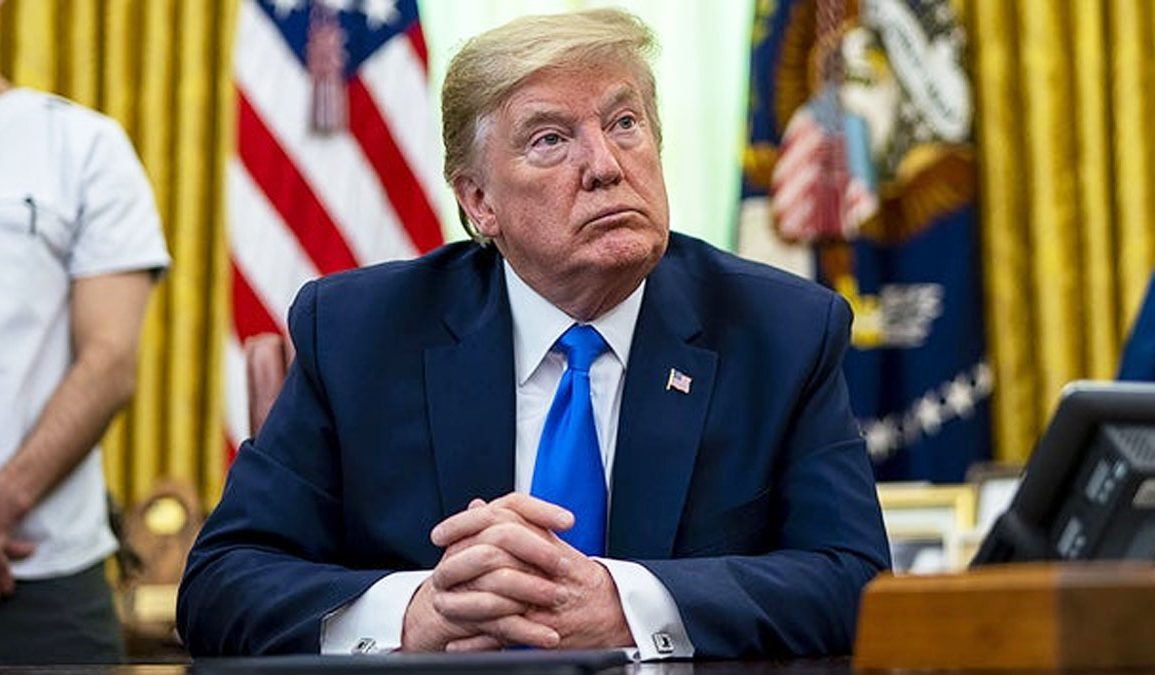
President Donald Trump has declared that the war against Iran will end only if Tehran agrees to what he called an “UNCONDITIONAL SURRENDER.” The statement marks the clearest and most forceful position yet from the White House as the conflict enters its second week.
In a social media post Friday, Trump made it clear that negotiations are off the table unless Iran fully capitulates. He wrote that there would be no deal to end the war without surrender, emphasizing the phrase in capital letters.
Trump also offered a vision of what could follow if Iran complies. After surrender and “the selection of a GREAT & ACCEPTABLE Leader(s),” he said the United States and its allies would help rebuild the country.
“We, and many of our wonderful and very brave allies and partners, will work tirelessly to bring Iran back from the brink of destruction, making it economically bigger, better, and stronger than ever before,” Trump wrote.
He added a slogan that echoed his familiar political style: “IRAN WILL HAVE A GREAT FUTURE. MAKE IRAN GREAT AGAIN (MIGA!).”
A War That Began With a Decapitation Strike
The demand comes amid a dramatic shift inside Iran’s leadership. The war began with a devastating opening strike by the United States and Israel that killed Iran’s supreme leader, Ayatollah Ali Khamenei.
Khamenei’s death left Iran scrambling to determine who will lead the country next. The Assembly of Experts, the clerical body responsible for choosing a new supreme leader, is reportedly trying to convene even as buildings linked to the organization have been targeted in the bombing campaign.
Trump has even hinted that the United States may influence the leadership outcome. Speaking about one possible successor, Mojtaba Khamenei, the late leader’s son, Trump dismissed him as “a lightweight.”
Meanwhile, White House Press Secretary Karoline Leavitt acknowledged that the U.S. government is closely watching possible successors but declined to elaborate, saying intelligence agencies are evaluating “a number of people.”
War Updates
From the U.S. perspective, the military campaign appears to be achieving major results. According to U.S. Central Command, American and Israeli forces have struck hundreds of targets across Iran.
In just 72 hours, roughly 200 targets were hit, including missile launchers and naval assets. Over the first week of the campaign, Israeli forces say they carried out around 2,500 strikes and destroyed about 80 percent of Iran’s air defense systems.
Trump himself described the damage in blunt terms. Iran, he said, is being “demolished” and the operation is progressing “ahead of schedule and at levels people have never seen before.”
He added that Iran’s air power has been wiped out.
“The air force is gone,” Trump said, asserting that Iran now has “no air force, no air defence.”
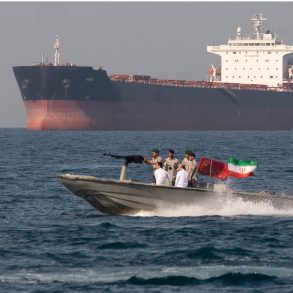
American forces have also struck Iranian naval assets. The U.S. military reported destroying an Iranian drone carrier, the IRIS Shahid Bagheri, setting the vessel ablaze. Earlier in the week, an American submarine sank an Iranian frigate off the coast of Sri Lanka.
Adm. Brad Cooper of U.S. Central Command said the trend on the battlefield is clear.
“U.S. combat power is building as Iranian combat power declines,” Cooper said.
Iran’s Retaliation Appears to Be Weakening
Iran has responded with missile and drone strikes targeting Israel and several Gulf countries that host American forces, including Kuwait, Qatar, Saudi Arabia and Bahrain.
But the scale of those attacks appears to be shrinking rapidly. According to U.S. officials, Iran’s ballistic missile launches have fallen by about 90 percent since the first day of the war. Drone attacks have dropped by roughly 83 percent.
Even so, the conflict has spread across the region. Iranian missiles and drones have targeted military installations and infrastructure in several Gulf nations. Saudi Arabia reported intercepting three ballistic missiles heading toward Prince Sultan Air Base. Qatar intercepted drones aimed at Al Udeid Air Base, which hosts the forward headquarters of U.S. Central Command.
In Israel, air defenses have been intercepting incoming Iranian missiles over Tel Aviv.
The war has already taken a heavy human toll. More than 1,230 people have been killed in Iran since the opening strikes. At least a dozen people have died in Israel and more than 120 in Lebanon. Six U.S. service members were killed in a drone strike in Kuwait.
Iran Refuses to Back Down
Despite the damage, Iran’s leadership has shown little public willingness to surrender or negotiate.
Iran’s foreign minister, Abbas Araghchi, said there is “no reason why we should negotiate with the US,” arguing that Washington cannot be trusted.
Iranian officials have also issued threats about a possible U.S. ground invasion. Ali Larijani, secretary of Iran’s Supreme National Security Council, warned that Iranian forces are ready and threatened that they could “kill and capture thousands of US troops.”
The rhetoric reflects a familiar pattern from Iran’s leadership, which for decades has projected defiance even while facing overwhelming military pressure.
But the reality inside the country appears very different. The regime’s top leader is dead. Military infrastructure has been heavily damaged. Missile launches have sharply declined. And key command facilities and bunkers have been repeatedly struck.
Calls for Iranians to Take Back Their Country
Trump has also attempted to speak directly to the Iranian people during the conflict.
On Thursday, he urged citizens to “help take back your country,” suggesting the United States would grant them “immunity,” though he did not elaborate on what that would mean.
His comments suggest that the administration sees the conflict not only as a military campaign but also as an opportunity for political transformation inside Iran.
At the same time, some officials in Washington say the primary goal remains eliminating Iran’s nuclear weapons program and its ballistic missile capabilities.
Trump, however, continues to frame the outcome in broader terms, including leadership change and a new relationship between Iran and the West.
A Conflict With Global Economic Stakes
The war is already sending shock waves through global markets. Oil prices have surged as fighting spreads across the Middle East.
Brent crude briefly broke $90 per barrel after Trump’s latest statement demanding surrender. Some energy officials warn prices could rise much further if the conflict disrupts shipping through the Strait of Hormuz.
Qatar’s energy minister Saad al Kaabi warned that the crisis could have enormous consequences for the global economy.
Rising oil prices, he said, “could bring down the economies of the world.”
He added that crude oil could reach $150 per barrel if tanker traffic through the strait is blocked.
A Moment of Decision for Iran
The war has now reached a critical moment. The Iranian regime has long portrayed itself as untouchable, projecting strength through missile tests, proxy forces and slogans about destroying its enemies.
But the first week of the conflict has shattered much of that image. The country’s supreme leader has been killed. Military defenses have been crippled. And U.S. and Israeli forces appear to be operating over Iran with near total air superiority.
Trump’s demand for unconditional surrender now puts the decision squarely in the hands of whoever emerges to lead Iran next.
If they continue the path of confrontation, the war could expand further. If they accept surrender, Trump has promised something very different.
A rebuilt Iran.
“IRAN WILL HAVE A GREAT FUTURE,” Trump wrote. “MAKE IRAN GREAT AGAIN.”
NP Editor: Considering the physical damage that has been done and the intensity of the strikes, the casualty count for Iranian military has been remarkably low. In fact, the government of Iran has killed orders of magnitude more protesters.