


The U.S. and Israeli campaign known as Operation Epic Fury delivered a historic shock to Iran’s leadership, killing Supreme Leader Ayatollah Ali Khamenei and numerous senior military commanders. Former CIA Director David Petraeus described the operation as “an extraordinary military achievement,” noting it was enabled by “precise intelligence” and what he called the regime’s “stunning arrogance.”
But even after those major losses, Petraeus warned the world not to assume the threat has ended.
“Iran still clearly has quite a capability,” he said, emphasizing that Tehran retains both long range and short range missile forces capable of striking targets across the region.
The early evidence suggests he is right. Iran has already begun striking back across the Middle East, and analysts warn the regime could escalate further, even if doing so damages its own economy and infrastructure.
Petraeus Warns Iran May Escalate Despite Heavy Losses
Petraeus cautioned that retaliation against U.S. interests in neighboring countries would be “foolish,” but he also made clear that Iran may not act rationally under pressure.
He noted that many regional nations initially tried to stay out of the conflict but are now being pulled in as Iranian missiles and drones target their territory. He also warned that power struggles inside Iran could produce hardline leadership willing to escalate.
History, he suggested, often favors ruthless actors during leadership vacuums rather than reformers. That reality raises the risk that Iran could adopt a scorched earth approach rather than accept defeat.
Missiles and Drones Strike Israel and Arab Nations
Iran’s retaliation began within hours of the initial strikes.
The first wave targeted Israel, where sirens sounded nationwide as approximately 35 missiles were launched. Some penetrated defenses. An Iranian ballistic missile strike later killed eight people and injured about 20 in central Israel’s Beit Shemesh. Earlier, one woman died from falling shrapnel near Tel Aviv.
Iran also targeted U.S. bases and allied nations across the region using short range missiles that Petraeus specifically warned about.
Missile and drone attacks hit Bahrain, Qatar, the United Arab Emirates, Kuwait, Jordan, and Saudi Arabia.
Bahrain confirmed that the headquarters of the U.S. Fifth Fleet was struck by a missile attack after the country was targeted with 45 missiles and nine drones.
Qatar’s Al Udeid Air Base, the largest U.S. base in the region, was attacked with 44 missiles and eight drones.
Kuwait reported intercepting 97 ballistic missiles and 283 drones.
In the United Arab Emirates alone, Iran fired 165 ballistic missiles, two cruise missiles, and 541 drones. Most were intercepted, but some struck civilian targets, killing three people and injuring dozens.
Iran also hit airports, ports, luxury hotels, and residential areas across the Gulf, including Dubai International Airport, Kuwait International Airport, and multiple tourist districts.
One analyst summarized the regional reaction bluntly: “Many people in the Gulf woke up Saturday pissed off at the United States and Israel, and went to sleep pissed off at Iran.”
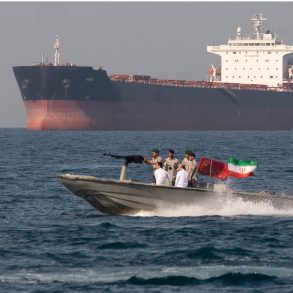
Iran Targets Shipping and the Strait of Hormuz
At sea, Iran has opened another front by threatening global energy flows.
Multiple commercial vessels were damaged between February 28 and March 1. The tanker Skylight was struck near Oman, the crude tanker MKD Vyom suffered an explosion that killed a crew member, and the product tanker Hercules Star was hit near the United Arab Emirates.
Additional ships were reportedly damaged or struck by projectiles across the region.
Maritime authorities warn the situation is extremely dangerous. Maritime security leader Jakob Larsen said, “Ships in the Persian Gulf are under threat from Iranian attacks,” with many vessels attempting to flee the area.
Iran has also launched electronic warfare operations that disrupted GPS and tracking systems for more than 1,000 ships, creating navigation chaos.
Traffic has slowed dramatically. More than 200 vessels have anchored near the Strait of Hormuz rather than risk transit, and major shipping companies have suspended routes or rerouted ships around Africa.
The danger is enormous because roughly 20 million barrels of oil per day, about one fifth of global consumption, normally pass through the strait.
Iran’s Remaining Military Tools
Despite heavy losses from U.S. and Israeli airstrikes, Iran still retains significant capabilities that could be used against American and allied interests.
These include large stockpiles of short range missiles capable of striking regional bases, drones and cruise missiles, naval mines, fast attack boats, submarines, and missile batteries positioned along the coast. Its stockpiles of drones are unkown but likely exist in the tens of thousands.
And do not forget that Iran has chemical weapons that they can use on the battlefield or against their own people.
Iran also retains at least one major proxy force. The Houthi movement in Yemen signaled readiness to act, with its leader saying fighters were prepared for “any necessary development” and would take action in solidarity with Iran.
Iran’s foreign minister also declared that “all bases, facilities, and assets of the hostile forces in the region shall be regarded as legitimate military objectives.”
A Strategy That May Backfire
Iran appears to be attempting a familiar strategy. By attacking Gulf nations and disrupting oil shipping, Tehran likely hopes to create economic pressure that forces the United States to de escalate.
But early signs suggest the opposite may be happening.
Gulf states that initially opposed the U.S. and Israeli strikes have begun moving toward a more confrontational stance after being directly attacked.
Anwar Gargash, adviser to the president of the United Arab Emirates, called Iran’s actions “completely irrational, and very shortsighted.”
The War May Be Won, But Not Finished
The United States and Israel have inflicted severe damage on Iran’s leadership and military infrastructure. American officials report that damage to U.S. installations has been minimal so far despite hundreds of missiles and drones launched in retaliation.
Yet the danger remains high.
Iran still has the capacity to lash out across the region, threaten shipping lanes, and potentially damage global energy markets. Analysts warn that even limited disruption in Hormuz could push oil prices sharply higher within days.
Most importantly, the internal situation inside Iran is unstable. Leadership struggles, ideological hardliners, and national humiliation could drive further escalation.
The regime may not be able to win militarily. But it may still be able to cause significant destruction before the conflict ends.
Petraeus’s warning captures the moment clearly. Even after historic strikes, underestimating Iran would be a mistake.