

Update: The U.S. has attacked Iran. More to follow. Iran is attempting to retaliate.
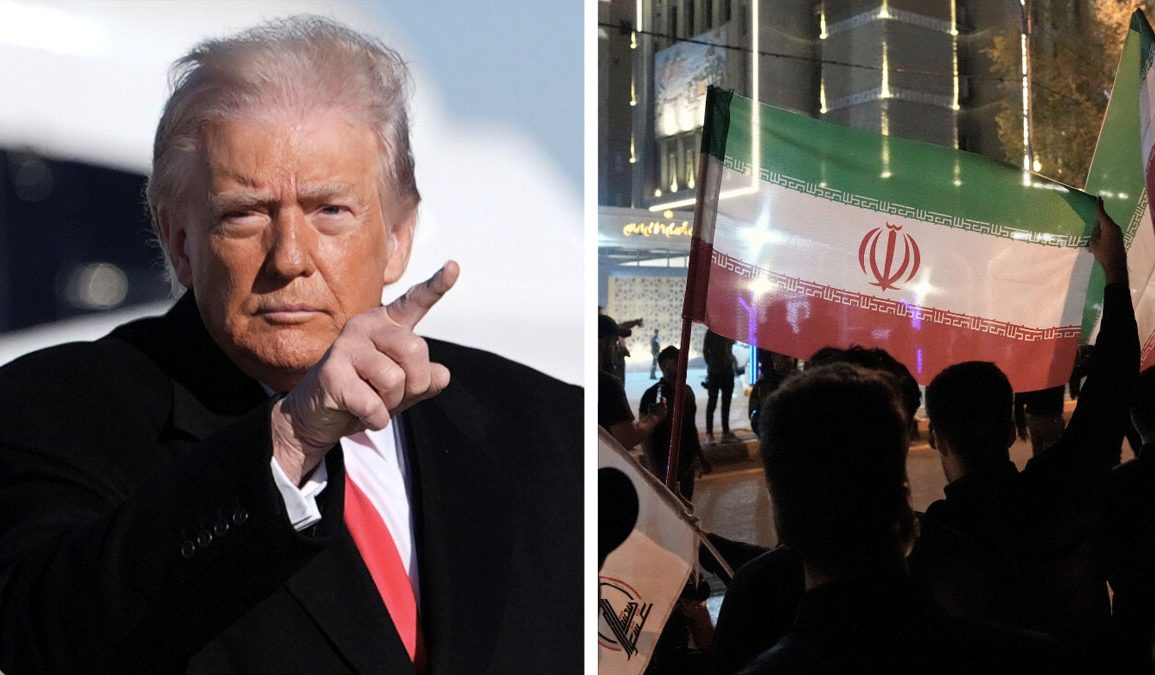
President Donald Trump made his position clear on Friday: he is “not happy” with how Iran is negotiating, and he is not satisfied with what Tehran is willing to offer. “I’m not happy with the fact that they’re not willing to give us what we have to have. I’m not thrilled with that. We’ll see what happens,” Trump told reporters as talks continued. His bottom line has not changed: “They cannot have nuclear weapons.”
That frustration comes after another intense round of Oman mediated, indirect negotiations in Geneva. The talks have not produced a deal, and Trump has not announced a final decision on whether to strike. “We haven’t made a final decision,” he said, adding that more talks were expected “later” and “today.”
Where The Talks Are Stalling
The core dispute is simple but dangerous. The United States is pressing for complete denuclearization, including an end to uranium enrichment. Iran’s foreign minister, Abbas Araghchi, insisted Iran has an “inalienable right” to enrich uranium, a position that directly collides with Trump’s demand.
Iran has also signaled it will keep enriching uranium, reject transferring stockpiles abroad, and seek sanctions relief. That is a familiar pattern in negotiations: Tehran offers partial, time limited steps while protecting the core capability that gives it leverage. Meanwhile, U.S. demands are not limited to enrichment. They also include constraints on Iran’s ballistic missiles and an end to support for regional proxy forces, conditions Iran has resisted as too sweeping.
Omani officials have projected optimism. After Geneva, Oman’s foreign minister, Sayyid Badr Al-busaidi, said “significant progress” had been made, even as neither side publicly explained what that progress means in concrete terms.
A Ten Day Clock That Iran Wants To Run Out
Trump has framed time as a weapon. He said the world would know “over the next, probably, 10 days” whether diplomacy works or whether the U.S. turns to military action. He also described the window as “10 to 15 days, pretty much, maximum,” and summarized the approach bluntly: “We have to make a meaningful deal otherwise bad things happen.”
The reporting provided here does not specify the exact start date of the ultimatum, so the precise number of days remaining cannot be calculated from this text alone. What is clear is that Trump is using a short deadline to force a decision, while Iran has every incentive to stretch the process, keep talks alive, and avoid giving up enrichment in any permanent way.
When asked if strikes could lead to a long conflict, Trump did not pretend the danger is zero. “I guess you could say there’s always a risk,” he replied. But he also pointed to prior operations that, in his view, worked cleanly and did not spiral, citing successes like “Soleimani” and “al Baghdadi,” and saying, “Everything’s worked out, and we want to keep it that way.”
He also said he would prefer not to use force, but left the door wide open. “I’d love not to use” the U.S. military, “but sometimes you have to.”
The Military Buildup Is Not A Bluff
Even while negotiations continue, American posture is tightening around Iran.
A major signal is the arrival of the USS Gerald R. Ford off Israel’s coast. The Ford’s strike group includes at least one guided missile destroyer, the USS Mahan. Another carrier, the USS Abraham Lincoln, is already operating nearby. Reports also describe additional combat aircraft moving into the region, including F 35s, F 22s, and F 16s, along with added air defenses and key command and control aircraft used to coordinate large air campaigns.
Other steps show governments are preparing for escalation. The U.S. Embassy in Jerusalem authorized non emergency personnel and family members to depart “due to safety risks,” and warned that seats could disappear quickly.
Indications are the National Guard troops are also moving into the theater of operation, possibly for backup of the main forces or in preparation for the second wave of attacks.
No Deal?
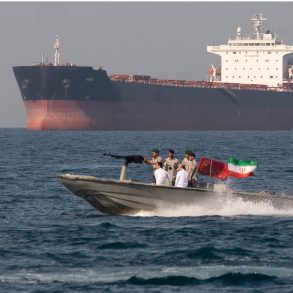
If the talks collapse, the path described in the reporting is an initial limited strike option, followed by escalation if Iran refuses to comply. That escalation could broaden beyond nuclear sites into regime facilities. Iran has warned it would retaliate and treat U.S. regional bases as targets if they are used in any attack. It has also conducted drills and live fire activity around the Strait of Hormuz, a critical oil transit corridor.
In other words, the stakes are not just Iran’s nuclear program. The stakes include a regional conflict that could spread quickly.
The Hard Question After A Strike: Who Runs Iran Next
This is the problem that sits behind every threat of “regime change,” even when it is not said out loud. Destroying facilities is one thing. Replacing and stabilizing a government in a country of roughly 90 million is another.
Even critics of Iran’s rulers warn that decapitation does not automatically produce order. Former CIA Director John O. Brennan put it bluntly: “Everyone agrees the Iranian regime is a problem. But that doesn’t tell you the solution. And the idea that decapitating the regime will solve the problem is absurd reasoning.”
Another analysis argues Iran’s system is weakened but “far from” collapse, and warns that misjudging the regime’s durability could lead to costly miscalculations.
Trump may prove patient beyond the headline deadline if he believes real concessions are finally coming. But his comments show he is not interested in vague promises. He wants a “meaningful deal,” and he is signaling that goodwill language from mediators is not enough.
Iran’s strategy is to delay, preserve enrichment, and trade limited steps for sanctions relief. Trump’s strategy is to compress time, mass force, and demand terms that remove Iran’s nuclear breakout option.
That means the next phase will be decided by specifics, not atmospherics. If the terms stay foggy, Trump has already told the world what comes next: “We have to make a meaningful deal otherwise bad things happen.”
ACZ Editor: The leadership issue if the most important. Do we perhaps have an Iman from a friendly country who could step in as the religious head of Iran? This would make it a lot easier to work on the secular side. The son of the former Shah has already been dismissed as a possible leader, but there may be some secular leaders who will work in the role that Rodriguez is serving now – a U.S. puppet who will keep the country stable until elections can be held.