

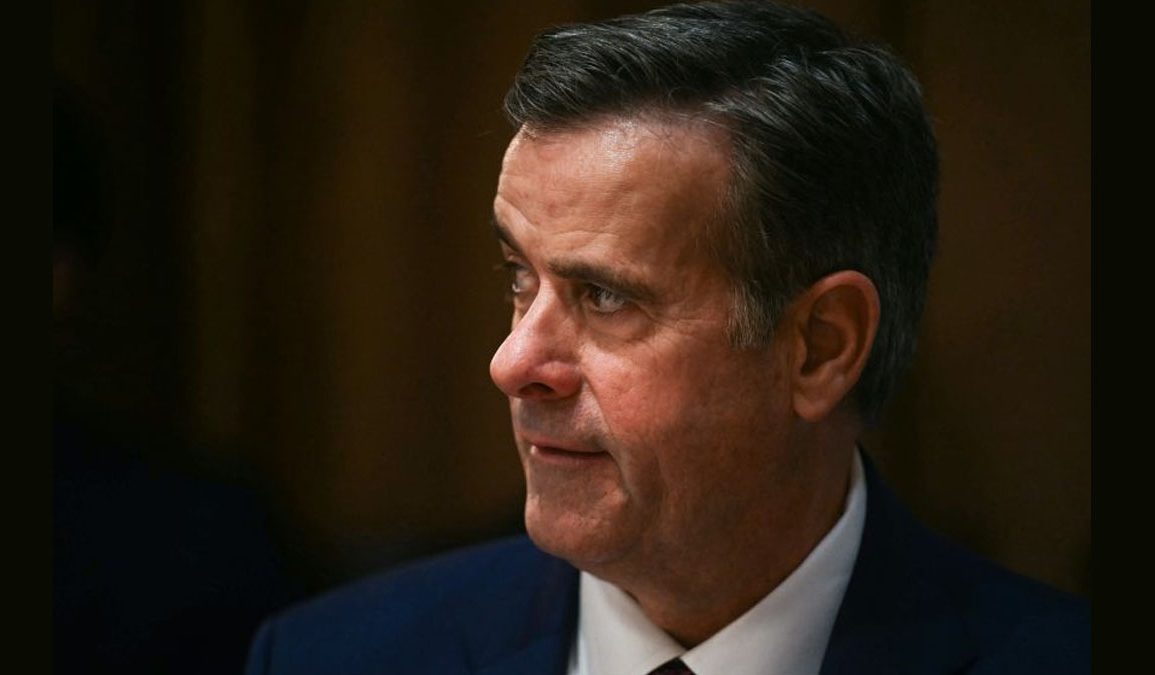
The Central Intelligence Agency has taken the extraordinary step of retracting or substantially revising 19 intelligence assessments produced over the past decade after determining they failed to meet standards of objectivity and analytic rigor. The decision, ordered by CIA Director John Ratcliffe, represents a major internal correction and an attempt to restore confidence in the agency’s reputation as a nonpolitical institution dedicated solely to national security.
For an organization whose officers often operate in dangerous conditions around the world, risking their lives to gather intelligence, the controversy surrounding politically influenced reports has sparked concerns about morale, mission focus, and public trust.
Ratcliffe Orders Sweeping Review and Retractions
Ratcliffe directed the agency to pull back or rewrite the intelligence products after an independent review by the President’s Intelligence Advisory Board examined hundreds of reports from the last ten years. The board concluded that 19 assessments did not meet analytic tradecraft standards and were influenced by political considerations.
Seventeen reports were fully retracted and two were withdrawn for revision.
In a statement explaining the decision, Ratcliffe said the reports “fall short of the high standards of impartiality that CIA must uphold and do not reflect the expertise for which our analysts are renowned.”
He emphasized that maintaining credibility required correcting mistakes openly. “There is absolutely no room for bias in our work and when we identify instances where analytic rigor has been compromised, we have a responsibility to correct the record,” Ratcliffe said. He added that the actions demonstrate the agency’s “commitment to transparency, accountability, and objective intelligence analysis.”
The CIA also stated that the goal was to ensure the workforce remains independent from “a particular audience, agenda, or policy viewpoint,” reinforcing the principle that intelligence analysis must stand apart from politics.
Examples of the Reports That Were Retracted
While the CIA did not publicly identify all 19 reports, officials released three examples that were judged to be politically influenced. According to a senior administration official, most of the remaining reports dealt with diversity, equity, and inclusion topics.
One report from October 2021 was titled “Women Advancing White Racially and Ethnically Motivated Violent Extremist Radicalization and Recruitment.” It focused on women involved in overseas groups that promote violence based on perceived threats to white European identity. Officials said the assessment ventured into foreign political debates about gender roles rather than focusing strictly on intelligence related to threats.
The report also labeled certain public figures as extremists and discussed concerns about women pursuing traditional motherhood roles. A senior CIA official said the analysis “waded into foreign political debates about gender roles rather than discussing any actual threats of political violence.”
Another report from January 2015, titled “Middle East-North Africa: LGBT Activists Under Pressure,” examined government policies affecting LGBT communities in the region. It argued that conservative public opinion and political competition from Islamist groups were driving policies that were “hindering US initiatives in support of LGBT rights.” Officials noted that the report cited activist organizations such as the Human Rights Campaign and was seen as engaging in political debates rather than intelligence analysis. (Why risk your life recruiting agents, when you can just watch some liberal podcasts?)
A third report from July 2020, “Worldwide: Pandemic-Related Contraceptive Shortfalls Threaten Economic Development,” examined how COVID disruptions to contraceptive supply chains could affect population pressures and economic outcomes in developing countries. Officials said the analysis relied on advocacy organizations and addressed topics outside the CIA’s core intelligence mission.
According to a senior official, “under prior administrations, there was an inappropriate insertion of DEI issues and other distractions into aspects of CIA’s work which undercut our mission of providing objective intelligence analysis on national security issues.”
The official added, “We found that these products do not meet the high bar of impartiality or insightfulness that we expect from CIA and were an inappropriate use of CIA time and resources.”
A Promise to Eliminate Bias and Restore Meritocracy
The review also fulfilled a promise Ratcliffe made during his Senate confirmation process to remove political influence from the agency’s analytic work. At the time, he pledged to root out “political or personal biases” and turn the CIA into what he called “the ultimate meritocracy.”
He delivered a blunt message to agency personnel as reforms began. “To the brave CIA officers listening around the world, if all of this sounds like what you signed up for, then buckle up and get ready to make a difference,” he said. “If it doesn’t, then it’s time to find a new line of work.”
The reforms were accompanied by efforts to reduce the agency’s workforce by about 1,200 positions and implement new mechanisms to ensure analytic standards are maintained going forward.
Officials noted that because the reports span a ten year period, some authors may no longer work at the agency. When asked whether anyone faced discipline, an official said, “We’ve created mechanisms to address these concerns, and we’ve really made sure that we clarify our expectations for all officers in our director of analysis.”
Political Reaction Reflects Deep Divisions
The decision to retract the reports quickly became a political flashpoint in Washington.
Sen. Tom Cotton, chairman of the Senate Intelligence Committee, praised the move and said he had been raising similar concerns for years. “I’ve been sending these kind of reports back to the CIA for years and observing that they contain no intelligence,” Cotton said, commending Ratcliffe for correcting the record.
Sen. Mark Warner, the top Democrat on the committee, sharply criticized the decision. He warned that allowing political appointees to influence intelligence judgments could create new problems. Warner said the move was part of “a broader and deeply troubling pattern in this administration: sidelining career experts, undermining inconvenient intelligence assessments, and allowing political considerations to override professional judgment.”
He added that “our country depends on the Intelligence Community’s ability to provide honest, fearless analysis, even when it is uncomfortable or inconvenient for those in power.” (Is he kidding with this?)
Some former officials also questioned whether the reports were truly flawed or simply reflected the policy priorities of earlier administrations.
The Stakes for Morale and the Agency’s Reputation
Beyond the political debate, the controversy highlights a deeper issue about the mission and identity of the CIA.
Intelligence officers often operate under extreme risk, gathering information in hostile environments where discovery could mean imprisonment or death. They do so with the understanding that their work serves the security of the United States, not political agendas or ideological debates.
When intelligence resources are perceived to be spent on topics far removed from core national security threats, it can be deeply demoralizing to professionals who expect the agency to remain focused and nonpolitical. Questions about bias also damage public trust, which is essential for an organization that must operate largely in secrecy.
Ratcliffe’s supporters argue that removing politicized analysis is necessary to restore credibility. Critics argue that political intervention itself risks undermining independence. What both sides recognize is that credibility is the agency’s most valuable asset.
Turning the Page on a Controversial Chapter
The retraction of 19 reports represents an acknowledgment that standards slipped in some cases and that reforms were necessary. Ratcliffe pointed to recent operations as evidence that the agency remains capable of high quality work, saying that successes such as Operation ABSOLUTE RESOLVE and Operation MIDNIGHT HAMMER demonstrate the CIA’s dedication to analytic excellence.
Whether this episode becomes a temporary controversy or a lasting turning point will depend on how consistently the agency maintains impartial standards going forward.
For the CIA, the mission remains clear. Intelligence must be objective, rigorous, and free from political influence. Restoring that perception may be the most important task facing the agency as it moves beyond what many see as a troubling chapter in its history.