
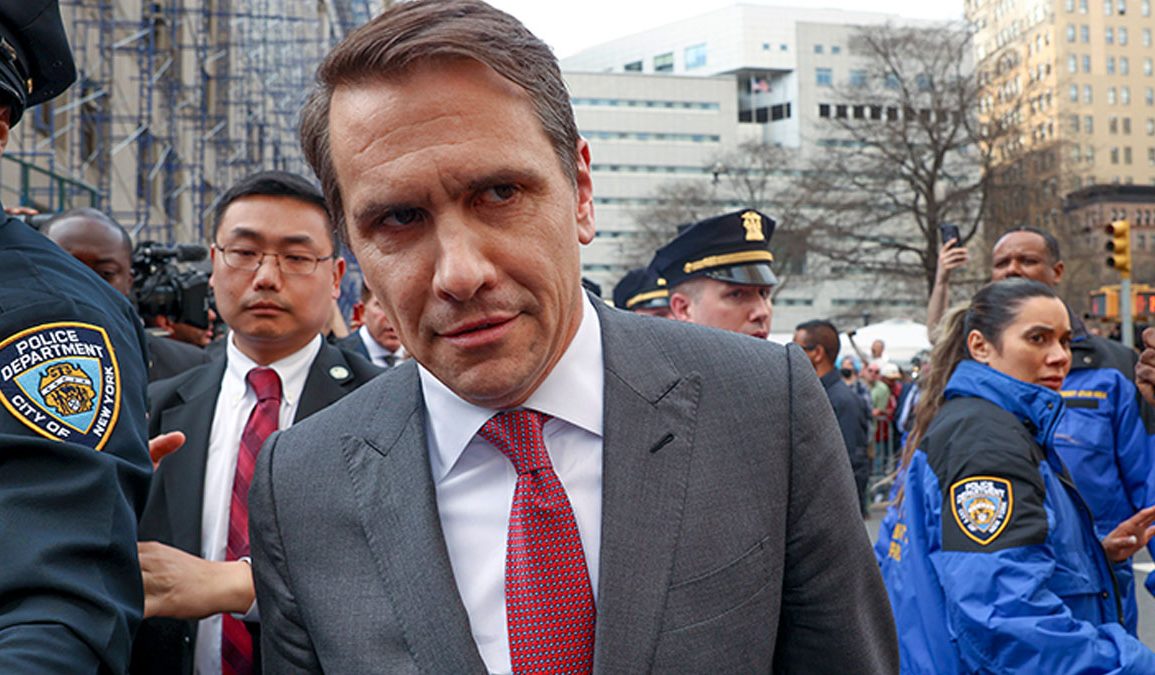
Deputy Attorney General Todd Blanche says the wave of protests and riots that erupted in Minneapolis are not spontaneous or grassroots. Instead, he argues they are driven by organized political networks reacting to federal efforts to shut down large scale fraud operations tied to immigration enforcement.
Speaking in interviews following violent clashes in Minnesota, Blanche said the protests appeared suddenly and in large numbers only after the federal government moved to halt what he described as a massive fraud operation. In his view, the timing is not accidental.
Blanche serves as the Deputy Attorney General in the Trump administration and plays a central role in overseeing federal investigations and enforcement strategy. His comments carry weight because they come from the Justice Department at a moment when multiple agencies are involved in Minnesota, including the Department of Homeland Security, ICE, Border Patrol, and the FBI.
Blanche has emphasized that his concerns are not about peaceful protest, which he says is protected, but about organized efforts that use protests as cover to protect criminal activity and undermine law enforcement.
What Is Really Driving the Protests
According to Blanche, federal investigators uncovered extensive fraud tied to federal entitlement programs across Minneapolis and greater Minnesota. When authorities moved to stop it, he says the focus of public activity shifted almost overnight.
Blanche described how protests quickly reframed the issue as an anti ICE movement, demanding that federal agents leave the city. He said the sudden surge in protesters, agitators, and rioters coincided directly with the crackdown on what he called a profitable fraud operation.
He stated that investigators are now tracing funding streams linked to the protests and that multiple investigations are underway. While he did not name specific groups or individuals, he repeatedly suggested that financial and logistical coordination points to an organized network rather than organic outrage.
The unrest intensified after two protesters were killed in separate encounters with federal agents during immigration enforcement operations. One of those killed was Alex Pretti, whose death is now under a federal civil rights investigation. The other was Renee Good, who authorities say struck an ICE agent with her vehicle.
These incidents became rallying points, triggering large demonstrations against federal immigration enforcement and drawing national attention to Minneapolis. The protests expanded rapidly, with crowds confronting agents, blocking vehicles, tracking enforcement activity, and attempting to disrupt operations across neighborhoods.
At the same time, DHS reported a dramatic spike in violence against ICE agents, including a sharp increase in assaults and vehicular attacks since the Trump administration took office.
Organized Networks and Coordination
Blanche and other administration officials argue that the scale, speed, and coordination of the protests raise serious questions. He said it strains credibility to believe thousands of protesters appear simultaneously without planning, funding, and communication networks.
Outside analysts and former federal officials have pointed to the use of encrypted messaging apps, scheduling tools, and cell based organizing tactics that resemble methods used by criminal or insurgent networks. These systems allow rapid mobilization while shielding organizers from identification.
Blanche said unraveling these networks will take time, but investigators are already making progress in following money trails and identifying how protest activity is being financed and coordinated.
Democratic officials in Minnesota, including Tim Walz, have condemned the federal operations and accused the administration of overreach. They argue the presence of heavily armed federal agents has frightened communities and escalated tensions.
Protesters and activists claim they are defending neighbors and exercising constitutional rights. Some groups deny any centralized coordination and insist their actions are purely grassroots.
The Trump administration rejects that narrative. Officials argue that while genuine protesters may be present, organized far left networks are exploiting emotional events to shield fraud, disrupt enforcement, and turn public opinion against ICE.
This Is Bigger Than Minneapolis
Blanche has warned that Minneapolis may be a test case. He has suggested that similar tactics could appear in other cities whenever federal enforcement threatens entrenched criminal or ideological interests.
From the administration’s perspective, these protests are part of a broader pattern where organized political groups leverage street demonstrations to obstruct law enforcement, intimidate officials, and protect illicit profit centers under the banner of activism.
Blanche has made clear that investigations will continue and that the federal government will not be deterred by what he sees as coordinated pressure campaigns disguised as spontaneous protest.
The Justice Department’s position is blunt. The Minneapolis unrest is not simply a community reaction to enforcement. It is, according to Blanche, a coordinated political response triggered when federal authorities moved to shut down a lucrative and deeply embedded fraud operation.
In that framing, the protests are not about ICE alone. They are about protecting money, power, and influence, and using public disorder as a tool to force the federal government to back down.