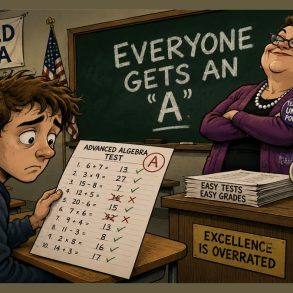



For many years, parenting advice has sounded like a therapy session. Talk gently. Validate feelings. Ask reflective questions. Make sure little Brayden and sweet Olivia feel heard at all times. The problem is that a lot of parents are now looking at the results and thinking, “Well, that did not quite work out the way the experts promised.” Out of that frustration comes a new, brasher trend in child raising. It has a funny name, but a very serious message. It is called FAFO parenting, short for “F—Around and Find Out,” and it represents a push toward stronger discipline, clearer consequences, and the belief that reality can be a better teacher than endless discussion.
Parents trying FAFO are not inspired by cruelty. They are inspired by exhaustion. They are tired of repeating themselves. They are tired of negotiating every rule like a hostage exchange. They are tired of watching kids push boundaries because they know nothing serious will happen. FAFO is basically parents saying, “Enough. If you break the rules, you get what comes next.”
What FAFO Really Means in Parenting
The idea behind FAFO is simple. Parents warn. Children test. Consequences follow. There is no giant parenting seminar required to understand it. If a child decides to act out in a dramatic act of defiance, the parent does not schedule a deep feelings talk. The parent lets the natural result happen.
One mother, Carla Dillon, learned this lesson the adventurous way. When her 13 year old son sprayed her with a water gun after she had already warned him not to, she did not deliver a lecture on respect. She picked him up and threw him in the pond fully clothed. She explained it with no apology. “Some of the best lessons in life are the hard ones,” she said. He was safe, he laughed, but she also made the point crystal clear. There are rules for a reason.
That is FAFO in action. Forget your raincoat even though you were told to bring it? Enjoy the walk home in the rain. Refuse to eat dinner because you felt dramatic and stubborn? Then breakfast will taste even better. Leave your toys all over the floor after repeated warnings? Enjoy finding them in the trash. It is harsh. It is blunt. It is also highly memorable.
Why Parents Are Moving Toward Tougher Discipline
So why is this happening now? The softer style of parenting, often called gentle parenting or permissive leaning, dominated recent decades. It stressed emotional support, warm communication, and avoiding punishment whenever possible. Critics argue that it also delivered unintended consequences. Surveys and discussion point to many young adults today struggling in work settings, relationships, and basic resilience. Some wonder if constantly being shielded from consequences might have played a role.
Parents like Dillon believe some children simply overpower gentle approaches. She said frankly, “My kids will walk all over me if I do that. I’ve tried it.” She is not alone. Father of five Jon Wellington said the culture has grown too soft. He believes tough lessons build lasting character, especially in a world that does not care about your feelings. “The era of the participation trophy is over,” Wellington said. To him, children must learn that when you commit to something, you finish it. When his daughter wanted to quit color guard after he paid for it, quitting was not an option. He said plainly, “In the real world when you commit to a loan or car payment or house payment or even a marriage, you have to finish that thing until it’s over with.”
To FAFO parents, this is not parenting brutality. This is preparation for adulthood.
The Clash With Gentle Parenting Culture
Gentle parenting still has passionate defenders. It was supposed to create emotionally aware, connected, thoughtful humans. It emphasizes understanding feelings, reducing fear, and building trust. But even people associated with the gentle approach admit culture has twisted it. Psychologist Becky Kennedy, known as “Dr. Becky,” says society took the concept too far and made parents afraid to upset their children at all. She says many parents ended up “tiptoeing around their children’s feelings,” losing the freedom to simply parent. She does not support FAFO’s harsher tone, but even she admits parents have misapplied softness in extreme ways.
Meanwhile, other parents proudly embrace softness. Millennial mother Madison Barbosa says she wants trust, not fear. “If my kids are ever in trouble, I don’t want them to say, ‘Mom’s going to be so mad at me,’” she said. But this is exactly where the cultural divide sits. One side believes being softer creates emotionally aware humans. The other side believes it has created fragile adults unprepared for reality.
Then there are the FAFO extremists online who brag, “I bit mine back and she never did it again.” Parenting online is truly a wild place.
A Look at What Happens When Discipline Disappears
Research about permissive parenting paints a concerning picture. Permissive parents tend to be warm, loving, and affectionate. Unfortunately, they also avoid enforcing rules, rarely require maturity, and prefer to be friends more than authority figures. The results often include kids with poor self discipline, lower achievement, weak decision making, insecurity, risky behavior, and emotional struggles. They do not learn boundaries because none were enforced. They do not learn to regulate themselves because they never had to.
Experts warn that it can lead to more aggression, poor coping skills, and difficulty functioning in structured settings like school or work. And while there are some benefits, like warmth and sometimes good self esteem, many parents are asking whether confidence without competence is really a win.
This is where FAFO parents loudly reply, “See? This is what we are talking about.”
The Shadow of Corporal Punishment and Why People Fear Going Back
Whenever talk shifts toward tougher discipline, the ghost of corporal punishment appears. Physical punishment in schools has a long, painful history. While most states have banned it, it remains legal in many and is still practiced. Critics argue that physical punishment damages mental health, causes injuries, and fuels fear rather than learning. U.S. Education Secretary Miguel Cardona warned that it “can lead to serious physical pain and injury” and is linked to mental health issues. The World Health Organization even called corporal punishment “a violation of children’s rights.”
Many educators who once supported it now reject it. One former teacher, Robin McNair, admitted she once supported paddling and harsh methods, but she now says, “I wonder why I thought doing this would stop him from being a child.” Research shows physical punishment often increases aggression, anxiety, depression, and alienation from school. It does not build discipline. It builds fear.
But how valid is this research? Many generations seem to have coped appropriately with such methods and moved on to become successful. As it is now, parents are struggling for ways to anchor important lessons, without using corporal punishment. Could it be that these researchers were full of crap the whole time?
The Bigger Message Behind FAFO
At its core, FAFO parenting is not about dunking kids in ponds forever. It is about rejecting the idea that children must always be protected from discomfort. It is about saying structure matters. Boundaries matter. Consequences matter. Parents like Andrea Mata, a clinical child psychologist, even admit that gentle methods can be complicated to execute correctly. She joked that sometimes it feels like “you need a clinical Ph.D in child development” just to do it right. Instead, she often leans on consequences herself, believing they teach accountability.
Parents embracing FAFO think experts went so far into softness that they forgot discipline can build strength. They believe children need responsibility, not everything explained softly until adulthood arrives and reality explains it far less kindly.
Parenting comes in cycles. Society swings from strict to soft and back again. We are now watching the pendulum swing toward discipline, structure, and real consequences. Parents tried the constant talking. They tried all the feelings-based strategies. Now, a growing number have decided it is time for kids to “find out” what happens when they ignore expectations.
Will this movement create stronger, more capable adults or just a new form of parenting chaos? Time will tell. But one thing is certain. A lot of parents are done with gentle techniques that produce zero results. They are ready to make sure lessons are learned, even if it means doing more than the “basic nonsense being advised.” And if that involves a pond now and then, well, some life lessons are best delivered soaking wet.
Goodbye Gentle Parenting, Hello ‘F— Around And Find Out’ – WSJ