

A Cease-Fire Turns Inward
The guns have not gone silent in Gaza—only redirected. As Israeli troops withdrew under President Trump’s U.S.-brokered cease-fire, Hamas surged back into the streets, not to rebuild, but to hunt its rivals. What began as a fragile truce between Israel and Hamas has quickly turned into a purge of internal enemies.
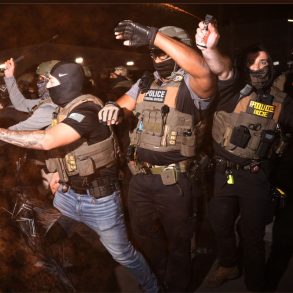
Witnesses described masked Hamas fighters dragging men from their homes and executing them in public squares. Videos verified by international media show victims forced to kneel before being shot in front of onlookers. Many of the targets were members of powerful Palestinian families—some long opposed to Hamas rule, others accused of collaborating with Israel or looting aid during the chaos of war.
A Hamas spokesman claimed the actions were part of a campaign to restore order, calling the victims “criminals and collaborators.” But for many Gazans, the sight of executions in broad daylight marks a chilling return to the kind of rule they had hoped was over.
Trump’s Warning: “They Will Disarm—Or We Will”
President Trump, flying between Jerusalem and Cairo this week to tout his Middle East peace plan, addressed the violence directly. Speaking aboard Air Force One, he said Hamas had been granted temporary authority to secure Gaza but added, “They’re going to disarm—and if they don’t disarm, we will disarm them.”
The crackdown directly contradicts the commitments Hamas made as part of the Trump cease-fire framework. Under the agreement, the group was to begin disarming and transferring control of Gaza to an internationally supervised authority. Instead, its security forces have reappeared in full strength, using the lull in fighting to crush rival militias and intimidate dissenters.
Trump appeared torn between pragmatism and impatience. “They’ve taken out a couple of gangs that were very bad,” he said later. “That didn’t bother me much, to be honest with you.” But his tone hardened when pressed about Hamas’s refusal to stand down: “If they don’t do so, we will disarm them, and it’ll happen quickly and perhaps violently.”
The 1,900 Released Fighters and the Shadow of Revenge
Among the key concerns now is the fate of the roughly 1,900 Hamas members released in exchange for the final hostages. Israeli and American officials fear many of them have rejoined the movement’s ranks, fueling the current wave of violence.
Reports from Gaza suggest that several of the men seen participating in the executions were recently freed prisoners. Hamas insists these are “police volunteers” helping restore order. Yet, to outside observers, the timing looks like vengeance. Freed militants, newly armed, are using their return to settle old scores against families and clans who challenged Hamas’s rule during the war.
The fighting around Gaza City’s Jordanian hospital illustrated how quickly these vendettas can spiral. Hamas forces besieged the Doghmush family, long accused of opposing the group, burning homes and executing suspected traitors. Dozens were killed. “I could hear gunfire all around,” said Sobheia Doghmush during the clashes. “The area is completely surrounded by masked gunmen.”
A Plan at Risk
Trump’s cease-fire blueprint, celebrated just days ago as “the dawn of a new Middle East,” now faces its first major test. Phase Two of the plan was supposed to transition Gaza to international supervision, demilitarize Hamas, and restore basic governance. Instead, the group has reclaimed the streets, enforcing its own brand of order through fear.
Israeli Prime Minister Benjamin Netanyahu, who has repeatedly vowed that the war will not end until Hamas is dismantled, is watching closely. “Hamas’s strategic role is to take over Palestinian society,” said retired Israeli Brigadier General Ephraim Sneh. “Netanyahu doesn’t want the alternative, which is the Palestinian Authority.”
Even some Palestinians acknowledge Hamas’s grip is tightening again. “Many people can’t wait to get rid of Hamas’s rule,” said Falah Masri, who lives in a tent in Deir al-Balah. “But they are everywhere.”
Was It Still Worth It?
For Trump and his negotiators, the question now is whether this blood-soaked resurgence is a fatal setback or an expected bump on the road to stability. From the beginning, critics warned that Hamas would use any cease-fire to regroup and retaliate. That prediction seems to be unfolding in real time.
Yet, the alternative—prolonged war—was untenable. Gaza’s infrastructure lies in ruins, famine has taken hold, and 68,000 people are dead. Trump’s team argues that despite the current turmoil, the peace framework remains the only viable path forward.
Analysts in the region suggest that the violence, while brutal, could burn itself out once Hamas consolidates control. Others fear that allowing Hamas to reassert itself risks reigniting a new war with Israel before any lasting peace can take root.
The Gamble Continues
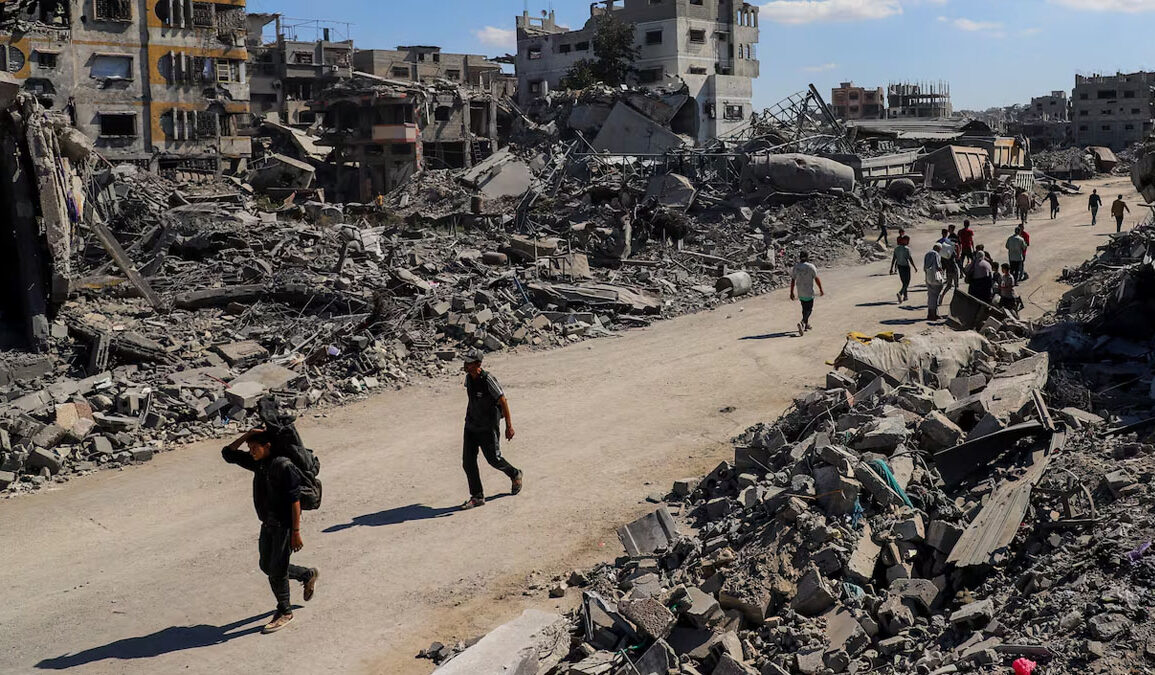
For now, the cease-fire holds—but barely. Aid convoys creep through bombed-out streets patrolled by Hamas gunmen. Families return to homes reduced to rubble. And in the background, a familiar pattern re-emerges: Hamas, bloodied but unbowed, using every pause in conflict to rebuild its power.
Trump’s peace plan remains alive, but it is now tied to a dangerous gamble—that the same group that sparked Gaza’s destruction can be coaxed into preserving its fragile peace. Whether that bet pays off or explodes into chaos may determine not just the future of Gaza, but the credibility of Trump’s entire Middle East doctrine.
NP Editor: This doesn’t surprise us, Hamas has never had integrity when it comes to peace deals or hostage deals – and why would you expect integrity from someone who takes innocent hostages in the first place?
It appears that Hamas is a) regrouping with its newly released 1900 soldiers – and perhaps one of those is their new leader, and b) getting revenge on those who have worked against them, particularly those who may have worked with Israel. This is brutal.
But the question is this: Do you allow them this “indiscretion” with the brutality that comes with it? Hoping that the rest of the deal can be salvaged? Or do you send the troops back in, crush what you can and forget about the deal?