

President Donald Trump has unveiled an ambitious plan to create a U.S. version of Israel’s highly effective “Iron Dome” missile defense system. Through an executive order, Trump aims to establish a next-generation missile shield capable of protecting the nation against modern aerial threats, including ballistic missiles, hypersonic weapons, and drones. This initiative signals a significant step in advancing America’s defensive capabilities and reflects Trump’s continued commitment to strengthening national security.
Trump’s Vision for an American Iron Dome
Speaking at a rally in December 2024, Trump announced his vision for a robust missile defense system, emphasizing the need for self-reliance in its development. “I will direct our military to begin construction of the great Iron Dome missile defense shield, which will be made all in the USA,” he declared, promising a system designed to shield the homeland from catastrophic threats.
Defense Secretary Pete Hegseth echoed this commitment on January 27, 2025, during his first official day at the Pentagon. He stated, “There are more executive orders coming that we fully support, including one on an Iron Dome for America. This is happening quickly.” Hegseth’s comments underscore the administration’s urgency in addressing modern security challenges.
Understanding the Iron Dome
The Iron Dome, developed by Israel, has gained global recognition as a state-of-the-art missile defense system. It is designed to intercept and neutralize short-range projectiles such as rockets, artillery, and drones. With an accuracy rate of approximately 90%, it has proven to be a critical asset in protecting civilian areas from enemy attacks. For example, the Iron Dome intercepted over 200 Iranian ballistic missiles targeting Israel on October 1, 2024, significantly mitigating the impact of those strikes.
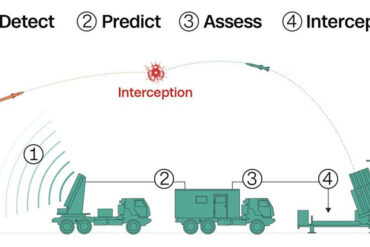
Israel’s system uses advanced radar and guided missiles to identify incoming threats, calculate their trajectories, and destroy them before they can cause harm. This technology has been crucial in safeguarding urban centers and military installations in Israel, a nation with a compact geographic area and densely populated regions.
The Need for a U.S. Iron Dome
America faces escalating threats from adversarial nations, including Russia, China, and Iran, which have developed sophisticated missile systems. The White House has described these dangers as “catastrophic” and highlighted the increasing prevalence of hypersonic, ballistic, and cruise missiles. According to Trump’s executive order, the U.S. must prioritize building a defense system to counter these modern threats.
Currently, the U.S. relies on systems like Patriot, THAAD, and Aegis to address medium- and long-range threats. However, these systems are not designed to counter smaller-scale, localized dangers such as drones and short-range projectiles. An American version of the Iron Dome would address this critical gap, offering a layered approach to missile defense and protecting vital infrastructure, military bases, and cities.
Victoria Coates, vice president of the Kathryn and Shelby Cullom Davis Institute for National Security and Foreign Policy, praised the initiative. “President Trump’s comprehensive missile defense plan for the United States will fulfill President Reagan’s vision for the Strategic Defense Initiative laid out some four decades ago,” she said. Coates emphasized that the system’s purpose is “to prevent deaths rather than avenge them,” reflecting the proactive approach the administration seeks to adopt.
Challenges in Implementing an Iron Dome for America
Despite its promise, adapting the Iron Dome for U.S. defense presents significant logistical and financial challenges. Unlike Israel, which is geographically small and has concentrated population centers, the United States spans thousands of miles, with dispersed urban areas, military sites, and infrastructure. Deploying enough systems to protect such a vast area would require substantial investment and careful planning.
Experts have also raised concerns about the system’s scalability. Dr. Yehoshua Kalisky, a senior researcher at the Institute for National Security Studies in Tel Aviv, noted that while the Iron Dome could serve as a starting point, it would need significant modifications to address America’s unique security needs. “The U.S. possesses advanced capabilities, such as the AN/TPY-2 radar, which has significantly greater range and power. Upgrading Iron Dome with more advanced radar systems and faster missiles could align it with systems like David’s Sling, which is designed to intercept more advanced threats,” Kalisky explained.
Cost is another potential sticking point. Deploying a nationwide Iron Dome-style system would involve substantial expenses, from research and development to production and maintenance. However, innovations such as the “Iron Beam,” a high-energy laser system developed by Israeli company Rafael Advanced Defense Systems, could offer more cost-effective solutions by neutralizing threats without relying on traditional missiles.
Steps Toward Implementation
Trump’s executive order outlines a comprehensive plan for developing and deploying the American Iron Dome. The initiative includes the following key components:
- Accelerating the development of Hypersonic and Ballistic Tracking Space Sensor Layers.
- Proliferating space-based interceptors and advanced warfighter space architecture.
- Enhancing capabilities to neutralize threats before they are launched.
- Exploring non-kinetic missile defense technologies, such as directed-energy weapons.
The order also emphasizes collaboration with international allies to advance missile defense technology and protect U.S. troops deployed abroad. Such partnerships could streamline development and ensure the system’s effectiveness against a wide range of threats.
Looking Ahead
President Trump’s proposal has sparked both enthusiasm and debate. Proponents argue that an American Iron Dome would bring the country closer to realizing President Reagan’s vision of a Strategic Defense Initiative. “Like Israel’s highly effective system of the same name, President Trump’s Iron Dome will provide an impenetrable defense for the American people that will bring peace through strength,” said Victoria Coates.
Critics, however, caution that the system’s adaptation to the U.S. may not be practical. Dr. Steven Terner, a consultant on national security, questioned the feasibility of deploying Iron Dome across such a large nation. “Where would the Iron Dome system go? Around every sensitive site in the U.S.? Wouldn’t that alert spies to those locations?” he asked, highlighting concerns about strategic vulnerabilities.
NP Editor: This is an excellent idea, but we have allowed foreign actors into our country unchecked through the border. It is similar to your tent in camping, you need the tent, but you have to get the mosquitos out before you seal it up.