

For decades, the world’s attention on Iran’s weapons programs has focused primarily on nuclear ambitions. But growing concerns about Tehran’s chemical weapons activities suggest a different and equally disturbing reality: a regime accused of developing banned weapons despite international agreements and potentially using them against both foreign adversaries and its own people.
A new report highlights fears that Iran’s chemical weapons efforts have continued in secret even after it joined the Chemical Weapons Convention, the international treaty that bans the development, production, stockpiling, and use of such weapons. The allegations paint a picture of a government willing to ignore international law while expanding unconventional capabilities that could be used on battlefields, through proxy forces, or during domestic unrest.
A Treaty Signed, But Compliance Questioned
Iran is a party to the Chemical Weapons Convention, which prohibits nations from developing or possessing chemical weapons under any circumstances. Yet U.S. findings have repeatedly raised doubts about Tehran’s compliance.
Beginning in 2011, the United States reported it could not certify Iran’s adherence to the treaty. Since 2018, U.S. officials have formally assessed Iran to be in noncompliance in multiple areas, including chemical weapons production facilities, potential transfers, and undeclared stockpiles.
Iran denies the accusations. In a 2024 statement, its United Nations mission insisted, “Over the past several decades, not a single instance of Iranian violation has been recorded,” calling allegations “unfounded reports” driven by political motives.
But intelligence assessments from the United States and Israel continue to conclude that Iran has maintained a covert chemical weapons capability for years.
A Program With Deep Historical Roots
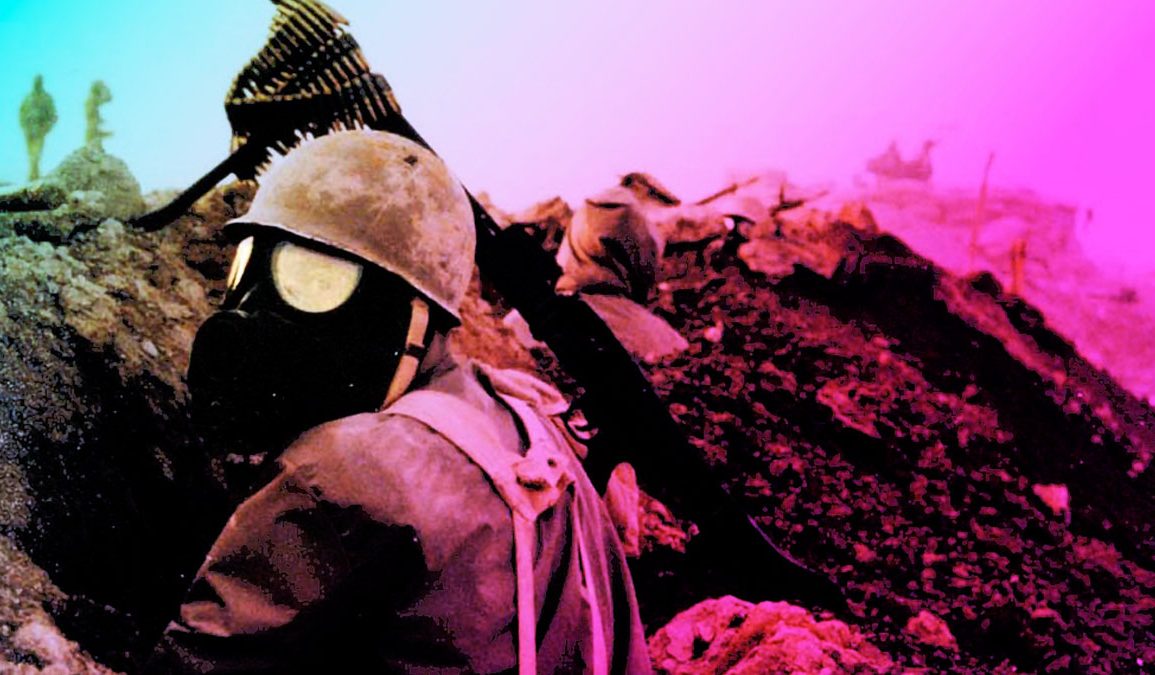
Iran’s chemical weapons program dates back to the 1980s Iran Iraq War, when Saddam Hussein’s forces used chemical attacks against Iranian troops and civilians. U.S. intelligence assessed that Iran began developing its own chemical weapons in 1983 in response.
Over time, Iran may have developed traditional battlefield agents such as sulfur mustard, phosgene, and possibly cyanide. Intelligence assessments also indicated Iran filled artillery shells, mortars, and aerial bombs with chemical agents during the conflict.
Foreign assistance played a critical role in early development. Intelligence reports noted that Western and Asian companies supplied equipment and precursor chemicals, while later procurement efforts involved suppliers in China, Russia, and other countries.
Even after joining the Chemical Weapons Convention in the 1990s, Iran allegedly continued seeking materials and expertise to expand its capabilities.
Modern Focus on Pharmaceutical Based Weapons
In recent years, concerns have shifted toward newer forms of chemical weapons known as pharmaceutical based agents. These substances are derived from legitimate medical compounds but can be weaponized to incapacitate or kill.
Israel’s deputy ambassador to the Netherlands, Yaron Wax, warned that “over the past two decades Iran has been developing a chemical weapons program based on weaponized pharmaceutical agents.” He said these substances “affect the central nervous system, and can be lethal even in small doses.”
Some allegations focus on fentanyl derived compounds designed for tactical munitions. Israeli officials believe such agents were being developed at the Shahid Meisami Research Complex before it was destroyed in 2025.
Research linked to Iranian institutions has also explored sedatives and anesthetics such as medetomidine, ketamine, and sevoflurane, including methods to aerosolize them for delivery through grenades or other devices.
The danger of these substances lies partly in their unpredictability. Aerosolized opioid based agents can easily cross from incapacitating doses to fatal overdoses, making their use highly dangerous and difficult to control.
Multiple Classes of Chemical Weapons Allegedly Pursued
Intelligence assessments and research findings suggest Iran has explored or developed several classes of chemical weapons.
These include nerve agents, blister agents such as mustard gas, choking agents, blood agents, riot control agents, and pharmaceutical based incapacitating agents. Research scale work on advanced nerve agents such as Novichok compounds has also been reported in academic publications.
While riot control agents are allowed for domestic law enforcement under international rules, the treaty requires countries to declare their stocks and prohibits the use of aerosolized central nervous system acting chemicals with prolonged effects. Allegations that Iran has not declared certain agents and may be developing more potent compounds raise concerns about treaty violations.
Potential Use Against Protesters
One of the most disturbing allegations involves the possible use of chemical agents against Iranian citizens during periods of unrest.
During a wave of protests beginning in late 2025, some groups claimed the regime used chemical substances against demonstrators. Andrea Stricker, author of the report examining Iran’s program, said, “The United States, its allies and the Organization for the Prohibition of Chemical Weapons should investigate credible claims that Iran’s regime used chemical weapons against its own people.”
If confirmed, such actions would represent not only a treaty violation but also a stark example of a government deploying unconventional weapons against civilians to maintain control.
Threats Beyond Iran’s Borders
Concerns also extend beyond Iran itself. Officials warn that chemical agents could be transferred to proxy forces across the Middle East.
There are fears that groups such as Hezbollah or other allied militias could receive chemical capabilities to support kidnappings, raids, or attacks while allowing Tehran to deny direct responsibility. Evidence discovered during operations against Hezbollah included chemicals, sedatives, and protective gear that raised alarms about possible chemical weapon planning.
The possibility of chemical weapons entering regional conflicts adds another layer of instability to an already volatile environment.
Calls for Accountability
Experts argue the international community has failed to hold Iran accountable for decades of suspected violations. Recommendations include investigations through the Organization for the Prohibition of Chemical Weapons, increased sanctions, and stronger efforts to block procurement of chemical materials and equipment.
Some analysts argue that military strikes on chemical weapons facilities may ultimately be necessary if intelligence confirms active production or deployment plans.
Stricker warned that the broader challenge goes beyond individual facilities. “The only solution to Iran’s persistent WMD threat is for the United States and Israel to undermine the regime’s grip on power,” she said.