Shot Down in Hostile Skies
The mission unraveled in seconds.
On Friday, a U.S. F-15E Strike Eagle was shot down by Iranian air defenses deep inside Iranian territory, marking one of the most dangerous escalations in the ongoing conflict. The aircraft, a two-seat fighter designed for both air-to-air and air-to-ground combat, carried a pilot and a weapons systems officer. Both were forced to eject into hostile terrain.
Iranian state media quickly capitalized on the moment. Broadcasts urged civilians and military units to hunt down the American airmen, even offering rewards for their capture. What followed was a race against time.
One crew member was rescued early. The other disappeared into the rugged mountains, injured and alone.
A Race Against Time
For nearly 48 hours, the missing airman survived behind enemy lines.
He was wounded. He was isolated. And he was being hunted.
President Donald Trump described the stakes bluntly, warning that Iranian forces were closing in. “This brave Warrior was behind enemy lines in the treacherous mountains of Iran, being hunted down by our enemies, who were getting closer and closer by the hour.”
U.S. officials feared the worst. Intelligence sources made it clear that if Iranian forces reached him first, the outcome could be catastrophic. One official said, “We’ve seen before what they do with prisoners. We were going to expend every effort to make sure we got to him first.”
Even the airman’s distress signal created uncertainty. At first, there was concern it might be a trap, a calculated move by Iranian forces to lure in a rescue team.
The margin for error was razor thin.
The CIA Steps In
What changed everything was intelligence.
The CIA detected the airman’s beacon signal and moved quickly to verify its authenticity. This was not routine. A false move could have led U.S. forces straight into an ambush. But once analysts confirmed the signal was real, the mission accelerated.
Then came the deception.
In what officials described as a highly coordinated intelligence maneuver, the CIA launched a deliberate misinformation campaign inside Iran. Through multiple channels, they spread the story that the missing airman had already been found and was being extracted through a completely different route by sea.
It was a calculated misdirection.
Iranian search efforts began shifting away from the actual location. Time, the most valuable resource in the operation, was suddenly back on the U.S. side.
At the same time, with assistance from Israeli intelligence, the CIA used advanced technical capabilities to lock in the airman’s precise position. The fog of uncertainty lifted.
“Within eight hours, we had planes in motion,” one official said. “Within almost 12 hours we were on the ground in Iran.”
In a mission defined by speed and precision, the intelligence phase proved decisive.
Overwhelming Force Meets Precision Planning
Once the location was confirmed, the rescue operation unfolded with overwhelming force.
Hundreds of U.S. personnel were mobilized. Dozens of aircraft were launched. This was not a small extraction team slipping quietly into hostile territory. This was a full-spectrum operation designed to dominate the battlefield long enough to get one man out alive.
MQ-9 Reaper drones were deployed to secure the airman’s position, firing on any approaching threats. U.S. tactical aircraft and B-1 bombers conducted strikes across the surrounding region to keep Iranian forces at bay.
A senior official described the scale of the operation clearly: “We executed multiple large-scale strikes in the surrounding area using every tactical jet in the U.S. inventory.”
The objective was simple. Clear the area. Hold it. Get him out.
The risks were enormous. Mechanical failures forced the destruction of two U.S. transport aircraft mid-operation, requiring rapid adjustments and additional deployments. Iranian media claimed they had shot down rescue aircraft, though U.S. officials stated those losses were due to technical issues.
Despite the chaos, the mission held together.
The Extraction
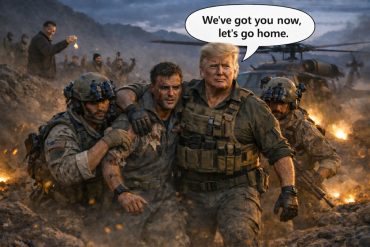
U.S. forces reached the airman in the mountains of Iran and secured him.
He was seriously wounded, but alive.
From there, the extraction unfolded under constant threat. Iranian forces were still searching. Time remained critical. But the combination of air dominance, real-time intelligence, and aggressive battlefield control created just enough space.
The airman was evacuated successfully.
Not a single American was killed during the mission.
Two Rescues, One Message
What made the operation even more extraordinary was that it was not the only one.
The second crew member from the same aircraft had already been rescued in a separate mission. Both rescues took place deep inside enemy territory, within a span of days.
“This is the first time in military memory that two U.S. Pilots have been rescued, separately, deep in Enemy Territory,” Trump said.
The successful recoveries transformed what could have been a major battlefield loss into a powerful demonstration of capability.
Global Reaction and Strategic Impact
The rescue operation quickly drew international attention.
Israeli Prime Minister Benjamin Netanyahu praised the mission, calling it proof that determined nations can overcome “seemingly insurmountable odds.”
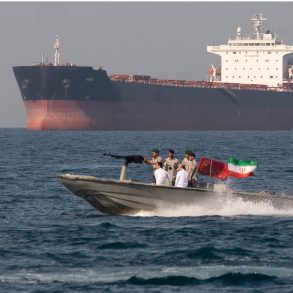
At the same time, the broader war continues to escalate. Iran has launched strikes across the region, targeting infrastructure in Gulf nations. Global markets remain unstable. Critical shipping routes, including the Strait of Hormuz, hang in the balance.
Trump has intensified pressure on Iran, warning of severe consequences if the strait is not reopened. Iran, in turn, has issued its own threats, signaling that the conflict remains far from resolution.
A Defining Moment
In the midst of a volatile and unpredictable war, the rescue stands out as a defining moment.
A wounded airman, stranded for nearly two days in hostile terrain, was found, protected, and brought home. It required intelligence precision, strategic deception, and overwhelming force, all working in coordination.
At its core, the mission sent a clear message. The United States will go to extraordinary lengths to recover its people.
And this time, it succeeded.
President Trump’s Full Truth Social Post
WE GOT HIM! My fellow Americans, over the past several hours, the United States Military pulled off one of the most daring Search and Rescue Operations in U.S. History, for one of our incredible Crew Member Officers, who also happens to be a highly respected Colonel, and who I am thrilled to let you know is now SAFE and SOUND! This brave Warrior was behind enemy lines in the treacherous mountains of Iran, being hunted down by our enemies, who were getting closer and closer by the hour, but was never truly alone because his Commander in Chief, Secretary of War, Chairman of the Joint Chiefs of Staff, and fellow Warfighters were monitoring his location 24 hours a day, and diligently planning for his rescue. At my direction, the U.S. Military sent dozens of aircraft, armed with the most lethal weapons in the World, to retrieve him. He sustained injuries, but he will be just fine. This miraculous Search and Rescue Operation comes in addition to a successful rescue of another brave Pilot, yesterday, which we did not confirm, because we did not want to jeopardize our second rescue operation. This is the first time in military memory that two U.S. Pilots have been rescued, separately, deep in Enemy Territory. WE WILL NEVER LEAVE AN AMERICAN WARFIGHTER BEHIND! The fact that we were able to pull off both of these operations, without a SINGLE American killed, or even wounded, just proves once again, that we have achieved overwhelming Air Dominance and Superiority over the Iranian skies. This is a moment that ALL Americans, Republican, Democrat, and everyone else, should be proud of and united around. We truly have the best, most professional, and lethal Military in the History of the World. GOD BLESS AMERICA, GOD BLESS OUR TROOPS, AND HAPPY EASTER TO ALL!